COP31 ends without a deal: what the drafts cut on fossil fuels, and how the talks collapsed
The Antalya climate summit closed on 22 November without agreeing its main text, after the EU and others rejected a draft that did not mention fossil fuels. We compare the drafts with the 2023 Dubai agreement and explain how consensus let objectors block the deal.
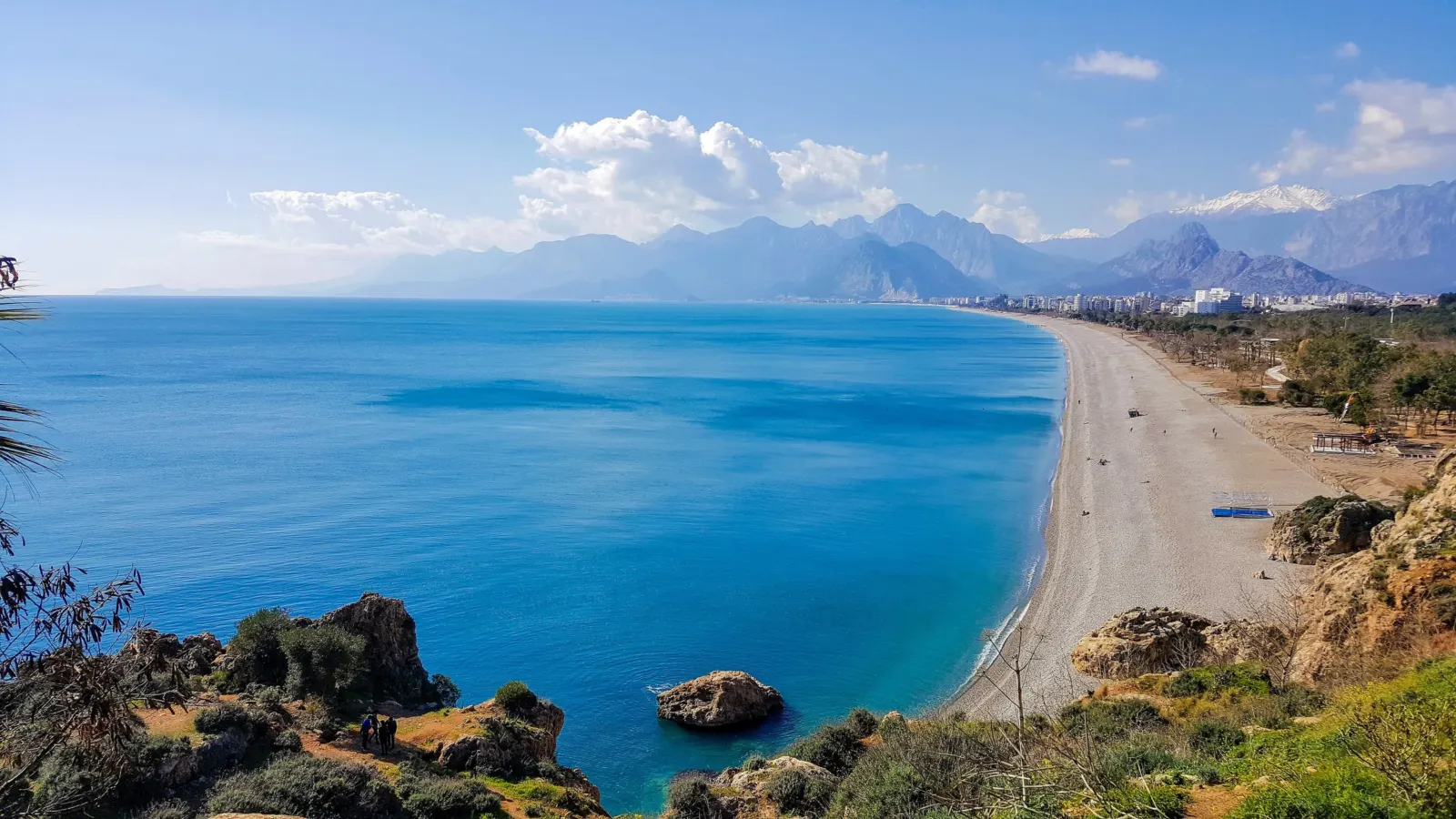
ANTALYA Updated 22 November: the summit ended without an agreement on its main text 12. Read our report on the collapse and what still binds countries.
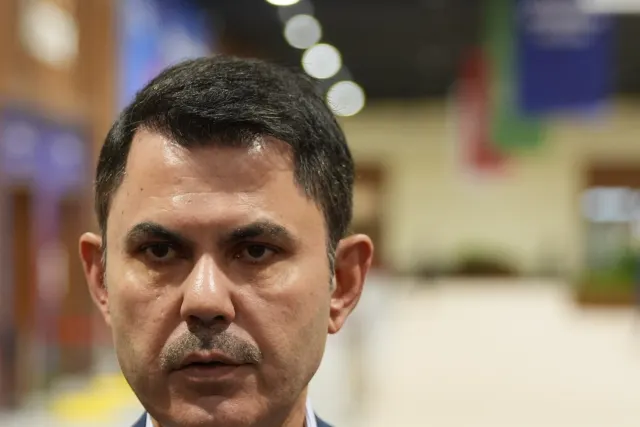
COP31 ended on Sunday 22 November without agreeing its main “cover decision”. After a fourth draft that did not mention coal, oil or gas, the European Union and other countries refused to endorse it, and COP31 president Murat Kurum told the closing session: “I understand that there is no agreement on this text. For that reason, these decisions have not been adopted” 12. The talks ran 44 hours past their scheduled close, making COP31 the longest UN climate conference on record, according to AFP 1.
Ireland’s climate minister, Darragh O’Brien, speaking for the EU, said the bloc would not endorse a decision “that does not even mention fossil fuels, which is the key driver of climate change” 13. Panama, the Marshall Islands, Vanuatu and Belize also rejected the text, AFP reported; CNN listed Norway among the objectors 13. The final text referred only obliquely to the 2023 Dubai agreement described below 1. Saudi negotiator Mohammad Ayoub, speaking for the Arab Group, said countries should “select from these solutions depending on their national circumstances” 1.
Chris Bowen, the Australian minister who led the negotiations, blamed “unbridgeable red lines” 2. Kurum said there would be no new draft: “We will not be carrying out work on a new text in an environment where there is no consensus” 2. The explainer below, written while the talks were still running, sets out what the drafts cut and how one objection can block a deal.
The draft climate deal on the table in Antalya does not mention coal, oil or gas 45. Three days earlier, the first version called for “accelerated action to phase out fossil fuels” 64. The UN summit was due to close on Friday 20 November. As of Saturday afternoon it was running an extra day without agreement, and Australia, which chairs the formal talks, was preparing a revised draft, according to AFP and RTÉ 78.
COP31, the 31st annual Conference of the Parties to the UN climate convention, is hosted by Türkiye, whose minister Murat Kurum is co-president alongside Australia’s climate minister Chris Bowen, who leads the negotiations 910. The fight is over the “cover decision”, the political summary text that nearly 200 governments must accept together 1011.
Triple Frontiers read the 18-page first draft that the UN climate secretariat published on 16 November and set it beside the decision agreed in Dubai in 2023 612. The revised text of 19 November is described below from reports by RTÉ, Agence Europe and Climate Home News 4913.
What did countries agree in Dubai?
At COP28 in 2023, governments adopted decision 1/CMA.5, the outcome of the first “global stocktake”, a five-yearly review of progress under the Paris Agreement 12. Its paragraph 28 calls on countries to contribute “in a nationally determined manner” to a list of global efforts 12.
Item (d) on that list reads: “Transitioning away from fossil fuels in energy systems, in a just, orderly and equitable manner, accelerating action in this critical decade, so as to achieve net zero by 2050 in keeping with the science” 12. The next item names carbon capture among technologies to speed up, and paragraph 29 says “transitional fuels” can help while ensuring energy security 12.
In plain words, Dubai set a direction, not a deadline: each country decides its own share 1210.
What did the first Antalya draft add?
The 16 November text went further than Dubai. Paragraph 65 reaffirmed paragraph 28 and urged countries to speed up “transitioning away from fossil fuels in energy systems” 6. Paragraph 66 used stronger words, calling for action “to phase out fossil fuels, including through the immediate transition away from fossil fuels in energy systems” 6.
It also welcomed Brazil’s COP30 roadmap for transitioning away from fossil fuels, said tripled adaptation finance “should reach at least USD$120 billion”, and asked countries to help raise electricity’s share of final energy use to 35 per cent by 2035 6. A separate paragraph set a goal for carbon capture of at least 500 million tonnes of carbon dioxide a year by 2035 6.
Opposition was immediate. The Arab Group and Russia rejected the draft, opposing language that targets specific energy sources and the 35 per cent target, while the Like-Minded Developing Countries, a negotiating bloc of developing nations, said it crossed their red lines, according to the Earth Negotiations Bulletin 14.
What did the 19 November rewrite remove?
The second draft runs to nine pages and 80 paragraphs, against 18 pages for the first 94. RTÉ reported that it contains no explicit reference to fossil fuels: both the call to accelerate the Dubai transition and the phase-out proposal were cut 4. Reuters reported that the references were removed after objections from Saudi Arabia and other major oil and gas producers 5.
The welcome for Brazil’s roadmap also went 413. So did the $120bn adaptation figure, money to help poorer countries cope with climate impacts 45. RTÉ and UN News reported that the pledge to triple adaptation finance stays, with the method for counting it left for later; Agence Europe reported that the acknowledgement of that pledge was dropped 4159.
The 35 per cent electrification goal survives in softer wording, and the call to accelerate “clean” electrification was removed 49. Some countries objected that the text does not require the extra electricity to come from clean sources rather than coal or gas 10. France’s ecological transition minister Monique Barbut noted that several paragraphs still promote carbon capture technologies 11.
The new text does recognise that warming is projected to exceed the Paris goal of 1.5C 415.
How does this compare with COP30?
COP30 in Belém, Brazil, ended in November 2025 without any mention of fossil fuels in its decision, AFP noted 10. Brazil said a roadmap would follow separately, but its own presidency conceded it “won’t carry the same weight” as a negotiated deal, the Associated Press reported 16. At the time, Panama’s negotiator Juan Carlos Monterrey Gomez said: “A climate decision that cannot even say ‘fossil fuels’ is not neutrality, it is complicity” 16.
The 19 November Antalya draft repeats the Belém outcome and also drops the Belém roadmap that the first draft had welcomed 46. Outside the formal text, six European countries have published national roadmaps for leaving fossil fuels and 21 others have said they will, the Earth Negotiations Bulletin reported 17.
Who wants the words back, and who resists?
A group led by France and Panama, with Belgium, Côte d’Ivoire, Finland, Greece, Guatemala, Spain, Sweden and Vanuatu, told the presidency on Friday that the text was “not good enough” 11. “It is not acceptable to have a COP or a cover document that does not even mention fossil fuels,” said Panama’s environment minister, Juan Carlos Navarro 511. Barbut called the omission a “black mark” 10. Navarro has since accused a “petroleum mafia” of blocking progress, and Panama now wants the text to cap oil production 7188.
EU climate commissioner Wopke Hoekstra said the EU would judge the draft against three tests, including whether it implements existing agreements, and declined to give an immediate verdict 4.
Bowen, for the hosts, said: “We will be consulting and negotiating until it is very clear to us that we have a consensus” 10. Asked about opposing demands, he said: “Well, red lines – that’s how negotiations work” 19.
Saudi Arabia has been a main actor blocking fossil fuel phase-out language, Middle East Eye reported, citing the Guardian’s sources; the kingdom reportedly wants carbon capture strongly referenced 2019. Its energy minister, Prince Abdulaziz bin Salman, told the summit on 11 November that “the quest for carbon neutrality without guaranteeing energy security can undermine our efforts” 21.
How can one country block a deal?
UN climate decisions are normally adopted by consensus, so a single formal objection could delay or derail the final deal, UN News explained 11. In practice, a text goes through when no government formally objects 11. The first Antalya draft itself describes the process as “consensus based” 6.
That gives Panama leverage. Navarro wrote that Panama will not join any consensus and will formally object in the closing plenaries to decisions it finds unsatisfactory, Agence Europe reported 9. Overruns are common: the last COP to finish on schedule was in Italy in 2003, the Guardian noted 19.
What did the Iran war change?
AFP reported that the war in Iran and an oil price shock had sharpened divisions over energy security and fossil fuels at Antalya 1021. The first draft acknowledged this directly: paragraph 26 said geopolitical tensions had caused “volatility in global energy markets and fossil fuel supply chains, with implications for energy security” 6.
Both camps now use that argument. The hosts present electrification as an energy-security measure, and the draft says it brings “significant benefits” for energy security and emissions 106. Saudi Arabia uses energy security to argue against rushing the exit from fossil fuels 21. Our report on the International Energy Agency’s outlook sets out the scale of the oil shock behind this debate 10.
What happens next?
The closing plenary was suspended on Friday night, and Kurum promised a third version of the text for Saturday morning 2218. “We are close to the finish line but not there yet,” he said 18. RTÉ’s update on Saturday afternoon still described Thursday’s nine-page text as the latest UN draft 8.
The EU has hardened its line. “Clearly there’s no compromise yet,” Hoekstra told reporters on Saturday, adding: “It’s better to have no deal than to have a bad deal” 8. AFP quoted him as saying: “We are not going to give up easily” 7. Ireland’s minister Darragh O’Brien said about 130 countries backed the EU position and that “today will tell whether a deal can be done or not” 8. Bowen has said “no one has said to me, let’s give up and go home” 22.
Another fight remains over science: dozens of countries want the next reports of the Intergovernmental Panel on Climate Change (IPCC), the UN’s climate science body, ready before the 2028 global stocktake, while a smaller group including Saudi Arabia and India wants them postponed to 2029, according to AFP 106.
The first draft invited the IPCC to deliver all of its next assessment “in time to inform the second global stocktake” 6. If Panama keeps its word, the decisive moment will come in the closing plenary, when the presidency asks whether any country objects 911.
Sources and references
- ArticleAFP via Phys.org, “COP31 fails to agree on climate deal in chaotic finale”, 22 November 2026. Link
- ArticleNBC News, “COP31 climate talks break down after angry dispute over fossil fuels”, 22 November 2026. Link
- ArticleCNN, “Global climate summit collapses as countries fail to agree on moving away from fossil fuels”, 22 November 2026. Link
- ArticleRTE (George Lee), “COP31 draft climate deal removes mention of fossil fuels”, 19 November 2026. Link
- ArticleReuters via Yahoo News Singapore, “COP31 climate talks spill into overtime as nations quarrel over fossil fuels (Reuters, Ezgi Erkoyun and Valerie Volcovici)”, 20 November 2026. Link
- Official documentUNFCCC / COP31 Presidency, “DRAFT TEXT prepared under COP 31 Presidency consultations on Presidency-led Party-driven cover decision (unedited version 16/11/2026 12:40)”, 16 November 2026. Link
- ArticleETV Bharat (AFP), “Countries Race To Secure COP31 Deal After Fossil Fuel Row (AFP)”, 21 November 2026. Link
- ArticleRTÉ, “EU climate envoy says ‘no compromise yet’ on COP31 deal (George Lee)”, 21 November 2026. Link
- ArticleAgence Europe, “Second COP31 draft decision raises doubts about states’ ability to agree on climate crisis response”, 19 November 2026. Link
- ArticleAFP via The Manila Times, “Crunch time for COP31, but no agreement in sight (AFP)”, 21 November 2026. Link
- ReportUN News, “COP31: Countries demand stronger climate deal as talks in Antalya reach final day”, 20 November 2026. Link
- Official documentUNFCCC, “Decision 1/CMA.5, Outcome of the first global stocktake (FCCC/PA/CMA/2023/16/Add.1)”, 15 March 2024. Link
- ArticleClimate Home News, “COP31 Bulletin Day 10: New draft keeps electrification goal but drops fossil fuel references”, 19 November 2026. Link
- ReportIISD Earth Negotiations Bulletin, “Earth Negotiations Bulletin Vol. 12 No. 908 (COP 31 #7), covering 16 November 2026”, 17 November 2026. Link
- ReportUN News, “COP31: Ambition goes missing as fossil fuel language drops from draft deal”, 19 November 2026. Link
- ArticleAP via PBS NewsHour, “COP30 climate talks end in Brazil without roadmap to phase out fossil fuels (AP)”, 22 November 2025. Link
- ReportIISD Earth Negotiations Bulletin, “Earth Negotiations Bulletin Vol. 12 No. 911 (COP 31 #10), covering 19 November 2026”, 20 November 2026. Link
- ArticlePBS NewsHour (AP), “Activists, leaders criticize COP31 climate talks as fossil fuels go unmentioned in draft deal (AP)”, 20 November 2026. Link
- ArticleThe Guardian via AOL UK, “Cop31 talks go into overtime as fossil fuels vanish from draft deal (The Guardian: Readfearn, Harvey, Gayle)”, 20 November 2026. Link
- ArticleMiddle East Eye, “Cop31 draft agreement ‘the worst ever’, campaigners warn (Katherine Hearst)”, 20 November 2026. Link
- ArticleAFP via Dawn, “World urged to tackle fossil fuels but big names skip COP31 (AFP)”, 11 November 2026. Link
- ArticleHealth Policy Watch, “COP31 Draft Deal Drops Fossil Fuels References as Final Session Goes Into Overtime”, 20 November 2026. Link
Sources and references are provided for transparency and further reading. Allegations and claims are attributed to their respective sources. Triple Frontiers distinguishes reported allegations from independently established facts.
The Frontier Brief
The week’s essential international reporting and new investigations, every Friday.