COP31 climate talks collapse without a main deal, the first such failure since Copenhagen
The Antalya summit closed on 22 November after the EU and others rejected a final text that never mentioned fossil fuels. We trace how the wording went from Glasgow's coal "phase down" to nothing, compare it with Copenhagen, and explain what still binds countries.
ANTALYA The UN climate summit in Antalya, Turkey, ended on Sunday 22 November without agreeing its main political text, after the European Union and others rejected a final draft that did not mention fossil fuels 12. It is the first time since Copenhagen in 2009 that UN climate talks have failed to adopt a deal agreed by all, according to AFP and Reuters reporting carried by RTÉ, and CNBC 12.
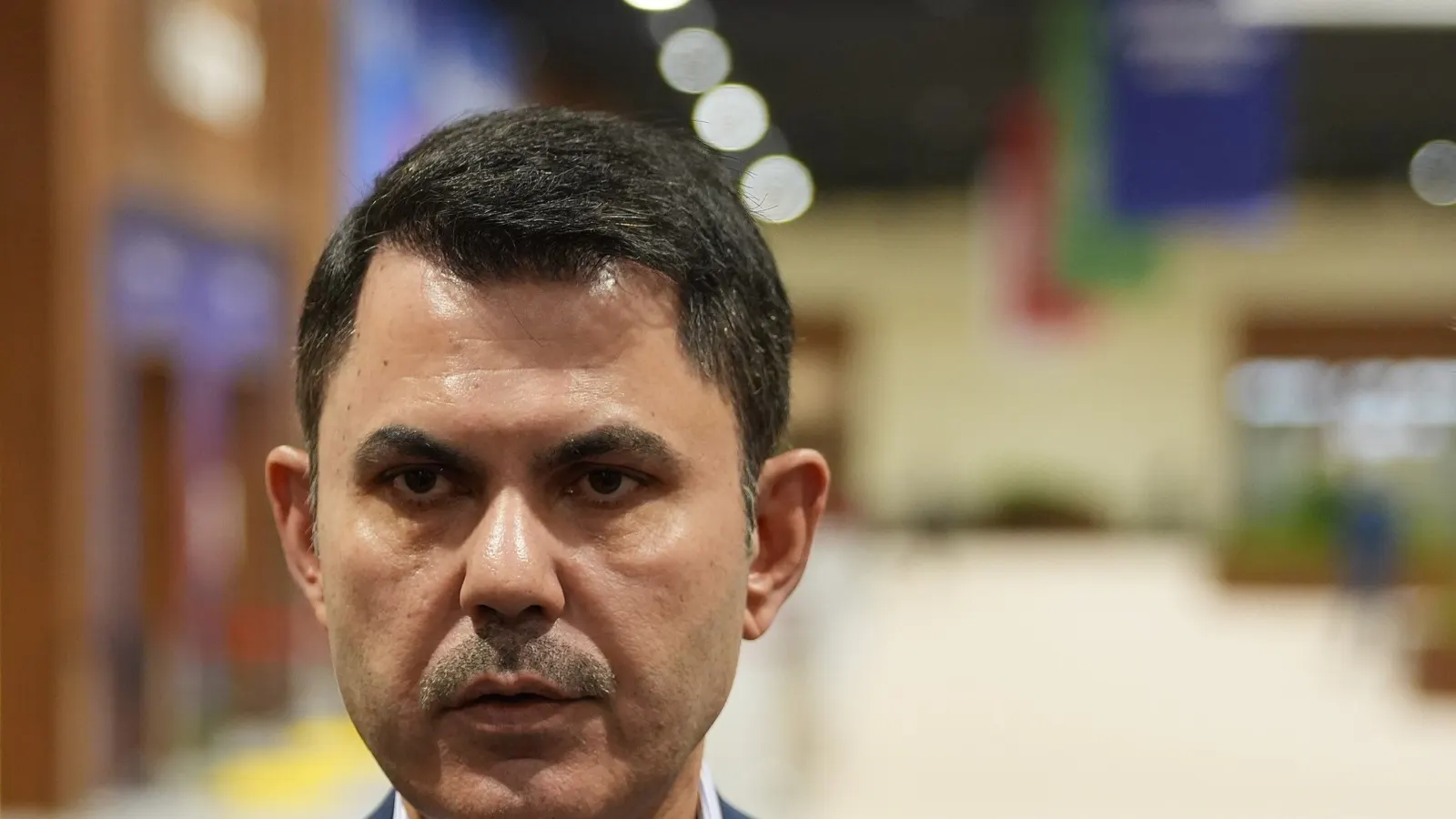
The conference, known as COP31 (the 31st “conference of the parties” to the UN climate convention), ran two days past its scheduled Friday close, the longest on record 13. Turkey’s environment minister Murat Kurum, who chaired it, told the closing session: “There is nothing to do, we did all that we could” 2. He added: “There will be no new text from now on” 2.
The talks did not collapse entirely. The joint Turkish and Australian presidency passed narrower decisions, including one on the “just transition” for workers in high-carbon industries, and others on the Adaptation Fund, carbon markets and transparency 45. What failed was the “cover decision”, the overarching political statement known as the Antalya pact 46.
Who said no, and why
Ireland’s environment minister, Darragh O’Brien, speaking for the EU, said the bloc would not endorse “an Antalya pact that does not even mention fossil fuels, which is the key driver of climate change” 4. Panama, the Marshall Islands, Vanuatu, Norway and Belize also told the conference they would not accept a deal without it 6.
The draft called for tripling climate finance without saying from what baseline, and set a goal of raising electricity’s share of world final energy use to 35% by 2035, from about 23% now 12. It also called for faster development of carbon-removal technologies, which critics feared could justify continued oil production 2.
The other side was organised too. Saudi Arabia and Russia led a group of oil-producing countries that vowed to veto any decision mentioning fossil fuels, the Guardian reported 6. Speaking for the League of Arab States, Saudi Arabia defended the text’s references to carbon capture and storage 3. Pakistan argued that the rest of the package should not be sacrificed because some countries objected to parts of it: “Climate action is not a menu from which we can select only what suits us” 4.
Australia’s climate minister Chris Bowen, the summit’s president of negotiations, called the result “very disappointing” and named fuels and finance as the dealbreakers 1. “I would have been happy with [a] transition away from fossil fuels being in the text, but that was not going to get support,” he said 6. UN Secretary-General António Guterres said: “There may be no consensus in the negotiating room. There is no ambiguity in the science” 3.
From Copenhagen to Antalya
At Copenhagen in December 2009, unanimous approval was out of reach, so the conference “took note” of the Copenhagen Accord rather than adopting it 7. That wording let individual countries sign up to the accord, which was not legally binding 7. Antalya produced not even that: its main text was not adopted, and Kurum said no new one would follow 23. Li Shuo of the Asia Society Policy Institute called the outcome a major setback and compared it with Copenhagen, according to Down To Earth 5.
Antalya breaks a short run of summits that each named fossil fuels a little more directly 896. At Glasgow in 2021, a last-minute change put forward by India replaced a “phase out” of coal power with a “phase down” 10. Many delegates still counted the coal wording as a win because it was the first such mention in any UN climate agreement 8.
At Dubai in 2023, nearly 200 countries approved a call for “transitioning away from fossil fuels”, the first time those words appeared in a UN climate agreement 9. The decision on the first “global stocktake”, the five-yearly review of progress, calls for “transitioning away from fossil fuels in energy systems, in a just, orderly, and equitable manner” 11.
The final Antalya text only referred back to the Dubai decision and did not say “fossil fuels”, which angered many countries 6. Belgium’s climate minister Jean-Luc Crucke said: “It’s not the end of multilateralism, but there has to be courage to say no” 1. Our earlier report compares the Antalya drafts in detail.
What still binds countries
The failure does not erase obligations agreed at previous UN conferences or the legal and technical frameworks for climate action 12. The 2015 Paris Agreement is a legally binding treaty, in force since November 2016 12. Under it, each country is expected to submit an updated national climate plan, known as a nationally determined contribution, every five years 12.
The Dubai pledge to transition away from fossil fuels still stands and has not been repudiated, the Guardian noted 13. Developed countries such as Australia also remain under Paris obligations to provide climate finance to poorer nations 13.
What happens next
Formal negotiations resume at the Bonn climate conference in June 2027 5. COP32 will be held in Addis Ababa, Ethiopia, in 2027 35. Decisions on how the new just transition mechanism will be structured were deferred to that summit 5. Simon Stiell, the UN climate secretariat’s executive secretary, said: “The world cannot afford a repeat of this moment” 3.
The fallout has started in Australia. As of Monday 23 November, according to the Guardian, Prime Minister Anthony Albanese had defended Bowen, blaming “difficult geopolitical times”, while opposition energy spokesperson Dan Tehan said Bowen should “resign immediately” 6.
Sources and references
- ArticleRTÉ (with AFP/Reuters), “COP31 climate talks collapse as EU and others reject deal”, 22 November 2026. Link
- ArticleCNBC, “COP31 climate talks break down as EU and others reject deal”, 22 November 2026. Link
- ReportUN News, “COP31 ends without climate pact as UN chief warns there is ‘no ambiguity in the science’”, 22 November 2026. Link
- ArticleThe Guardian, “Cop31 climate talks break down as key deal rejected”, 22 November 2026. Link
- ArticleDown To Earth, “COP31 ends with no major deal, divisions over fossil fuels and climate finance deepen”, 22 November 2026. Link
- ArticleThe Guardian, “’Difficult geopolitical times’: Albanese defends Bowen after Cop31 deal failure”, 23 November 2026. Link
- ArticleInside Climate News, “Conference of Parties ‘Takes Note Of’ Copenhagen Accord”, 19 December 2009. Link
- ArticleYale Environment 360, “UN Climate Agreement Is Reached, But Crucial Issues Remain Unresolved”. Link
- ArticleYale Environment 360, “Climate Conference Delivers Agreement to Transition Away from Fossil Fuels”. Link
- ArticleNPR, “At COP26, nations strike a climate deal with coal compromise (AP)”, 13 November 2021. Link
- ReportCenter for Climate and Energy Solutions (C2ES), “Considerations for a Transitioning Away from Fossil Fuels Roadmap”, April 2026. Link
- ReportUnited Nations, “The Paris Agreement”. Link
- ArticleThe Guardian, “Finance, fossil fuels and the ‘overshoot’: six key takeaways from Cop31”, 22 November 2026. Link
Sources and references are provided for transparency and further reading. Allegations and claims are attributed to their respective sources. Triple Frontiers distinguishes reported allegations from independently established facts.
The Frontier Brief
The week’s essential international reporting and new investigations, every Friday.