IEA says Iran war has reshaped energy for good as Hormuz risks redraw oil and gas trade
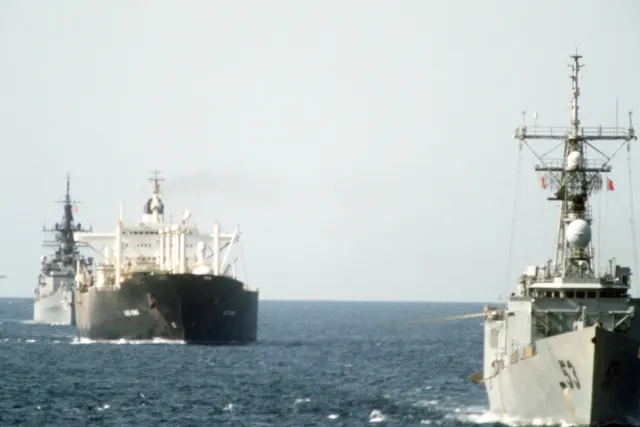
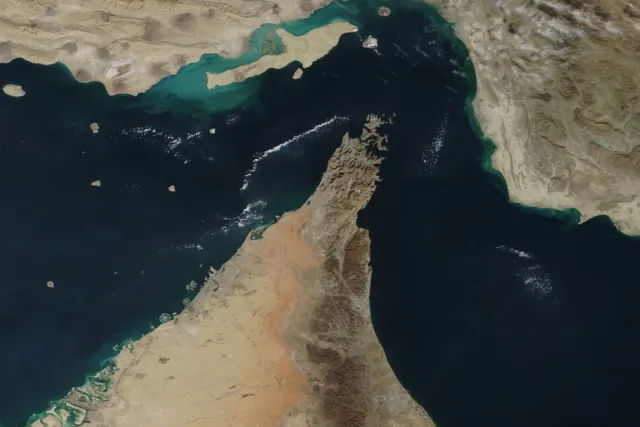
The International Energy Agency's World Energy Outlook 2026, published on 19 November, says the length of the Hormuz disruption will decide how far the energy system changes. In one case it explores, oil flows through the strait fall from 20 million barrels a day before the war to under 2 million by 2035.
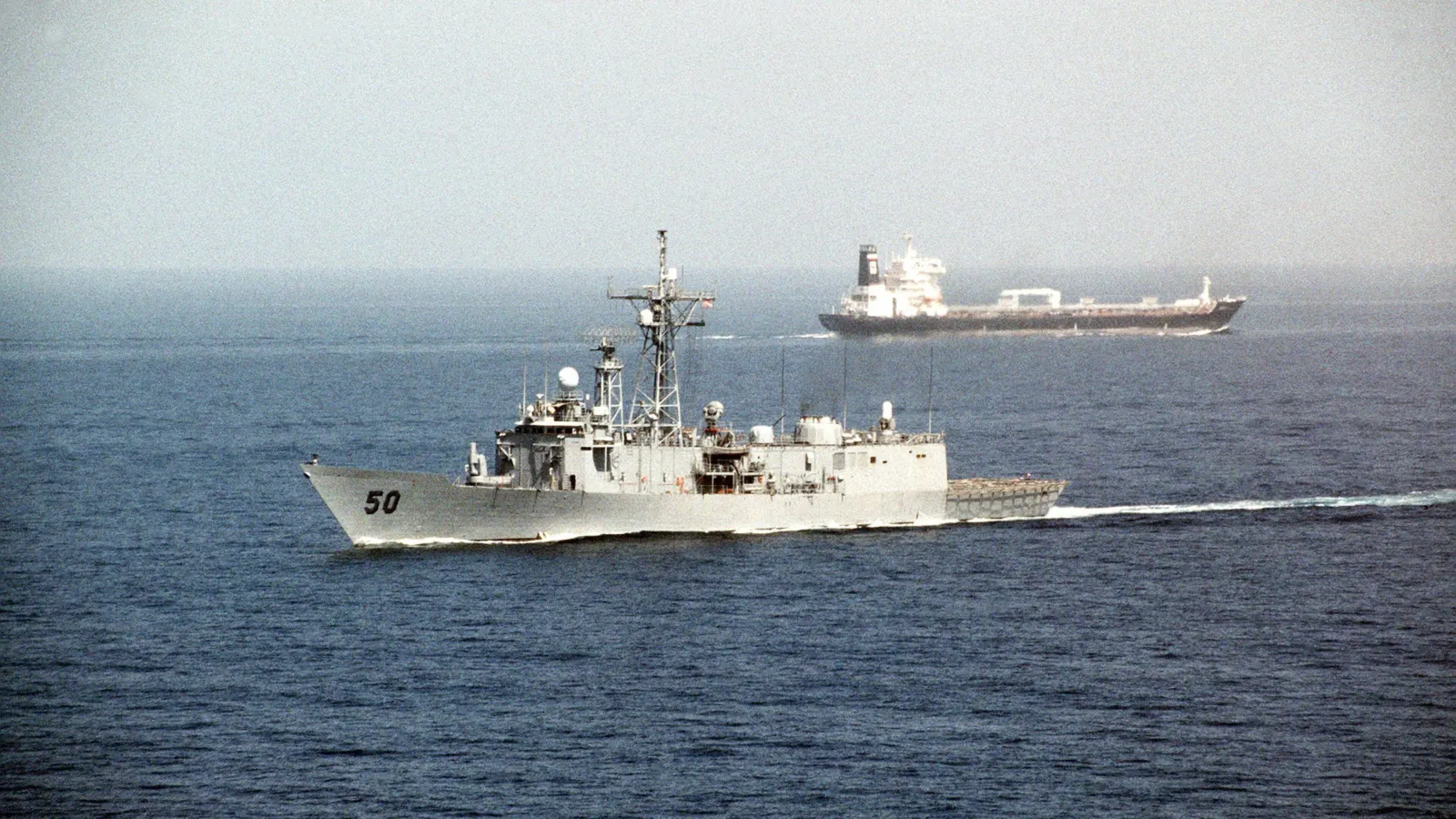
PARIS The International Energy Agency published its World Energy Outlook 2026 on Thursday 19 November, saying the disruption to shipping through the Strait of Hormuz caused by the Middle East conflict is the largest energy supply shock in history 12. The Paris-based agency said the crisis is likely to leave lasting marks and to reinforce energy security and affordability as guiding principles for governments 1.
“The Hormuz crisis has delivered a huge shock to the system,” said Fatih Birol, the IEA’s executive director 1. “I don’t see any credible pathway for the energy world to return to the way it was before,” he said 13. He added that “the longer the crisis lasts, the deeper the effects will be” 13.
The report’s headline projection concerns the strait itself. In a case where risks to shipping through Hormuz are prolonged, investment, alternative supply and lower demand could reduce the need for oil flows through the Strait from 20 million barrels a day (mb/d) before the crisis to 8.5 mb/d in 2030 and under 2 mb/d by 2035, the IEA said 134. The agency presents this as a scenario, not a forecast 4.
The scale of the shock
According to the report’s executive summary, the disruption has caused cumulative losses of 2.8 billion barrels of oil and 60 billion cubic metres of gas supply from the Gulf 56. Diesel prices hit record levels above $200 a barrel, the summary says 5.
Spending on imported oil and gas in 2026 is set to rise to $1.6 trillion, 25 per cent higher than in 2025, the IEA said 5. Before the war, about a fifth of the world’s traded oil passed through the strait, the Associated Press reported 3. In March the IEA coordinated the emergency release of 400 million barrels of crude oil stocks 3.
Five ways forward
The outlook sets out a Current Policies Scenario (CPS), a Stated Policies Scenario (STEPS), an Additional Response Case (ARC), a Low Hormuz Case (LHC) and a Net Zero Emissions by 2050 Scenario 52. All are projections under stated assumptions, not predictions 54.
The Low Hormuz Case asks whether the energy world could manage without transit through the strait 5. It assumes new pipelines that bypass Hormuz, lower demand from importers and higher oil output outside the Gulf; around 7 mb/d of new pipeline projects are under construction or under consideration, the summary says 5. Even in this case, the IEA said, the Middle East would remain the world’s largest exporter of oil to international markets 15.
The summary says Gulf LNG exports have no feasible bypass routes, and that almost 90 per cent of the liquefied natural gas passing through the strait was destined for Asia 5.
Oil demand and the LNG wave
The scenarios differ on oil 5. In the CPS, demand for both oil and gas continues to rise 5. In the STEPS, oil demand levels off at around 103 mb/d by 2030 before entering a slow decline, according to the executive summary 5.
In the Additional Response Case, in which governments go further on energy security, oil demand falls to 97 mb/d in 2035, about 4.4 mb/d below the STEPS 4. Gas demand in that case is more than 300 billion cubic metres lower than in the STEPS in 2035 64. Energy-security responses could cut global oil demand by more than 4 per cent by 2035, the IEA said 64.
On gas, the summary says that if all planned projects, mainly US-led, go ahead, LNG supply would expand by more than 50 per cent 5. In the CPS all the new LNG finds a home, mainly in Asia 5. If the conflict is resolved, oil and gas supply could rebound, “particularly as a delayed wave of liquefied natural gas supply hits the market”, which could result in a buyer’s market for oil and gas, the press release says 14.
The IEA also flagged the opposite risk. In the ARC, importers become wary of gas and invest less in import infrastructure, which could leave a “huge and lasting imbalance” if Middle East LNG returns at scale 5. The agency warned that high prices are likely to return, given the cyclical nature of markets 5.
How it unfolded
-
Key moment. The Iran war begins and disrupts shipping through the Strait of Hormuz.
-
The IEA coordinates an emergency release of 400 million barrels of crude oil stocks.
-
Gulf crude exports recover to more than 80% of pre-war levels, according to the IEA.
-
Birol writes in The Economist that confidence in Hormuz has been crushed.
-
Key moment. The IEA publishes the World Energy Outlook 2026.
Solar, nuclear and coal
The IEA said “the biggest beneficiaries from a pivot towards domestic energy resources are set to be renewables”, led by solar PV, together with nuclear power 13. Energy efficiency and biofuels could also gain ground 1.
Solar PV generation rose by 600 terawatt-hours in 2025, according to the summary 5. Renewables’ share of electricity generation rises from 33 per cent today to 45-50 per cent by 2035 in the CPS and STEPS 5. Nearly 90 gigawatts of new nuclear capacity was under construction, the summary says 5.
Energy security concerns may lead nations to rely on coal as a fallback option, AP reported 3. “Energy security concerns could encourage governments to rely on coal for longer,” the IEA said, pointing to Asian oil and gas importers with significant domestic coal resources 1. AP described coal-rich Asia as having gone into energy triage when the war cut off the strait 3. Even so, the summary says coal demand gets a short-term boost from the crisis but is in decline in all scenarios by 2030 5.
“In pursuit of greater energy security, countries must take care not to replace one dependency with another,” the press release says 1.
Electricity and cooling
Electricity accounts for around 23 per cent of final energy consumption today, and its share closes in on 30 per cent globally in all the exploratory scenarios, the IEA said 15. Electricity demand grows by more than 10,000 terawatt-hours over the next decade 5. Since 2019, global electricity demand has grown faster than the world economy 1.
For the first time, the IEA said, “energy needs to keep buildings cool are now overtaking energy needs for heating them” 13. Cooling demand increases by 1,700 terawatt-hours by 2035 in the STEPS 5.
“This is a unique convergence that sees electrification at the heart of crisis response,” Laura Cozzi, the IEA’s director of sustainability, told AP 3. AP reported that China’s electrification may grow from 32 per cent last year to 43 per cent by 2035 3.
Asia, Africa and the climate
India and Southeast Asia see the largest overall increase in energy needs, according to the summary 5. AP reported that India will account for more energy demand growth over the next decade than any other country 3.
The IEA said the crisis threatens to reverse recent progress on energy access, particularly in emerging and developing economies 1. Around 720 million people still live without electricity, the summary says 5.
On climate, current or stated policy trajectories lead to temperature outcomes ranging from 2.5C to 2.9C of warming, the IEA said 1. In the CPS, warming reaches around 2.9C in 2100; in the ARC it is 2.4C, against 2.5C in the STEPS 5. Birol said “energy security and energy transitions have never been so closely aligned” 1.
Reaction
Dave Jones, co-founder of Ember, told AP that “governments are only just beginning to get their head around just how much things will change” 3. Mohamed Adow of Power Shift Africa said: “This crisis has exposed the price of fossil fuel dependence” 3.
Michelle Manook of FutureCoal told AP that “for coal-rich economies, domestic coal remains an important energy security asset” 3. Rachel Cleetus of the Union of Concerned Scientists said: “The future of the energy system and our climate are inextricably intertwined” 7.
Latest
The outlook follows an essay by Birol in The Economist’s The World Ahead 2027, published on 18 November, in which he wrote that “confidence in the Strait as a safe and reliable corridor for energy and other goods has been crushed”, CNBC reported 8. Citing the IEA’s November oil market report, CNBC said Gulf crude exports reached more than 80 per cent of pre-war levels in October 8. Renewed US-Iran strikes this week broke a lull in direct fighting, CNBC reported 8.
At 6.45am US Eastern time on 18 November, Brent crude futures stood at $92.74 a barrel and US West Texas Intermediate at $85, according to CNBC 8.
Different Hormuz risks for importers and exporters
The IEA’s report treats the Hormuz crisis as a lasting break rather than a passing disruption, and ties the scale of change to how long shipping risks persist 1. For importers, its scenarios point towards domestic renewables, nuclear and, in parts of Asia, coal 15. For exporters, it sketches two risks at once: oil flows through the strait shrinking sharply if risks persist, and a delayed wave of LNG supply and a buyer’s market if the conflict ends 15.
Sources and references
- ReportInternational Energy Agency, “As an unprecedented shock reshapes the energy world, its duration will determine the scale of the change”, 19 November 2026. Link
- ReportInternational Energy Agency, “World Energy Outlook 2026”, 19 November 2026. Link
- ArticleAssociated Press (Anton L. Delgado, Sibi Arasu) via PBS NewsHour, “Iran war has permanently reshaped energy priorities, IEA report says”, 20 November 2026. Link
- ArticleIran International, “Iran war could cut global oil demand by over 4% by 2035 – IEA”, 20 November 2026. Link
- ReportInternational Energy Agency, “World Energy Outlook 2026: Executive summary”, 19 November 2026. Link
- ArticleTimes of Israel (agencies), “Iran war sparked ‘largest threat’ to energy security in history, says energy agency”, 19 November 2026. Link
- ArticleAssociated Press via BNN Bloomberg, “There is no going back ‘to the way it was before’ the Iran war’s energy shock, IEA says”, 19 November 2026. Link
- ArticleCNBC (Sawdah Bhaimiya), “IEA chief sees no ‘credible pathway’ back to pre-war normality in the Strait of Hormuz”, 18 November 2026. Link
Sources and references are provided for transparency and further reading. Allegations and claims are attributed to their respective sources. Triple Frontiers distinguishes reported allegations from independently established facts.
The Frontier Brief
The week’s essential international reporting and new investigations, every Friday.