The Iran war explained: how it started, where it stands, what comes next
From the twelve-day war of June 2025 to the blockade and tanker attacks of November 2026: how the US-Israeli war with Iran began, where it stands now and what to watch next.
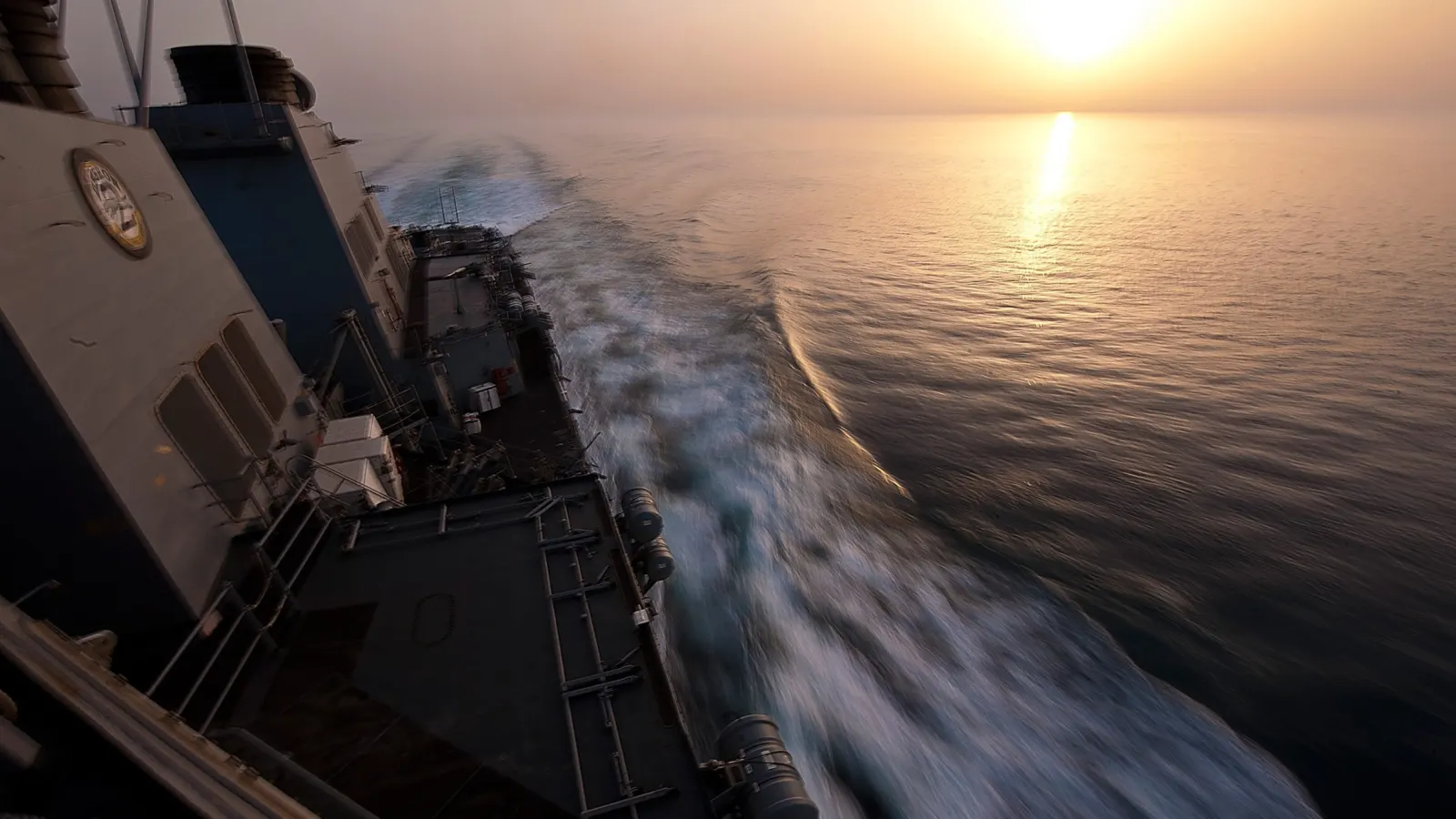
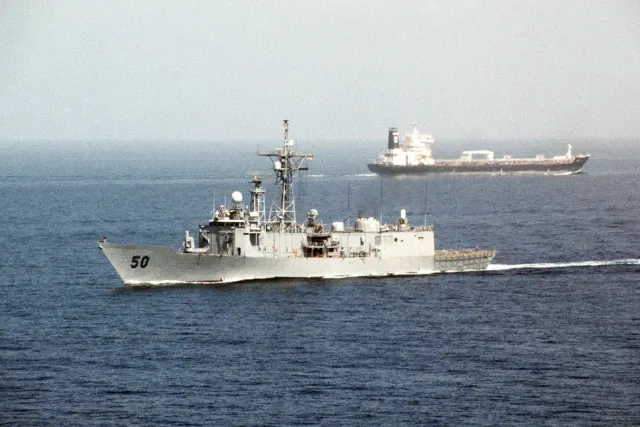
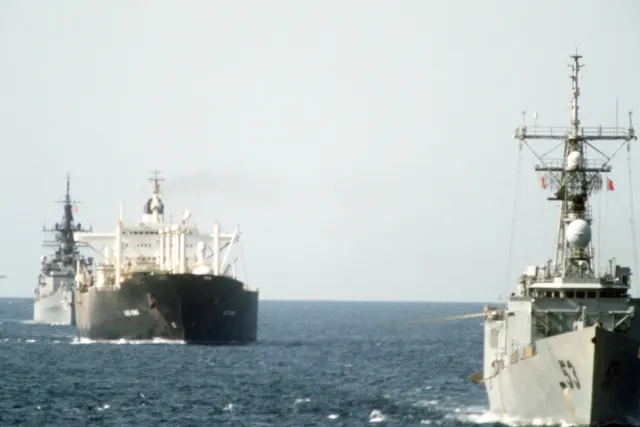
The United States and Iran remain at war, which began when US and Israeli strikes on 28 February 2026 killed Iran’s supreme leader, Ali Khamenei. The fighting is now mostly at sea and around the Gulf: Iran restricts and attacks shipping in the Strait of Hormuz, the US Navy blockades Iran’s ports, and the two sides trade drone and air strikes while Qatar tries to broker a deal. President Donald Trump said on 22 November that he was inclined to resume a full offensive if there is no agreement by the new year.
The short version
- In June 2025 Israel and Iran fought for twelve days and the US bombed three nuclear sites. A much larger US-Israeli war began on 28 February 2026.
- Ali Khamenei was killed on the first day of the 2026 war. His son, Mojtaba Khamenei, was named supreme leader in March.
- A Pakistan-mediated ceasefire in April and a US-Iran memorandum in June both broke down. The memorandum expired on 17 August without a deal.
- The Strait of Hormuz is open but far below normal. Ships cross it under fire: one tracker counted 37 ships attacked in October, the highest monthly total of the war.
- The US Navy has blockaded Iranian ports since 14 July, and Iran’s crude exports have been close to zero for months, according to shipping sources quoted by Reuters.
- Brent crude fell below $90 a barrel on 23 November, though the International Energy Agency (IEA) calls the Hormuz disruption the largest energy supply shock in history.
- UN sanctions on Iran returned in September 2025, but UN nuclear inspectors still cannot verify where Iran’s near-weapons-grade uranium is.
Where things stand
As of 24 November 2026:
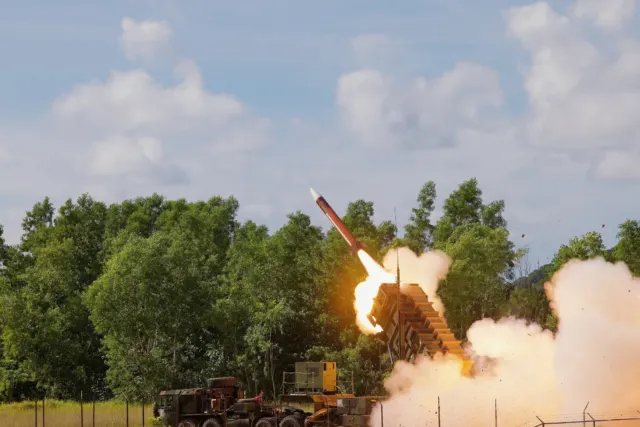
- Fighting. Iran’s Revolutionary Guards said they targeted US Patriot air-defence sites in Bahrain on 21 November; Bahrain said an Iranian attack set fire to a civilian industrial facility at Sitra and injured two people, ABC News reported on 22 November. Days earlier a US jet struck a missile site on Qeshm Island and Iran fired drones at Kuwait, as we reported.
- Shipping. Two Hong Kong-flagged tankers, the Torkel and the Arina, were hit off Oman on 21 November. The UK Maritime Trade Operations centre (UKMTO), a British naval reporting service, has recorded 106 incidents in the strait since 28 February, according to the Maritime Executive.
- Blockade. Iran’s foreign ministry spokesman, Esmaeil Baqaei, said on 23 November that Iran would use all available means against the US blockade and that Hormuz could reopen within two days if Washington met Iran’s demands, CBS News reported.
- Washington. Trump told Fox News on 22 November that he was leaning towards resuming strikes if no deal is reached by the new year, the Times of Israel reported. See who is pushing which way.
- Talks. A Qatari delegation held two hours of talks in Tehran on the evening of Friday 20 November, Iran’s deputy foreign minister Kazem Gharibabadi said (CBS News).
- Oil. Brent crude was trading at $89.99 a barrel on the afternoon of 23 November (New York time), down 2.8% on the day, CNBC reported. OPEC+ ministers meet on 29 November to set production quotas for 2027 (Reuters).
How we got here
- Israel launches a major air campaign against Iran, killing senior officials and nuclear scientists; Iran answers with waves of ballistic missiles (Congressional Research Service).
- The US strikes three Iranian nuclear sites, including the underground enrichment plant at Fordow, using B-2 bombers and GBU-57 bunker-busting bombs (CRS).
- Trump announces an end to hostilities. Iran’s health ministry later put its dead at 610 and Israel’s health ministry put Israel’s at 28 (Dawn, via AFP). See our twelve-day war explainer.
- Britain, France and Germany trigger the “snapback” of UN sanctions under the 2015 nuclear deal (E3 statement).
- Six UN Security Council resolutions against Iran are reinstated at 20:00 New York time (E3 statement). See our snapback explainer.
- Two days after a failed round of nuclear talks, the US and Israel attack Iran and kill Ali Khamenei; Iran fires on Israel and on US bases in Bahrain, Kuwait and Qatar (PBS NewsHour, via AP).
- Iran’s Assembly of Experts names Mojtaba Khamenei, 56, supreme leader; Trump calls him “unacceptable to me” (Fortune, via AP).
- IEA members agree to release 400 million barrels of emergency oil stocks as flows through Hormuz fall from about 20 million barrels a day to “a trickle” (IEA).
- Qatar’s Ras Laffan gas complex comes under Iranian fire again; QatarEnergy says the attacks have knocked out 17% of its LNG export capacity for three to five years (Khaleej Times).
- Pakistan announces a two-week ceasefire; Trump ties it to the “COMPLETE, IMMEDIATE, and SAFE OPENING of the Strait of Hormuz” (Al-Monitor).
- The US Navy begins blockading Iran-related oil exports (Reuters, via gCaptain).
- The United Arab Emirates says it will leave OPEC from 1 May (ABC7, via AP); our OPEC+ explainer traces the price swings.
- Pakistan says the “Islamabad MoU” between the US and Iran has entered into force, with Iran to reopen Hormuz and the US to lift its blockade (Anadolu).
- The US reimposes the blockade after the understanding collapses (Reuters, via gCaptain); a wave of US strikes follows (eNCA).
- The 60-day memorandum expires with no extension announced (Arab News).
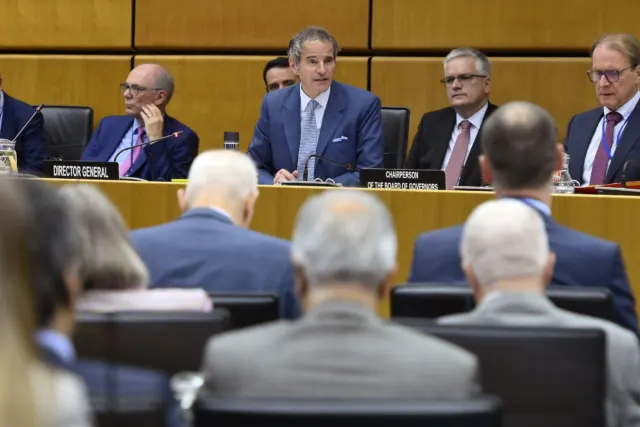
- The IAEA Board of Governors votes 23 to three to refer Iran to the UN Security Council over nuclear non-compliance (Gulf News).
- Reuters reports that 37 ships were attacked in October, the highest monthly total of the war (gCaptain). Our investigation logs the attacks ship by ship.
- US Central Command widens the blockade to ships taking Iranian cargo in ship-to-ship transfers at sea (Reuters, via gCaptain).
- Trump claims, without evidence, that Iran is “looking at gases, looking at bio” (Dawn).
- The tankers Torkel and Arina are struck off Oman (Maritime Executive), and an Iranian attack starts a fire at an industrial site in Bahrain (ABC News).
- Trump says he is inclined to renew the offensive if there is no deal by the new year (Times of Israel).
- A day after Iran announced scheduled power cuts because power plants are short of fuel (The National), its judiciary says the US owes Iran $290 billion in war damages (CBS News).
- Brent crude falls 2.8% to $89.99 a barrel, its lowest since 27 August, as traders weigh a coming supply surplus against continued attacks on shipping (Reuters via CNBC). OPEC+ ministers meet on 29 November to set 2027 quotas (Reuters).
Key numbers
| Figure | What it measures | Source and date |
|---|---|---|
| 20 million barrels a day | Oil flowing through the Strait of Hormuz before the 2026 war | IEA, 19 November 2026 |
| 2.8 billion barrels and 60 bcm | Cumulative oil and gas supply lost from the Gulf because of the war | IEA World Energy Outlook, 19 November 2026 |
| 18.4 million barrels a day | Gulf oil exports (excluding Oman) in October, 26% below pre-war levels | IEA Oil Market Report, 13 November 2026 |
| $136 to $93 | North Sea Dated crude, from its early-October high to mid-November | IEA, 13 November 2026 |
| $89.99 | Brent crude price, afternoon of 23 November (New York time) | CNBC, 23 November 2026 |
| 550 | Ship transits through Hormuz in October, the busiest month since the war began | Lloyd’s List Intelligence, 19 November 2026 |
| About 65% below normal | Hormuz traffic compared with pre-conflict levels | UKMTO, via Gulf News, 10 November 2026 |
| At least 25 | Seafarers killed in the region since late February, according to the IMO | Reuters via gCaptain, 11 November 2026 |
| 17% | Share of Qatar’s LNG export capacity knocked out by Iranian strikes, for three to five years | QatarEnergy, via Khaleej Times, 19 March 2026 |
| 440.9 kg | Iran’s uranium enriched to up to 60%, whose location the IAEA cannot verify | IAEA report, via Bloomberg, 15 November 2026 |
| At least 3,375 | People killed in Iran in the 2026 war, according to the head of Iran’s Legal Medicine Organization | Asharq Al-Awsat, 20 April 2026 |
| More than 4,300 | People killed by Israeli attacks in Lebanon since March, according to Lebanon | CBS News, 23 November 2026 |
Who’s who
United States
President Donald Trump said on 21 November that he wants a “permanent” agreement but that Iran would “break the deal the next day” (CBS News). Treasury Secretary Scott Bessent said on 23 November: “Iran’s economy is underwater, and its leaders are panicking” (CBS News).
Iran
Supreme Leader Mojtaba Khamenei, a cleric with close ties to the Revolutionary Guards, has never held elected office (Fortune, via AP). President Masoud Pezeshkian signed the June memorandum with Trump (Arab News). Foreign Minister Abbas Araghchi says the blockade “must be lifted rationally” and that Iran’s demands must be met before reopening Hormuz is discussed; those demands include an end to the war on all fronts, unfrozen assets and the lifting of oil sanctions (CBS News).
Israel
Benjamin Netanyahu is caretaker prime minister. His rival Gadi Eisenkot, leader of the Yashar party, was given the mandate to form a government with the backing of 67 lawmakers (Express Tribune). On 23 November Eisenkot said: “I see no direct and immediate threat from Iran today,” naming the enriched uranium stockpile as the gravest threat; Netanyahu warned against downplaying “serious and grave threats” (CBS News).
The Gulf states and mediators
Qatar is the main mediator; its foreign ministry spokesman Majed al-Ansari said its delegation would try to “narrow differences and reach an agreement to end the war” (Al-Monitor). Bahrain, which hosts the headquarters of the US Navy’s 5th Fleet, and Kuwait have been targeted repeatedly (PBS NewsHour).
Europe, the UN and the IAEA
Britain, France and Germany triggered snapback, saying “the reimposition of UN sanctions is not the end of diplomacy” (E3 statement). Russia and China voted against the IAEA referral and can veto new Security Council sanctions (Gulf News).
Hormuz is open, under fire, and busier than it looks
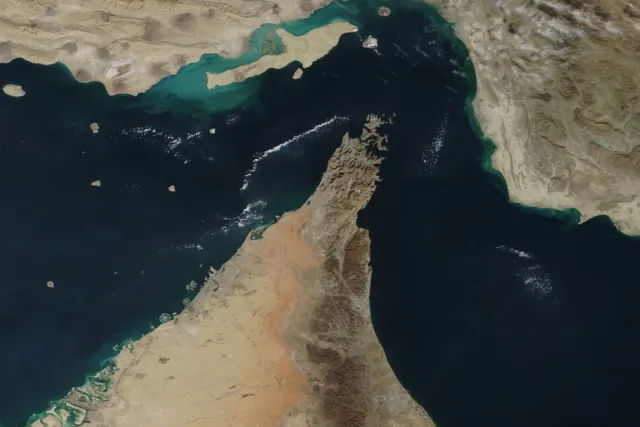
The strait is open, and ships are still being hit there every week. The ship-tracking firm Lloyd’s List Intelligence counted 550 transits in October and called it “the busiest month for Hormuz traffic since start of conflict” (Lloyd’s List Intelligence). The same month produced the war’s highest tally of attacks on ships, 37, according to data from the Washington Institute for Near East Policy reported by Reuters (gCaptain).
Traffic has recovered, but from a very low base. UKMTO’s weekly count to 10 November put traffic about 65% below pre-conflict levels and warned that the real number is probably higher because many ships switch their transponders off (Gulf News). The US says it has cleared mines from the main routes, and the Maritime Executive notes that most damage seen on ships does not match mine strikes (Maritime Executive).
For oil markets, the recovery matters more than the attacks. The IEA said Gulf exports reached 18.4 million barrels a day in October and that global supply had overtaken demand for the first time since the war began; North Sea crude had fallen 32% from its early-October high (IEA).
The calm in prices hides two weak points. On-land oil stocks are at their lowest since at least 2016, the IEA said, and European diesel is still about 77% above pre-war levels (IEA). Gas is harder still: Gulf LNG has no feasible bypass route, and almost 90% of the LNG that passed through the strait went to Asia (IEA World Energy Outlook). Our report on the IEA’s long-term outlook explains its scenario in which oil flows through Hormuz fall below 2 million barrels a day by 2035.
Two blockades, and who pays for them
The war at sea is a siege in both directions: Iran squeezes shipping through Hormuz, and the US Navy squeezes Iran’s. Since the blockade was reimposed on 14 July, Iran’s crude exports have stayed close to zero, though some liquefied petroleum gas and jet fuel has got out, shipping sources told Reuters, and on 18 November Central Command said ships taking Iranian cargo from other vessels at sea could be “intercepted, seized, or redirected” (Reuters, via gCaptain).
The cost inside Iran is becoming visible. The state power company Tavanir announced scheduled power cuts on 22 November because power plants are short of fuel, and government spokeswoman Fatemeh Mohajerani warned that the gas shortfall could reach 430 million cubic metres a day this winter, against about 300 million in previous years (The National). The report links the shortfall partly to Israeli strikes on the South Pars gas field in March. The IMF projects Iran’s economy will shrink by 6.1% this year, with inflation near 69% (Arab News).
Gulf neighbours pay too. Iranian strikes cut Qatar’s LNG export capacity by 17%. “For production to restart, first we need hostilities to cease,” QatarEnergy’s chief executive, Saad al-Kaabi, said (Khaleej Times). The war has also spilled into Yemen, where Saudi-led forces and the Houthi movement are exchanging strikes, and the UN says fighting in Yemen since July has killed more than 1,600 people (CBS News). In Iraq, the government has moved into the stronghold of the Iran-aligned militia Kataib Hezbollah, as we reported.
Deals signed, deals broken
The April ceasefire depended on Iran reopening Hormuz; Iran’s foreign minister said passage would be possible “via coordination with Iran’s Armed Forces”. Tehran said Washington had accepted continued Iranian control of the strait; Israeli officials said Iran had agreed to reopen it (Al-Monitor). The June memorandum, brokered by Pakistan and Qatar, gave negotiators 60 days to settle the nuclear programme, the blockade, sanctions and the strait (Arab News). Within a month the blockade was back.
The gap now is the order of steps. Tehran says Hormuz could reopen within two days once its demands are met, starting with the lifting of the blockade (CBS News). Its conditions also include major sanctions relief, the release of frozen assets and compensation for war damage; US officials have dismissed many of them as non-starters (Al-Monitor). On 23 November Iran’s judiciary said Iranian courts had awarded $290 billion against the US for damages from the war and earlier (CBS News).
The nuclear file sits underneath it all. Snapback restored UN sanctions over Russian and Chinese objections, but it did not bring inspectors back. More than a year after losing “continuity of knowledge”, the IAEA cannot verify the location of 440.9 kg of uranium enriched to up to 60%, and inspectors have visited only the Bushehr power plant in recent months (Bloomberg, via News Tribune).
Politics in Washington and Jerusalem is shifting. Democrats won both chambers of Congress on 3 November, and in Israel the man trying to replace Netanyahu says Iran is not an immediate threat (CBS News). The confrontation also reaches US courtrooms: on 17 November a Brooklyn judge jailed a Pakistani man for 27.5 years over a 2024 plot against US politicians that prosecutors say Iran’s Revolutionary Guards directed; Iran denies trying to kill US officials. Our investigation into why the UN cannot make Israel comply looks at how the war’s politics have cost Netanyahu his majority and Trump his Congress.
What to watch next
- 29 November: the seven OPEC+ countries meet to review oil output, according to OPEC’s 1 November statement.
- Israel’s coalition deadline: Eisenkot has 28 days from receiving his mandate, with a possible 14-day extension, to form an Israeli government (Express Tribune).
- The new year: Trump’s marker for a renewed offensive if there is no deal (Times of Israel).
Questions readers ask
Is the Strait of Hormuz open?
Yes, but traffic is well below normal and ships are still being attacked. UKMTO put traffic about 65% below pre-conflict levels in early November (Gulf News), the analyst Noam Raydan counted at least 22 confirmed attacks in and around the strait in November up to the 22nd (Maritime Executive), and Iran says it will not discuss fully reopening the strait until its demands are met.
Is the US at war with Iran?
Yes. The war that began with US-Israeli strikes on 28 February 2026 has not formally ended. US and Iranian forces exchanged strikes as recently as 17 to 21 November.
Who is Iran’s supreme leader now?
Mojtaba Khamenei, son of Ali Khamenei, who was killed on 28 February. Iran’s Assembly of Experts named him in March 2026 (Fortune, via AP).
Why did the US and Israel attack Iran?
The 2026 strikes followed a failed round of nuclear talks on 26 February. US officials said Iran was rebuilding its nuclear programme after the June 2025 strikes; Iran said it had not enriched uranium since June but had kept inspectors out of the bombed sites (PBS NewsHour, via AP).
Why are oil prices falling if the war is still going on?
Because Gulf supply has recovered faster than the attacks have cut it. The IEA said in November that global supply had overtaken demand for the first time since the war began (IEA).
What are snapback sanctions on Iran?
A clause in the 2015 nuclear deal let any party restore the UN sanctions the deal had lifted. Britain, France and Germany used it in August 2025, and six UN resolutions, covering arms, missiles and nuclear trade, returned on 27 September 2025 (E3 statement). Our snapback explainer has the detail.
Will the US strike Iran again?
Trump says he is inclined to if there is no deal by the new year (Times of Israel).
Sources
- CBS News — Live Updates: Iran says it will use all means to end U.S. blockade as Trump plays down escalating attacks, 23 November 2026
- CNBC — Oil slips with Mideast flows in focus, 23 November 2026
- The National — Iran imposes power cuts as energy crisis worsens, 23 November 2026
- Maritime Executive — Two More Tankers Hit Off Oman as Houthis Threaten Saudi Red Sea Ports, 22 November 2026
- ABC News — Iran live updates: IRGC says Bahrain attacks targeted US Patriot sites, 22 November 2026
- Times of Israel — Trump says he’s inclined to renew Iran offensive if no deal reached by end of year, 22 November 2026
- IEA — As an unprecedented shock reshapes the energy world, its duration will determine the scale of the change, 19 November 2026
- IEA — World Energy Outlook 2026: Executive summary, 19 November 2026
- Lloyd’s List Intelligence — Strait of Hormuz Brief: 19 November 2026, 19 November 2026
- Dawn — Trump claims Iran seeking biological weapons, threatens retaliation, 19 November 2026
- gCaptain (Reuters) — U.S. targets ship-to-ship transfers in expanded Iran maritime blockade, 18 November 2026
- Al-Monitor — Araghchi meets Qatari mediators in Oman; Trump threatens Iran over dirty bomb report, 17 November 2026
- News Tribune (Bloomberg) — Iran extends shutout of UN nuclear inspectors, 15 November 2026
- IEA — Oil Market Report, November 2026, 13 November 2026
- gCaptain (Reuters) — Tankers continue to burn in the Middle East despite hopes for de-escalation, 11 November 2026
- Gulf News — Hormuz shipping ‘below normal, but not stalled’: UKMTO, 10 November 2026
- Express Tribune — Israeli president tasks Eisenkot with forming new government, 9 November 2026
- OPEC — Saudi Arabia, Russia, Iraq, Kuwait, Kazakhstan, Algeria, and Oman reaffirm commitment to market stability, 1 November 2026
- Gulf News — IAEA board refers Iran to UN Security Council, 9 September 2026
- Arab News — Can the US force Iran into a deal through economic pressure alone?, 18 August 2026
- eNCA (AFP) — US reports ‘wave of strikes’ on Iran as war returns, 15 July 2026
- Anadolu Agency — Islamabad MoU between US, Iran enters into force with immediate effect: Pakistan, 18 June 2026
- ABC7 (AP) — United Arab Emirates says it will leave OPEC effective May 1, 28 April 2026
- Asharq Al-Awsat — Over 3,300 People Have Died in Iran During War, 20 April 2026
- Al-Monitor — Explainer: What US, Iran, Israel and Pakistan have said about ceasefire, 8 April 2026
- Khaleej Times — Iran attack wipes out 17% of Qatar’s LNG capacity for up to five years, QatarEnergy CEO says, 19 March 2026
- IEA — Oil Market Report, March 2026, 12 March 2026
- Fortune (AP) — Iran’s Assembly of Experts picks 56-year-old Mojtaba Khamenei as next Supreme Leader, 9 March 2026
- PBS NewsHour (AP) — U.S. and Israel launch a major attack on Iran; Trump says Supreme Leader Khamenei killed, 28 February 2026
- GOV.UK — E3 joint statement on Iran: activation of the snapback, 28 September 2025
- Dawn (AFP) — What are the death tolls in Iran, Israel from their war?, 28 June 2025
- Congressional Research Service — Israel-Iran Conflict, U.S. Strikes, and Ceasefire (IF13032), 26 June 2025
The Frontier Brief
The week’s essential international reporting and new investigations, every Friday.