What is OPEC+ deciding on 29 November, and will oil prices keep falling?
All 21 OPEC+ members meet on 29 November to set 2027 quotas from a new capacity review, as about 2 million barrels a day of cuts expire. Brent has fallen to about $90 despite attacks on tankers, and forecasters expect a surplus next year. Will oil prices go down further?

LONDON Oil prices are falling even though the war with Iran has not ended 1. Brent crude, the international benchmark, dropped 2.8% to $89.99 a barrel on Monday 23 November and touched $88.60, its lowest since 27 August, according to Reuters 1. Six days later, on 29 November, OPEC+ ministers meet to set oil production quotas for 2027 23. Here is what they are deciding, and whether oil prices are likely to go down further.
What is OPEC+ and who is in it now?
OPEC is the Organization of the Petroleum Exporting Countries. OPEC+ is the wider alliance of OPEC members and other producers such as Russia that coordinate output under a pact known as the Declaration of Cooperation 14.
The group is smaller than it was a year ago. The United Arab Emirates left OPEC and OPEC+ on 1 May 2026, after objecting for years to quotas that limited how much it could sell, the Associated Press reported 5. The UAE was pumping about 3.4 million barrels a day before the war began on 28 February, against a capacity analysts put at about 5 million 5. Jorge Leon of the consultancy Rystad Energy said at the time that OPEC was losing one of the few members able to raise output quickly, and that “A structurally weaker OPEC” would struggle to manage supply and prices 5.
Reuters counts 21 OPEC+ members now 2. Day-to-day policy has been run by seven of them: Saudi Arabia, Russia, Iraq, Kuwait, Kazakhstan, Algeria and Oman 3. On 1 November those seven kept their December targets at September levels and set their next meeting for 29 November 3.
What exactly is being decided on 29 November?
All 21 members meet on 29 November, when analysts expect them to set quotas and a production framework for 2027, Reuters reported 2. Two clocks run out at the same time.
First, the group’s current production levels were fixed only “until 31 December 2026”, according to OPEC’s statement from its last full ministerial meeting a year ago 4. A layer of cuts of about 2 million barrels a day, covering most members, expires with them 2. The seven core members had already finished returning a separate 1.65 million barrel-a-day cut in September 2.
Second, the 2027 quotas are meant to rest on new “baselines”, the reference levels from which each country’s quota and any cut is calculated 2. In November 2025 OPEC+ approved a mechanism to measure each member’s “maximum sustainable production capacity” and use it as the reference for 2027 46. Saudi Arabia’s energy minister, Prince Abdulaziz bin Salman, called the system “fair and transparent” and said it would reward countries that invest 7.
That review is now done. OPEC Secretary General Haitham Al Ghais chaired a closing video meeting and called it a “historic milestone”, according to Reuters and Interfax 89. The consultancy DeGolyer and MacNaughton assessed most members, while an India-based firm, Shri Chandra Energy & Data Processing, assessed Russia and Venezuela, Reuters reported, citing sources 8. The work finished later than planned because the Iran war disrupted capacity projects in the Middle East 8.
The UAE’s exit changes the arithmetic. Before it left, the UAE was the leading example of a member that had built capacity and wanted a bigger quota, while African members whose capacity had shrunk resisted cuts, Reuters reported in 2025 6. That country is now outside the room 5.
Why are oil prices falling during a war?
Because more oil is reaching the market, even with tankers still under attack 1011. The International Energy Agency (IEA), which advises consuming countries, said on 13 November that world supply rose by 2.3 million barrels a day in October to 105.4 million, “surpassing demand for the first time” since the war began 10. It expects the market to move into surplus in the last quarter of 2026, with “a more substantial build in 2027” 10.
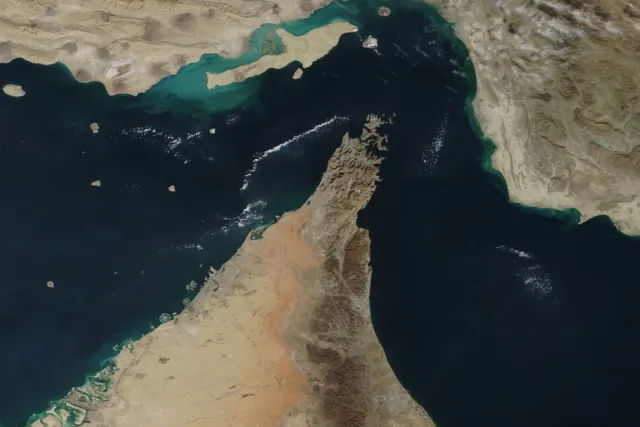
Gulf producers have found ways round the Strait of Hormuz. The IEA put October Gulf exports, excluding Oman, at 18.4 million barrels a day, 26% below pre-war levels, with crude exports at about 82% of pre-war volumes 10. Counting pipelines and ports outside the strait, Homayoun Falakshahi of the data firm Kpler told Rudaw on 16 November that Middle East exports were at “90 percent of pre-war levels” in November, about 15.3 million barrels a day 12. About 60% of that oil goes through Hormuz by tanker, against 80% before the war, he said 12. Traffic through the strait itself remains thin: Kpler data cited by The National in October showed about 19 commodity ships a day passing through, against more than 100 before the war 13.
The attacks continue. Oilprice.com reported Iranian drone strikes on tankers in Hormuz at about one clear hit a day as of 20 November 11. The Houthi movement in Yemen said it attacked a Saudi oil refinery on Sunday 22 November, and the UK Maritime Trade Operations centre reported several attacks on shipping in the Gulf and near the strait over that weekend 1.
Analysts quoted by Reuters say traders are giving more weight to signs of a glut than to the attacks 114. “Now it looks like the biggest fear is a surplus,” Phil Flynn of Price Futures Group said on 13 November 14. Brent fell 16% in the week to 6 November and about 2.5% in the week to 13 November 14, then about 5% in the week to 20 November, according to Oilprice.com: three weekly falls in a row, on our count 11. Reuters had reported Brent settling at almost $118 on 30 October, its highest since April 2, so Monday’s price was roughly a quarter lower 12.
What are the likely outcomes?
Rystad’s Jorge Leon said after the 1 November meeting that the group “faces an extremely difficult call for 2027”, because it must plan around the war, the pace of recovery through Hormuz and the size of any surplus once disrupted barrels return 2.
The choices follow from the two deadlines. Ministers can extend the roughly 2 million barrels a day of cuts into 2027, let them lapse, or replace them with new quotas based on the capacity review 24. Each has a cost. Letting cuts lapse would add oil to a market the IEA already expects to be in surplus 10. Holding back supply leaves room for producers outside the group, such as the United States, which JPMorgan expects to add barrels 1.
The baselines carry weight because capacity estimates feed directly into negotiations over how much each country can pump, Reuters reported 86. Russia, Iran and Venezuela, all under Western sanctions, were to be assessed separately or on their average output from August to October 2026 6. Iran’s crude exports have fallen “down to zero” under the US naval blockade, Kpler’s Falakshahi said 12. Most Gulf members are also pumping well below their current targets, Reuters reported 2.
Will oil prices keep falling?
Bank forecasts quoted by Reuters point lower, with a caveat about the war 1. JPMorgan expects oil to fall to the high $70s a barrel in the first half of 2027 because of a supply surplus 1. Bank of America said geopolitics would remain the main driver, with low global stocks leaving the world exposed to disruption 1. “It would be irresponsible to conclude that oil will now be supplied uninterruptedly and in vast volumes,” said Tamas Varga of the broker PVM 1.
For more on the longer-term picture, see our report on the IEA’s World Energy Outlook and our investigation into six weeks of attacks on merchant ships in Hormuz. Our earlier piece explains how OPEC+ unwound its cuts in 2025 and then lost control of prices.
What does it mean for fuel prices?
Pump prices are following crude down, slowly. In Britain the average litre of petrol peaked at 174.7p on 5 October and started the week of 10 November at 169.7p, according to the AA motoring organisation, which expects a further 10p cut 15. Diesel was 197.9p, only 2p below its record of 199.9p 15. A year earlier petrol cost 135.4p and diesel 143.1p, the AA said 16. Across Europe, the IEA said diesel prices had fallen 11% from their October peak but were still about 77% above pre-war levels 10.
In the United States, the national average for regular petrol fell below $4 a gallon for the first time since July, the motoring group AAA said on 12 November 17.
For where the war itself stands, see our Iran war explainer and our 23 November report on President Donald Trump’s comments about resuming strikes. The OPEC+ ministers meet on Sunday 29 November 23.
Sources and references
- ArticleCNBC (Reuters), “Oil prices fall amid equity sell-off, though Iran war attacks limit losses”, 23 November 2026. Link
- ArticleGV Wire (Reuters), “OPEC+ keeps December oil output targets steady ahead of tougher call for 2027”, 1 November 2026. Link
- Official documentOPEC, “Saudi Arabia, Russia, Iraq, Kuwait, Kazakhstan, Algeria, and Oman reaffirm commitment to market stability”, 1 November 2026. Link
- Official documentOPEC, “40th OPEC and non-OPEC Ministerial Meeting”, 30 November 2025. Link
- ArticleABC7 (Associated Press), “United Arab Emirates says it will leave OPEC effective May 1”, 28 April 2026. Link
- ArticleYahoo Finance (Reuters), “OPEC+ holds oil output steady, agrees capacity mechanism”, 30 November 2025. Link
- ArticleGulf Times (Reuters), “New Opec+ production mechanism will help stabilise markets, says Saudi energy minister”, 2 December 2025. Link
- ArticleBOE Report (Reuters), “OPEC officials meet to discuss oil production capacity review”, 16 November 2026. Link
- ArticleInterfax, “OPEC+ completes assessment of members’ maximum sustainable production capacity”, 17 November 2026. Link
- ReportInternational Energy Agency, “Oil Market Report – November 2026”, 13 November 2026. Link
- ArticleYahoo Finance (Oilprice.com), “Tankers Are Being Hit Daily. So Why Is Oil Falling?”, 20 November 2026. Link
- ArticleRudaw, “Kpler: Middle East oil exports at 90 percent of pre-war levels”, 16 November 2026. Link
- ArticleThe National, “Non-Iran Middle East oil exports recover to prewar levels with Hormuz alternatives”, 21 October 2026. Link
- ArticleThe Nation (Thailand), “Brent and WTI set for losses of about 2.5% in week to Nov 13 as surplus concerns grow”, 14 November 2026. Link
- Official documentThe AA, “Petrol down 5p a litre, 10p to follow”, 10 November 2026. Link
- Official documentThe AA, “Petrol prices fall (Middle East conflict)”, 2 November 2026. Link
- Official documentAAA, “Today’s AAA National Average $3.9081”, 12 November 2026. Link
Sources and references are provided for transparency and further reading. Allegations and claims are attributed to their respective sources. Triple Frontiers distinguishes reported allegations from independently established facts.
The Frontier Brief
The week’s essential international reporting and new investigations, every Friday.