Google keeps Chrome but must share search data: where the US antitrust cases stand
A US judge found in 2024 that Google is a monopolist in search. In September 2025 he declined to order a sale of Chrome but banned exclusive deals and ordered data-sharing with rivals. Both sides have appealed, and a second judge has ruled on Google's ad tech business.
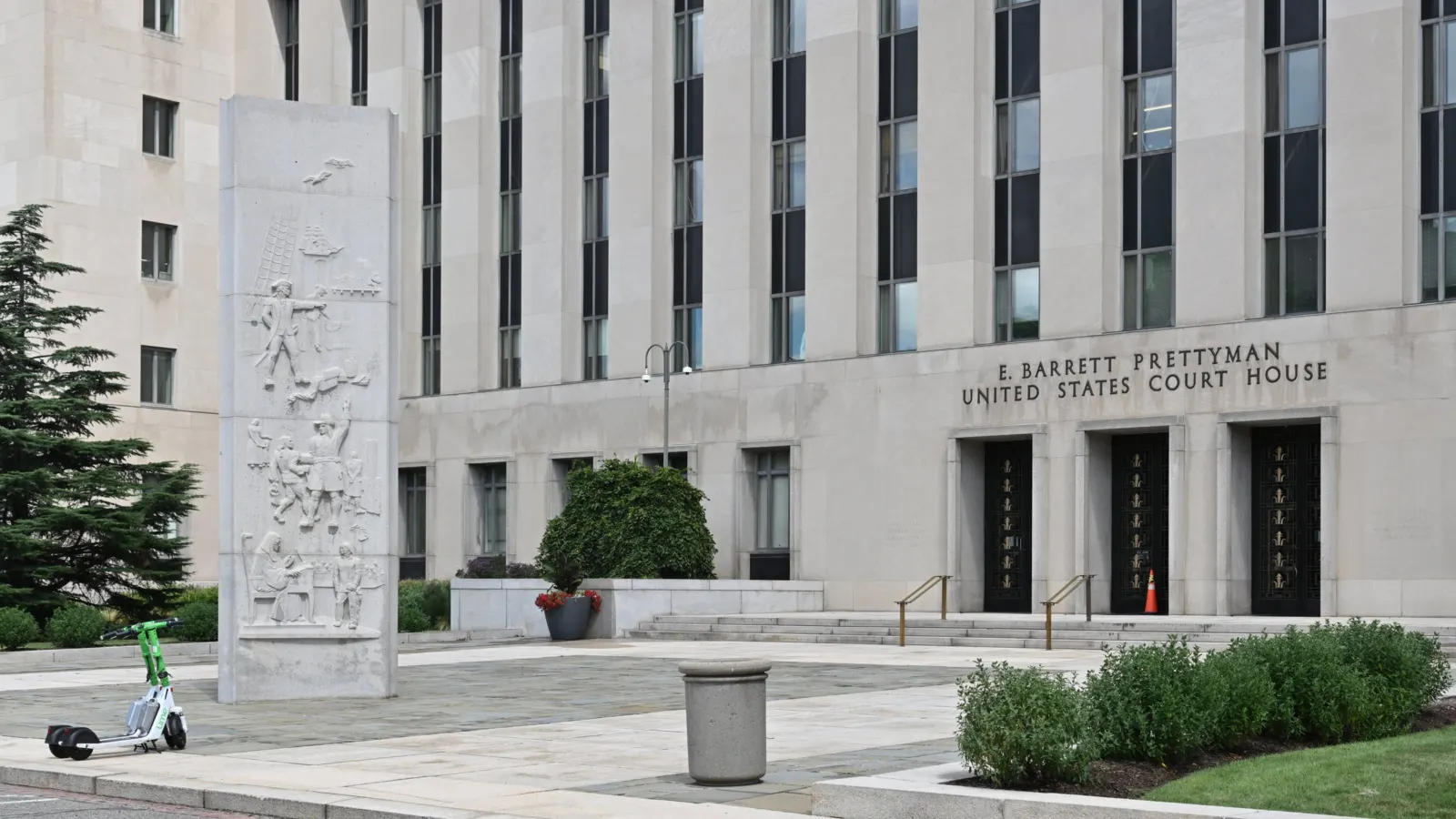
WASHINGTON On 2 September 2025 Judge Amit P. Mehta of the US District Court for the District of Columbia decided what Google must do after he found that it had illegally maintained its search monopoly. He declined to order the sale of the Chrome browser or the Android operating system, writing that the plaintiffs had “overreached” 1. Instead he barred Google from exclusive distribution contracts and ordered it to share some search data and results with rivals 12.
More than a year later, the remedies are being put in place by a court-appointed Technical Committee 3. Google has appealed and the government has cross-appealed to the US Court of Appeals for the D.C. Circuit; as of the government’s latest brief on 29 October 2026, oral argument had not been scheduled 45.
The monopoly ruling
The Justice Department and 11 states sued Google on 20 October 2020, and 38 states and territories led by Colorado filed a parallel suit about two months later 1. On 5 August 2024, after a trial, Judge Mehta concluded: “Google is a monopolist, and it has acted as one to maintain its monopoly.” 6
He found that Google had monopoly power in two markets, general search services and general search text ads, and that its distribution agreements were exclusive and had anticompetitive effects 6. Measured by queries, Google held 89.2% of general search, and 94.9% on mobile devices 6. In 2021 it paid $26.3 billion in revenue share to browser developers, device makers and wireless carriers under those contracts 6. The court also found that Google had charged supracompetitive prices for search text ads 6.
Google won on some points: the judge found no monopoly power in a broader search advertising market and cleared it over its SA360 advertising tool 6.
The remedies decision
The remedies hearing ran from 22 April to 9 May 2025, with nearly 50 live witnesses 1. “The emergence of GenAI changed the course of this case,” Judge Mehta wrote, and the remedies phase was as much about ensuring Google’s dominance in search did not carry over into AI 1. Of the task, he wrote that “the court is asked to gaze into a crystal ball and look to the future. Not exactly a judge’s forte.” 1
His 2 September 2025 opinion barred Google from entering or keeping exclusive contracts for Google Search, Chrome, Google Assistant and the Gemini app 12. He rejected a ban on Google paying partners for placement, saying cutting off payments would likely cause substantial, and in some cases crippling, harm to distribution partners, related markets and consumers 1. He also rejected mandatory choice screens and self-preferencing provisions 1.
Google said the court had “imposed limits on how we distribute Google services” and added: “We have concerns about how these requirements will impact our users and their privacy” 7. Attorney General Pamela Bondi said the decision “marks an important step forward in the Department of Justice’s ongoing fight to protect American consumers.” 2
The exact terms
The parties could not agree on the wording of a judgment, so Judge Mehta entered his own Final Judgment on 5 December 2025 89. It lasts six years from its effective date, 60 days after entry; plaintiffs had asked for up to ten years and Google for three 91.
Google may still pay for default placement. But any agreement tying payment to the distribution or default status of Search, Chrome, Assistant or a Google AI product must end within one year, and default deals with browser developers and Apple must expressly allow them to promote rival search engines and AI products 9.
On data, Google must give each “Qualified Competitor”, within 30 days of its certification and at marginal cost, index data: an identifier for each document, a map from those identifiers to URLs, and for each document when it was first seen and last crawled, its spam score and a device-type flag 9. It must also share, at least twice, user-side data used to build its GLUE and RankEmbed models, with privacy safeguards set by plaintiffs and the committee 9. Algorithms, ranking signals and post-trained AI models are excluded 9.
Google must also offer a five-year search syndication licence through a real-time API. In the first year a competitor may use it for up to 40% of its annual US queries, a share that is meant to taper over five years 9. A five-year search text ads syndication licence is also required 9. A five-person Technical Committee oversees compliance 9.
How it unfolded
-
Justice Department and states sue Google over search distribution.
-
Key moment. Judge Mehta rules Google is a monopolist in general search and search text ads.
-
Judge Brinkema finds Google monopolised ad tech markets.
-
Search remedies hearing.
-
Key moment. Remedies opinion: no Chrome sale; exclusive deals barred; data-sharing and syndication ordered.
-
Final Judgment entered; six-year term.
-
Key moment. Google files notice of appeal; government later cross-appeals.
-
First Technical Committee members appointed.
-
Key moment. Brinkema rejects AdX sale, orders behavioural ad tech remedies.
-
Compliance report cites source-code access dispute.
-
Government’s final cross-appeal brief filed; argument not yet scheduled.
Appeals
Google filed its notice of appeal on 16 January 2026 and asked the district court to pause the data-sharing and syndication remedies while the appeal is heard 10. Google wrote that the 2024 ruling “ignored the reality that people use Google because they want to, not because they’re forced to”, and that the data-sharing and syndication mandates “would risk Americans’ privacy and discourage competitors from building their own products” 10.
The government’s brief says Google’s appeal challenges the market definition, the monopoly-power finding in search text ads, the finding that its default deals were exclusive and anticompetitive, and the data-sharing and syndication remedies, including their extension to AI companies 4. The United States and the co-plaintiff states cross-appealed, arguing that the judge erred in rejecting a ban on Google’s search-related payments to distributors 45.
The separate ad tech case
In Alexandria, Virginia, Judge Leonie Brinkema ruled on 17 April 2025 that Google had monopolised the markets for open-web display publisher ad servers and ad exchanges, and had unlawfully tied its DFP ad server to its AdX exchange 1112. The plaintiffs failed to prove a market for advertiser ad networks 11. Assistant Attorney General Abigail Slater said: “The Court’s ruling is clear: Google is a monopolist and has abused its monopoly power” 12. Before the remedies trial in September 2025, Google said: “We disagree with the Court’s initial decision and will appeal it” 13.
On 2 September 2026 Judge Brinkema rejected the Justice Department’s request that Google sell AdX and adopted behavioural remedies instead; her 106-page opinion was unsealed on 16 September 1415. Google must connect AdX and DFP to Prebid, an open-source header-bidding framework, send AdX real-time bids to rival publisher ad servers, let publishers export their data and stop AdWords bidding preferentially into AdX. A monitor and a technical committee will oversee the remedies for six years 1614. The government and states had sought 15 years 14. Associate Attorney General Stanley E. Woodward Jr. called the ruling “a significant victory” 16. Reuters reported that Google said it disagreed with the liability ruling and would appeal, and that the parties had 30 days to propose a final judgment 14.
Where things stand
On 21 January 2026 Judge Mehta appointed Tammy Savage, Gerry Campbell and John Abowd as the Technical Committee’s standing members, with Savage as chair 17. The last two members were appointed on 9 May 2026 3.
Plaintiffs’ second compliance report, filed on 17 September 2026, said a dispute over an agreement giving the committee access to Google’s source code was delaying its work. It also said Google was withholding some information on user-side data until that agreement was signed 3. Procedures for certifying Qualified Competitors were still being developed 3. On 13 October 2026 plaintiffs filed a redacted recommended template for the syndication licences, with Google’s objections still to be resolved 18.
Why it matters
The search judgment reaches beyond search into generative AI, covering the Gemini app and requiring syndication terms for AI rivals that qualify 194. Its central bet is that index data, user data and syndicated results can help rivals catch up, but as of September 2026 the procedures for certifying which rivals qualify were still being developed 3. The D.C. Circuit could still overturn the liability finding, as Google asks, or add a payment ban, as the government asks 4. Meanwhile, the Virginia ruling means that two federal judges have now found Google liable for monopolisation, and both declined to break the company up 114.
Sources and references
- Court documentU.S. District Court for the District of Columbia (via CourtListener), “United States v. Google LLC, Memorandum Opinion (remedies), ECF No. 1436”, 2 September 2025. Link
- Official documentU.S. Department of Justice, Office of Public Affairs, “Department of Justice Wins Significant Remedies Against Google”, 2 September 2025. Link
- Court documentU.S. Department of Justice and plaintiff states (court filing), “Plaintiffs’ Second Status Report as to the Enforcement of and Google’s Compliance with the Final Judgment, ECF No. 1552”, 17 September 2026. Link
- Court documentU.S. Department of Justice (D.C. Circuit filing), “Final Response Brief and Opening Brief on Cross-Appeal for the United States and Co-Plaintiff States, D.C. Cir. Nos. 26-5023, 26-5047, 26-5049”, 21 October 2026. Link
- Court documentU.S. Department of Justice (D.C. Circuit filing), “Reply Brief on Cross-Appeal for the United States and Co-Plaintiff States”, 29 October 2026. Link
- Court documentU.S. District Court for the District of Columbia (via CourtListener), “United States v. Google LLC, Memorandum Opinion (liability), ECF No. 1033”, 5 August 2024. Link
- Official documentGoogle (Lee-Anne Mulholland), “Statement on today’s decision in the case involving Google Search”, 2 September 2025. Link
- Court documentU.S. District Court for the District of Columbia (via DOJ), “United States v. Google LLC, Memorandum Opinion accompanying Final Judgment, ECF No. 1461”, 5 December 2025. Link
- Court documentU.S. District Court for the District of Columbia (via DOJ), “United States v. Google LLC, Final Judgment, ECF No. 1462”, 5 December 2025. Link
- Official documentGoogle (Lee-Anne Mulholland), “Why we’re appealing the DOJ Search distribution case”, 16 January 2026. Link
- Court documentU.S. District Court for the Eastern District of Virginia (via DOJ), “United States v. Google LLC (E.D. Va.), Memorandum Opinion, ECF No. 1410”, 17 April 2025. Link
- Official documentU.S. Department of Justice, Office of Public Affairs, “Department of Justice Prevails in Landmark Antitrust Case Against Google”, 17 April 2025. Link
- Official documentGoogle (Lee-Anne Mulholland), “DOJ’s remedies go significantly beyond the Court’s ruling and would harm publishers and advertisers”, 19 September 2025. Link
- ArticleReuters, via The Star, “Google should relax ad tech rules, appoint antitrust monitor, US judge finds (Reuters)”, 17 September 2026. Link
- ArticleThe Next Web, “Judge’s full ruling puts Google’s ad tech business under a monitor for six years”, 17 September 2026. Link
- Official documentU.S. Department of Justice, Office of Public Affairs, “Department of Justice Again Wins Substantial Relief Against Google”, 16 September 2026. Link
- Court documentU.S. District Court for the District of Columbia (via DOJ), “Order Appointing Technical Committee Members, ECF No. 1474”, 21 January 2026. Link
- Court documentU.S. Department of Justice and plaintiff states (court filing), “Plaintiffs’ Supplemental Joint Recommendation for Template Search and Search Text Ads Syndication License Agreement, ECF No. 1561”, 13 October 2026. Link
Sources and references are provided for transparency and further reading. Allegations and claims are attributed to their respective sources. Triple Frontiers distinguishes reported allegations from independently established facts.
The Frontier Brief
The week’s essential international reporting and new investigations, every Friday.