Venezuela’s disputed count: from the 2024 election to Maduro’s capture
The electoral council declared Nicolás Maduro the winner of the July 2024 election without publishing the count. Observers said the result could not be verified, the opposition published its own tally sheets, and a crackdown followed. In January 2026 US forces seized Maduro. Venezuelans are still waiting for a new vote.
CARACAS In the early hours of 29 July 2024, the president of Venezuela’s National Electoral Council (CNE), Elvis Amoroso, announced that Nicolás Maduro had won the previous day’s presidential election with 51.2% of the vote to 44.2% for the opposition candidate, Edmundo González, with 80% counted. He called the trend “irreversible” 12. Maduro was proclaimed the winner the same day 2.
The council never published the results polling station by polling station, as it had in previous elections; the authorities said its website had been hacked 34. The government blamed a cyberattack from North Macedonia, without presenting evidence 4.
The tally sheets
The opposition had a counter-claim on paper. It collected copies of the tally sheets, or actas, printed by more than 80% of the country’s roughly 30,000 voting machines and published them online; it says they show González winning by more than two to one 34. The government says the sheets are false and opened a criminal investigation into opposition leaders, including González 34.
The Carter Center, one of the few observers invited by the government, concluded on 30 July that the election “did not meet international standards of electoral integrity and cannot be considered democratic.” It said: “The Carter Center cannot verify or corroborate the results of the election declared by the National Electoral Council” 5. A panel of UN electoral experts said announcing a winner without polling-station results “had no precedent in contemporary democratic elections”. It did not validate the opposition’s count, but said the records the opposition had published appeared to carry all the original security features 6. The European Union said the results the CNE published on 2 August could not be recognised without supporting evidence 7.
On 22 August Venezuela’s Supreme Tribunal of Justice certified Maduro’s victory, ruled that the opposition’s tallies were forged and said its decision could not be appealed 8.
The crackdown
Security forces arrested more than 2,000 people in the weeks after the vote for protesting or questioning Maduro’s claimed win 6. Human Rights Watch documented 24 deaths in post-election protests, some attributed to security forces and others to pro-government armed groups, and said hundreds of people were charged with offences such as incitement to hatred and terrorism 9. “The Venezuelan government has killed, tortured, detained and forcefully disappeared people seeking democratic change,” said Juanita Goebertus, HRW’s Americas director 9.
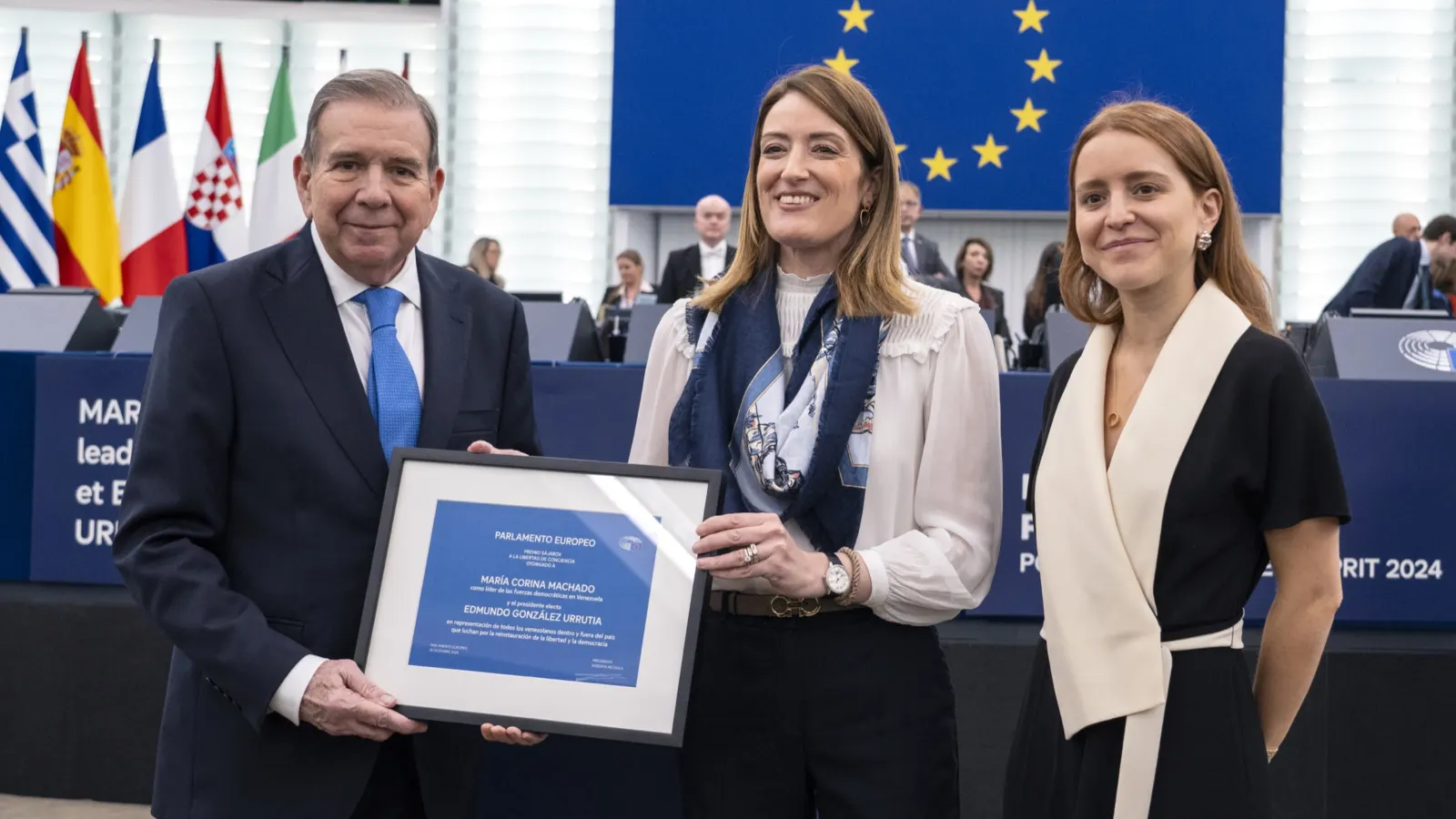
Prosecutors issued an arrest warrant for González. After sheltering in the Spanish embassy, he flew to Spain on a Spanish Air Force plane on the night of 7 September 2024; he has not been tried 4. In November the United States called him Venezuela’s “president-elect” for the first time 10.
Maduro was sworn in for a third six-year term on 10 January 2025. “I have not been made president by the government of the United States,” he said 11. The US, the EU, Britain and Canada announced new sanctions, and the US raised its reward for information leading to his arrest to $25 million 12.
How it unfolded
-
Key moment. Presidential election held.
-
Electoral council declares Maduro the winner without publishing polling-station results.
-
Carter Center says the result cannot be verified.
-
Supreme Tribunal certifies Maduro’s victory.
-
Edmundo González leaves for Spain under an arrest warrant.
-
Maduro sworn in for a third term.
-
Key moment. US forces capture Maduro and fly him out of Venezuela.
-
Maduro and Flores plead not guilty in New York.
-
Key moment. Acting president Delcy Rodríguez promises elections, without a date.
Capture
On 3 January 2026 US forces struck military targets around Caracas and captured Maduro and his wife, Cilia Flores, flying them out of the country 13. Russia condemned what it called an “act of armed aggression against Venezuela” 13. Two days later the couple appeared before Judge Alvin Hellerstein in federal court in Manhattan on four counts including narco-terrorism conspiracy and conspiracy to import cocaine. Both pleaded not guilty 14. Their trial has been set for June 2027; Maduro’s lawyers intend to argue that he is immune from prosecution as a head of state 15. He has not been convicted.
Maduro’s vice-president, Delcy Rodríguez, became acting president 14. She has worked with Washington, signing a law in January 2026 that ended the state oil company PDVSA’s monopoly over oil production and sales 16. An amnesty law led to the release of hundreds of political prisoners; the rights group Foro Penal said in March that about 500 remained in jail 17.
An election without a date
The opposition leader María Corina Machado, a Nobel Peace Prize laureate, returned to Venezuela in late October 2026 18. On 29 October Rodríguez promised that the country would hold all the elections provided for in the constitution, but set no date 18. Under a US-backed plan, a new Supreme Court is to be installed first, followed by a new electoral council; the opposition expects the government then to declare a presidential vacancy, which would open a six-month window for an election 19. More than 900 lawyers have applied for the court’s 32 seats 19.
Why it matters
The 2024 election showed how a government could declare a result without publishing the count, and how far independent observers, rival tally sheets and foreign pressure could go in contesting it: far enough to deny Maduro recognition, not far enough to remove him. He was removed instead by foreign military force, an outcome that settles nothing about the vote itself. The question the July 2024 tally sheets raised, who Venezuelans actually chose, will only be answered by an election that is counted in public.
Sources and references
- ArticleMercoPress, “Venezuelan authorities claim Maduro was reelected”, 29 July 2024. Link
- ArticleCaracas Chronicles, “Venezuela’s Presidential Election: A Briefing”, 29 July 2024. Link
- ArticleAssociated Press (via WLRN), “Carter Center presents Venezuela tally sheets at OAS”, 3 October 2024. Link
- ArticleReuters (via NBC News), “Venezuela opposition leader González flies to Spain after arrest warrant”, 8 September 2024. Link
- ReportThe Carter Center, “Carter Center Statement on Venezuela Election”, 30 July 2024. Link
- ArticleAssociated Press (via WDIV ClickOnDetroit), “UN expert panel sent to Venezuela blasts lack of transparency in presidential elections”, 13 August 2024. Link
- Official documentEuropean External Action Service, “Venezuela: Statement by the High Representative on behalf of the EU on post-election developments”, 4 August 2024. Link
- ArticleAssociated Press (via NBC News), “Venezuela’s Supreme Court certifies Maduro’s claims that he won presidential election”, 22 August 2024. Link
- ReportHuman Rights Watch, “Venezuela: Brutal Crackdown Since Elections”, 30 April 2025. Link
- ArticleAssociated Press (via PBS NewsHour), “U.S. recognizes Venezuela’s opposition candidate González as president-elect”, 19 November 2024. Link
- ArticleAssociated Press (via PBS NewsHour), “Nicolás Maduro sworn in for third term as Venezuelan president despite evidence of election loss”, 10 January 2025. Link
- ArticleAssociated Press (via News4JAX), “Venezuela latest: Nicolás Maduro to be inaugurated for a third term defying evidence of fraud”, 10 January 2025. Link
- ArticleBloomberg (via gCaptain), “Maduro Captured, Indicted After US Airstrikes on Venezuela”, 3 January 2026. Link
- ArticleCBS News, “Maduro pleads not guilty in court”, 5 January 2026. Link
- ArticleCBS New York / AP, “Nicolás Maduro trial date set for June 2027”, 22 July 2026. Link
- ArticleAssociated Press (via PBS NewsHour), “Venezuela’s acting president signs overhaul easing state control of oil industry into law”, 29 January 2026. Link
- ArticleFrance 24 / AFP, “Venezuela frees more political prisoners under amnesty law”, 8 March 2026. Link
- ArticleColombia One, “Delcy Rodriguez Promises Elections in Venezuela and Replaces Her Foreign Minister”, 2 November 2026. Link
- ArticleLatin Times, “Venezuela’s court shakeup: 900+ lawyers eye 32 Supreme Court seats before Rubio’s deadline”, 17 November 2026. Link
Sources and references are provided for transparency and further reading. Allegations and claims are attributed to their respective sources. Triple Frontiers distinguishes reported allegations from independently established facts.
The Frontier Brief
The week’s essential international reporting and new investigations, every Friday.