Mexico elected its judges: what the first vote produced, and what changed after
In June 2025 Mexico became the first country to elect its entire federal judiciary. Turnout was about 13%, voting guides matched the winners, and the electoral authority validated the Supreme Court result by a single vote. The next round has now been moved to 2028.
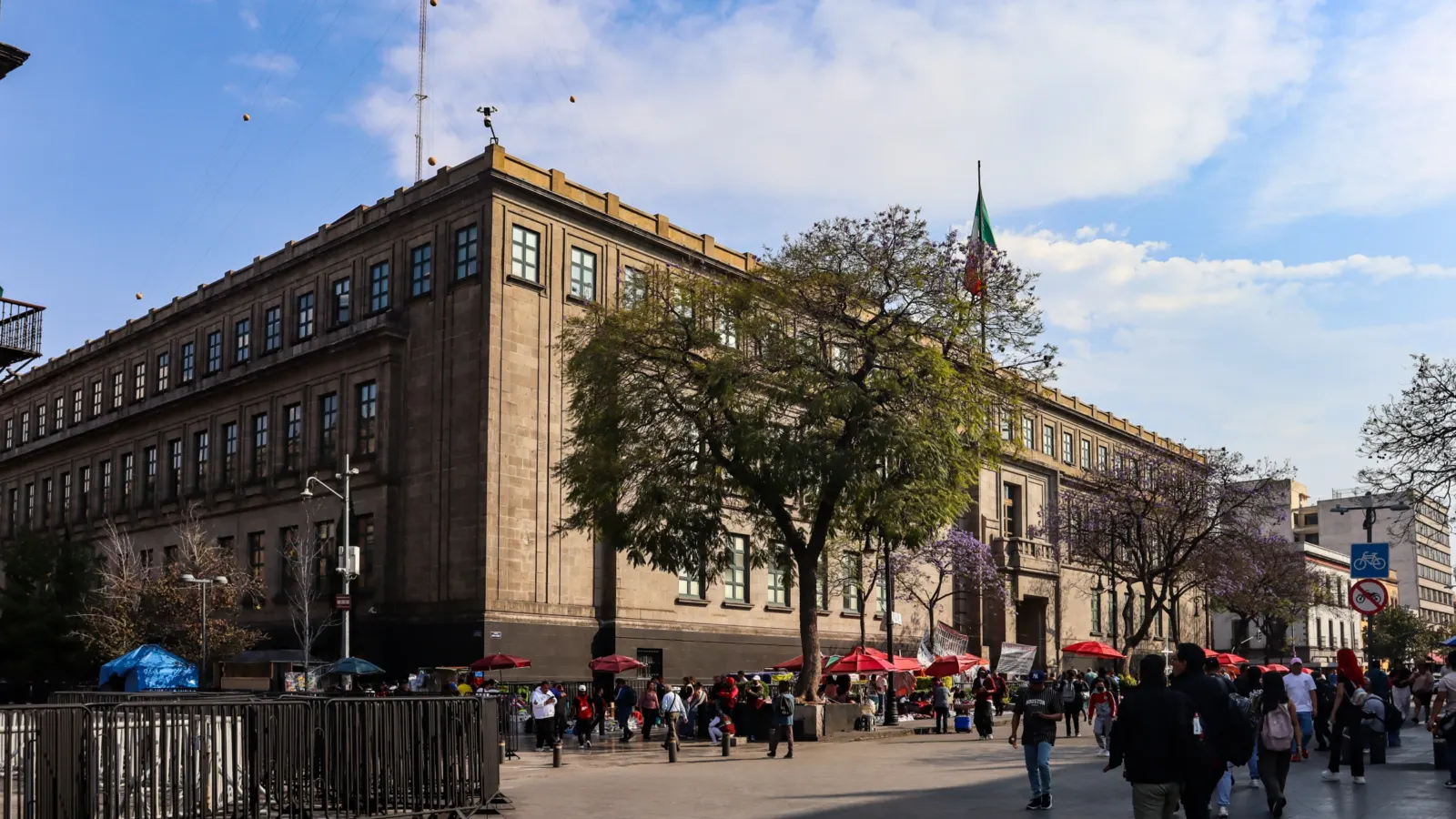
MEXICO CITY On 1 June 2025 Mexicans were asked to do something no other country’s voters had done: choose their entire federal judiciary, from district judges to all nine justices of the Supreme Court, at the ballot box. Fewer than one in seven took part. The electoral authority’s president estimated turnout on election night at between 12.57% and 13.32% 6; the Organization of American States (OAS) observer mission put it at about 13%, against 60.9% at the general election a year earlier 7.
The vote was the centrepiece of a constitutional overhaul pushed through by President Andrés Manuel López Obrador’s coalition in his final weeks in office and carried forward by his successor, Claudia Sheinbaum. Its supporters said it would root out corruption and nepotism in the courts; its critics, including the federal judges’ association and the US ambassador of the time, said it would put the judiciary under political control 22125. Seventeen months on, the court it produced is sitting, the sanctions over how the vote was run have been annulled, and the government has redesigned the system before its second use.
The reform
The constitutional decree reforming the judicial branch was published in the official gazette, the Diario Oficial de la Federación, on 15 September 2024 1. It cut the Supreme Court from 11 justices to nine, sitting only as a full court, with 12-year terms that cannot be renewed, and replaced the disciplinary functions of the Federal Judicial Council with an elected Judicial Discipline Tribunal 117. Candidates were to be nominated by the three branches of government, each of which set up a five-member committee to screen applicants, with the lists then cut by public lottery 1. Half of the circuit and district judgeships were to be filled in 2025 and the rest at the 2027 federal elections 13.
Before the decree passed, US Ambassador Ken Salazar said on 22 August 2024: “Based on my lifelong experience supporting the rule of law, I believe popular direct election of judges is a major risk” to Mexican democracy. López Obrador defended the reform as a tool against impunity and corruption 2.
The courts were unable to stop it. On 5 November 2024 a draft by Justice Juan Luis González Alcántara Carrancá that would have struck down key parts of the reform won seven votes in the then 11-member Supreme Court, one short of the eight required 3. When the judiciary’s own evaluation committee halted its work, citing court suspensions, the Electoral Tribunal (TEPJF) on 27 January 2025 ordered the Senate’s governing board to carry out the lottery of that committee’s candidates in its place 4. The board held the draw on 30 January over more than eight hours, with opposition senators from the PAN, PRI and Movimiento Ciudadano absent, according to Expansión 5.
The vote
On 1 June voters chose nine Supreme Court justices, two senior and 15 regional electoral magistrates, five members of the new discipline tribunal, 464 circuit magistrates and 386 district judges: 881 federal posts in all, plus local judgeships in some states 7. Printed and digital voting guides, known as acordeones (“crib sheets”), circulated before the vote; the federal judges’ association said in May that they confirmed the election was a “simulation” 25.
The OAS mission, led by former Chilean foreign minister Heraldo Muñoz, found that the nine most-voted Supreme Court candidates had all been promoted in such guides. It noted that six of the nine winners had been put forward by the executive’s nominating committee and that the other three were sitting justices appointed by the former president, which it said raised “reasonable doubts” about the court’s independence from the executive 7. While acknowledging the vote was held calmly and in line with the law, the mission concluded (translated from Spanish): “the Mission does not recommend that this model for selecting judges be replicated in other countries of the region” 7. Mexico’s foreign ministry rejected some of its recommendations and said the mission had exceeded its mandate 11.
Sheinbaum called the vote a success. “Close to 13 million Mexicans took part yesterday in the election for the judicial branch,” she said at her press conference the next morning, defending voters’ right to carry notes on whom to choose (translated from Spanish) 8.
A one-vote validation
On 15 June the National Electoral Institute (INE) completed the Supreme Court count. It excluded 818 polling stations, 0.97% of the total, where it found irregularities including turnout of 100% or more, ballots that had never been in the ballot box, or vote inducement using the guides 910. Hugo Aguilar Ortiz received the most votes, 5,900,789, followed by Lenia Batres Guadarrama and Yasmín Esquivel Mossa, both sitting justices 10.
The INE’s general council approved the tally by 10 votes to 1, but declared the election valid by only 6 votes to 5 910. In the debate, councillor Arturo Castillo said that every winning candidate for the national bodies appeared in the voting guides, on average in 80% of them, and that complaints covered at least 37 different guide models in 15 states 9. Councillor Dania Ravel, questioning polling stations that reported full turnout, said: “In an election with 13 per cent citizen participation nationally, it seems hardly credible that this happens” (translated from Spanish) 9.
On 28 July the INE fined 118 winning candidates a combined 6.3 million pesos for benefiting from guides paid for by third parties, while finding no proof that the candidates had financed or distributed them 12. Sheinbaum called the decision “contradictory” 13.
The Electoral Tribunal then closed the challenges. On 13 August its senior chamber voted 3–2 not to refer the guide complaints to the INE for investigation and rejected requests to strip winners of their certificates 14. Days later it upheld the Supreme Court election by the same margin, rejecting draft rulings by magistrates Reyes Rodríguez Mondragón and Janine Otálora that would have annulled it; the majority held there was not enough proof that the guides had determined the result 1516. Otálora said in dissent that the guides “were not educational in nature, but were designed to influence the will of the citizens”; magistrate Felipe Fuentes Barrera said annulling the election “would not only be a legal error, it would be an institutional blow” (both translated from Spanish) 15. On 30 October the tribunal, again 3–2, revoked the INE’s fines outright, finding the authority had not proved how or when the guides were produced and distributed, or that they were used to promote candidacies 18.
The new court
The nine elected justices took office on 1 September 2025. Aguilar, an Indigenous Mixtec lawyer from Oaxaca, became the court’s president; Batres, Esquivel and Loretta Ortiz Ahlf had all served on the previous court. About 880 other elected judges and magistrates began their terms at the same time 17. The court now decides all cases as a single nine-member bench 17.
Its early rulings have been closely watched. On 13 November 2025 it rejected seven of nine challenges by Grupo Salinas companies to tax bills totalling about US$2.6 billion; the group called them “abusive and illegal double charges”, and its owner, Ricardo Salinas Pliego, says he is being targeted for criticising the government, which Sheinbaum denies 19. In January 2026, in a case brought by the federal prosecutor’s office, the court said it would not review judgments handed down by the chambers of the previous court 20.
Redesigned before its second use
In May 2026 Sheinbaum proposed changing the system again. The reform moves the second judicial election from 2027 to 2028, cuts the field to two candidates per post, requires sitting judges seeking another post to resign first, and allows the Supreme Court to sit in two sections 2123. The Senate approved it on 28 May with the votes of Morena and its allies, against the opposition 22, and the decree was published on 2 June 2026 24. Federal and state judicial elections will now be held together on 4 June 2028 23. The federal judges’ association, which had called the 2025 vote a “simulation”, described the postponement as the clearest admission that the original design was unworkable 2125.
Why it matters
Mexico is the United States’ largest trading partner, and investors and governments read its courts as a measure of legal certainty. The 2025 vote produced a Supreme Court whose members were all promoted in the same voting guides and in six cases had been nominated by the executive’s committee, on a turnout of about 13%, and was certified by the electoral authority by a single vote. The government says the reform was needed to root out corruption and nepotism and rejects claims that it was meant to take control of the courts; the OAS mission, the judges’ association and opposition parties say it has weakened judicial independence 7212526. The 2028 election, under the revised rules, will be the next test of which reading holds.
How it unfolded
-
Key moment. Constitutional reform of the judiciary published in the official gazette.
-
Supreme Court falls one vote short of striking down key parts of the reform.
-
Senate board draws the judiciary’s candidates by lottery after the Electoral Tribunal orders it to step in.
-
Key moment. First popular election of the federal judiciary; turnout about 13%.
-
INE declares the Supreme Court election valid by 6 votes to 5, excluding 818 polling stations.
-
Electoral Tribunal upholds the result 3–2.
-
Key moment. New nine-member Supreme Court takes office under Hugo Aguilar Ortiz.
-
Electoral Tribunal revokes the INE’s fines over voting guides.
-
Reform moving the next judicial election to 4 June 2028 is published.
Sources and references
- Official documentDiario Oficial de la Federación, “Decreto por el que se reforman, adicionan y derogan diversas disposiciones de la Constitución Política de los Estados Unidos Mexicanos, en materia de reforma del Poder Judicial”, 15 September 2024. Link
- ArticleVOA (Reuters), “US ambassador: Mexico’s planned judicial reform is ‘major risk’ to democracy”, 22 August 2024. Link
- ArticleMexico News Daily, “Mexico to move forward with judicial elections after Supreme Court stalemate”, 6 November 2024. Link
- ArticleUno TV, “Tribunal Electoral ordena al Senado sustituir Comité de Evaluación en elección de jueces”, 27 January 2025. Link
- ArticleExpansión Política, “Senado sortea las candidaturas del Poder Judicial”, 30 January 2025. Link
- ArticleUno TV, “En elección judicial hubo una participación de entre 12.57% y 13.32%, informa Guadalupe Taddei”, 1 June 2025. Link
- ReportOrganization of American States Electoral Observation Mission, “Informe preliminar: Elecciones del Poder Judicial en México”, 6 June 2025 (copy hosted by INEP). Link
- Official documentPresidencia de la República, “Versión estenográfica. Conferencia de prensa de la presidenta Claudia Sheinbaum Pardo del 02 de junio de 2025”. Link
- Official documentInstituto Nacional Electoral, minutes of the General Council extraordinary session, 15 June 2025. Link
- ArticleN+, “INE declara validez de elección de ministros de la Corte; algunos consejeros acusan anomalías”, 15 June 2025. Link
- ArticleExpansión Política, “Gobierno rechaza informe sobre elección judicial de la OEA”, 7 June 2025. Link
- ArticleExpansión Política, “INE multa a candidatos de elección judicial con más de 6 mdp”, 28 July 2025. Link
- ArticleEl Financiero, “Sheinbaum tacha de incongruente al INE por sancionar a ministros electos por acordeones”, 29 July 2025. Link
- ArticleExpansión Política, “Tribunal rechaza más impugnaciones sobre acordeones en elección judicial”, 13 August 2025. Link
- ArticleLa Razón, “TEPJF confirma validez de elección de nuevos ministros de la SCJN”, 20 August 2025. Link
- ArticleInfobae, “TEPJF valida elección de ministros de la SCJN pese a uso masivo de acordeones”, 21 August 2025. Link
- ArticleMexico News Daily, “Mexico’s new Supreme Court takes the bench”, 1 September 2025. Link
- ArticleUno TV, “Por falta de pruebas, tribunal anula multas del INE por 6 mdp en caso de ‘acordeones'”, 30 October 2025. Link
- ArticleCanadian Lawyer (Associated Press), “Grupo Salinas companies lose in Mexico Supreme Court over US$2.6 billion tax debts”, 14 November 2025. Link
- ArticleExpansión Política, “SCJN vota a favor de cosa juzgada; no revisará sentencias emitidas”, 19 January 2026. Link
- ArticleMexico News Daily, “Two years after landmark judicial overhaul, Sheinbaum proposes sweeping changes”, May 2026. Link
- ArticleLa Razón, “Senado aprueba pasar elección judicial al 2028; va a congresos locales”, 28 May 2026. Link
- AnalysisGarrigues, “Mexico: new constitutional reform adjusts judicial elections and redefines structure”, June 2026. Link
- Official documentDiario Oficial de la Federación, index of the 2 June 2026 editions. Link
- ArticleExpansión Política, “Jufed: acordeones confirman simulación”, 26 May 2025. Link
- AnalysisInter-American Dialogue, “Two years after Mexico’s judicial reform: what has changed and why it matters for the United States”, September 2026. Link
Sources and references are provided for transparency and further reading. Allegations and claims are attributed to their respective sources. Triple Frontiers distinguishes reported allegations from independently established facts.
The Frontier Brief
The week’s essential international reporting and new investigations, every Friday.