US proposes new tariffs of up to 35% on 14 economies, from the EU and Japan to China and Vietnam
The US trade office found 14 economies' industrial policies unfair and proposed rates that mostly copy 2025 deals: 15% for the EU and Japan, but up to 35% for Vietnam. Nothing changes before hearings in late January.
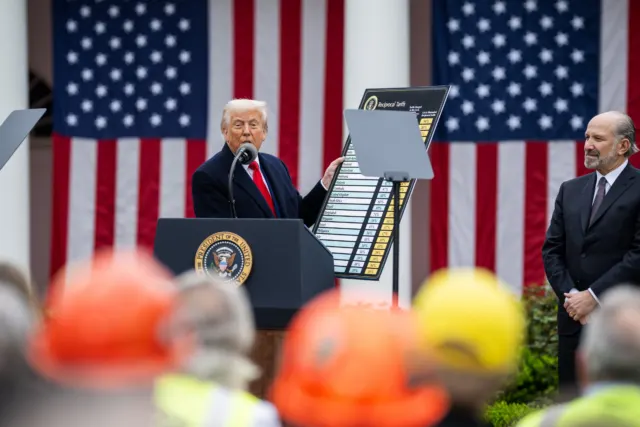
WASHINGTON The United States has proposed new tariffs on goods from 14 economies, from the European Union and Japan to China and Vietnam, at rates of 15% for allies such as the EU and Japan and up to 35% for Vietnam 12. The Office of the US Trade Representative (USTR), the agency that runs American trade policy, announced on Wednesday 25 November that it had found their industrial policies to be “unreasonable” and a burden on US commerce 1.
Nothing changes at the border yet. The rates are proposals, open to public comment until 5 January 2027, with hearings starting on 25 January 2027 13. Trade Representative Jamieson Greer said the policy would probably not take effect for months, although a senior official said duties could start as early as January, CNBC reported 4.
The move matters because it rebuilds, on a different legal footing, the country-by-country tariffs that the US Supreme Court struck down in February 2026 24. Together with the “forced labour” tariffs imposed in July 2026, the new duties would “largely replace” the struck-down tariffs, according to the law firm Holland & Knight 2. We traced that history in our report on how the Liberation Day tariffs reshaped world trade 2.
Markets fell on Wednesday. According to Reuters, MSCI’s global share index lost 0.60% and emerging-market stocks fell 2.8% 5. On Wall Street the Nasdaq dropped 0.62% and the S&P 500 0.25%, while the Dow rose 0.33%; Nvidia fell 3.91% as a separate sell-off in technology shares continued 5. “We still have not dealt with the fresh shock of Nvidia and tech and now we have tariffs,” said Aneeka Gupta, an equity strategist at WisdomTree 5.
What USTR decided
The tariffs come from Section 301 of the Trade Act of 1974, a law that lets the US act against foreign practices it finds unfair 1. USTR opened these investigations on 11 March 2026 into 16 economies over what it calls “structural excess capacity”: factories producing far more than home markets need, supported by subsidies, cheap finance and export incentives 3. It found against 14 of them and has not yet ruled on Mexico or Norway 12.
“For decades, many of our trading partners have adopted industrial strategies built on targeting manufacturing,” Greer said 1. The duties would cover all goods from each economy except products listed in annexes to each notice 1.
The rates, next to the 2025 deals
The proposed rates “track the administration’s existing trade agreements in most cases”, according to Holland & Knight 2. The table sets the new proposal beside the “reciprocal” rates of the executive order of 31 July 2025 6. The “alternative” column shows the higher rate USTR could use if talks go badly, or the lower rate on offer if a deal is signed 23.
The EU and Japan end up where their 2025 deals put them. The August 2025 framework with the EU set the higher of the normal US tariff or 15% on most European goods, and the Japan deal implemented in September 2025 set a 15% baseline on nearly all Japanese imports 78. The new proposal “puts most of the targeted countries back where they were earlier in the year,” said Mark Williams of Capital Economics 4.
Vietnam, Bangladesh and Cambodia face more than Europe
The steepest proposed rates fall on Vietnam, India and Singapore, the three economies that Holland & Knight singles out for higher headline rates 2. Vietnam faces up to 35%, compared with 20% in July 2025, falling back to 20% only if it signs an agreement 26. Bangladesh and Cambodia face up to 18%, and up to 20% and 25% respectively under the alternative rates, while exporters in the EU or Japan face 15% 23.
The structure of the rates also differs. For the EU, Japan, South Korea, Switzerland and Taiwan, the 15% includes ordinary US import duties, known as most-favoured-nation (MFN) tariffs 23. For Bangladesh, Cambodia, Indonesia, Malaysia, Thailand, Singapore, India and Vietnam, MFN duties are charged on top 3. Vietnam’s trade ministry said it was working to complete a deal with the US as soon as possible, Reuters reported 4.
How the new tariffs stack
USTR says each rate already accounts for duties under earlier Section 301 actions and under Section 232, the national-security law behind tariffs on steel, cars and other sectors 1. The law firm Wiley gives an example: an EU product paying a 5% MFN duty and a 5% forced-labour tariff would owe an extra 5%, for 15% in total 3. Goods already under Section 232 tariffs, such as steel, aluminium, cars, wood products, patented medicines and semiconductors, are exempt outside China 23. Anti-dumping and anti-subsidy duties would still be added on top 3.
China is the exception, and the sources read it differently. Holland & Knight and CNBC say China’s new rate of up to 20% comes on top of the tariffs from Trump’s first term, which CNBC puts at 25% 24. Wiley says the China notice lacks the express Section 232 exemption the others receive, so those goods could face stacked duties, while USTR’s release says every proposal takes Section 232 duties into account 31. China’s alternative rate of up to 40% is linked to the US–China truce, which Holland & Knight says is reported to expire on 10 January 2027 24. Background is in our report on the US–China truce and rare earths 2.
What governments said
China’s commerce ministry spokesperson, He Yadong, said Washington should “rectify its wrongdoing and return to the right track of resolving issues through dialogue”, CNBC reported 4. The European Commission rejected the overcapacity charge: “To the contrary, Europe is among those most exposed to overcapacity,” said its spokesperson Olof Gill, adding: “We regret the lack of joint action” 4. The EU expects any measure to respect the 15% all-inclusive ceiling of its deal, according to CNBC 4.
Singapore’s trade ministry said it was “very disappointed” 4. It said about a third of its direct exports to the US, worth S$9.4 billion, would be affected, and that its effective tariff rate would rise from 7.8% to 10.3% at the 20% level 4.
What happens next
Written comments and requests to testify are due by 5 January 2027 1. Hearings begin at 10am Eastern time on 25 January before USTR’s Section 301 Committee at the US International Trade Commission in Washington, and may run for several days 3. Before then, EU trade ministers are due to speak to Greer on Monday 30 November, and Holland & Knight says further agreements could be finalised at the G20 summit in Miami on 14–15 December 42. “The tariff wall keeps changing, but it isn’t coming down,” said Inga Fechner, an economist at ING 4.
Sources and references
- Official documentUSTR, “USTR makes determinations and proposes actions in 14 Section 301 investigations”, 25 November 2026. Link
- ReportHolland & Knight, “USTR proposes tariffs following 14 Section 301 investigations”, 25 November 2026. Link
- ReportWiley Rein, “USTR announces affirmative Section 301 determinations”, 25 November 2026. Link
- ArticleCNBC, “U.S. tariff-hike threats pile pressure on partners to sign trade deals”, 26 November 2026. Link
- ArticleKorea Times (Reuters), “World stocks tumble as Trump tariffs rattle markets, AI rally fades”, 26 November 2026. Link
- Official documentWhite House, “Further modifying the reciprocal tariff rates (EO 14326)”, 31 July 2025. Link
- Official documentAmerican Presidency Project, “Joint statement on a US-EU framework agreement”, 21 August 2025. Link
- Official documentWhite House, “Fact sheet: US-Japan framework agreement”, 5 September 2025. Link
Sources and references are provided for transparency and further reading. Allegations and claims are attributed to their respective sources. Triple Frontiers distinguishes reported allegations from independently established facts.
The Frontier Brief
The week’s essential international reporting and new investigations, every Friday.