Nepal’s Gen Z uprising: two days that toppled a government, and the reckoning since
A social-media ban in September 2025 set off protests that left 76 dead, burned parliament and forced K.P. Sharma Oli from office. A new party won the election that followed, an inquiry blamed Oli's government, and the case against him has stalled.
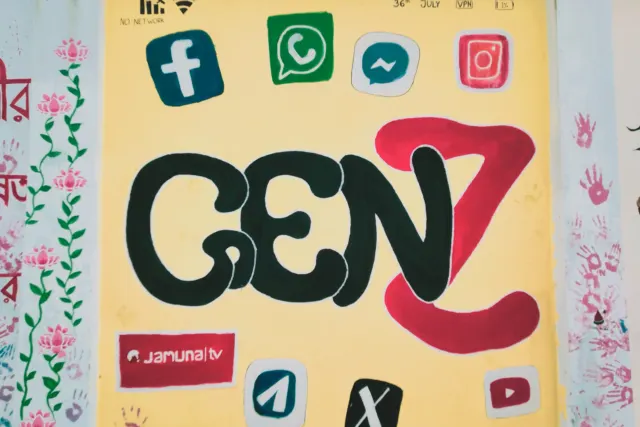
KATHMANDU On 4 September 2025 Nepal’s government blocked 26 social-media platforms, including Facebook, Instagram, YouTube, WhatsApp and X, for failing to register with the communications ministry 1. Four days later tens of thousands of mostly young people marched in Kathmandu. They were angry about the ban, but also about corruption and about the lavish lives of politicians’ children, whom they called “nepo kids” 23.
Near the federal parliament, police met them with tear gas, water cannon and live ammunition 45. Nineteen people were killed on 8 September, 17 of them in Kathmandu 46. “Nearly 20 people were murdered by the state — that shows the scale of police brutality,” said Yujan Rajbhandari, a 23-year-old student 5. That night the government lifted the ban, and the home minister resigned 5.
The second day
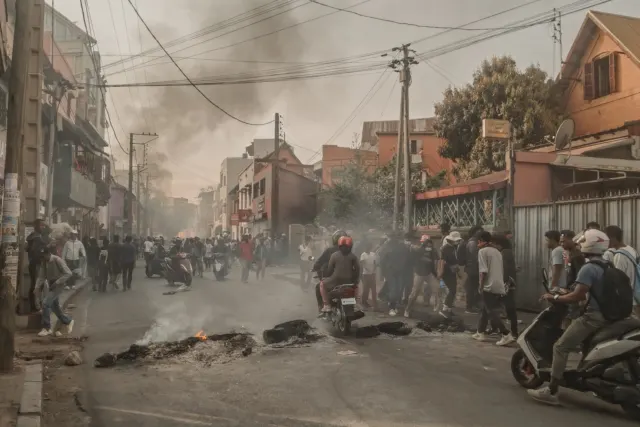
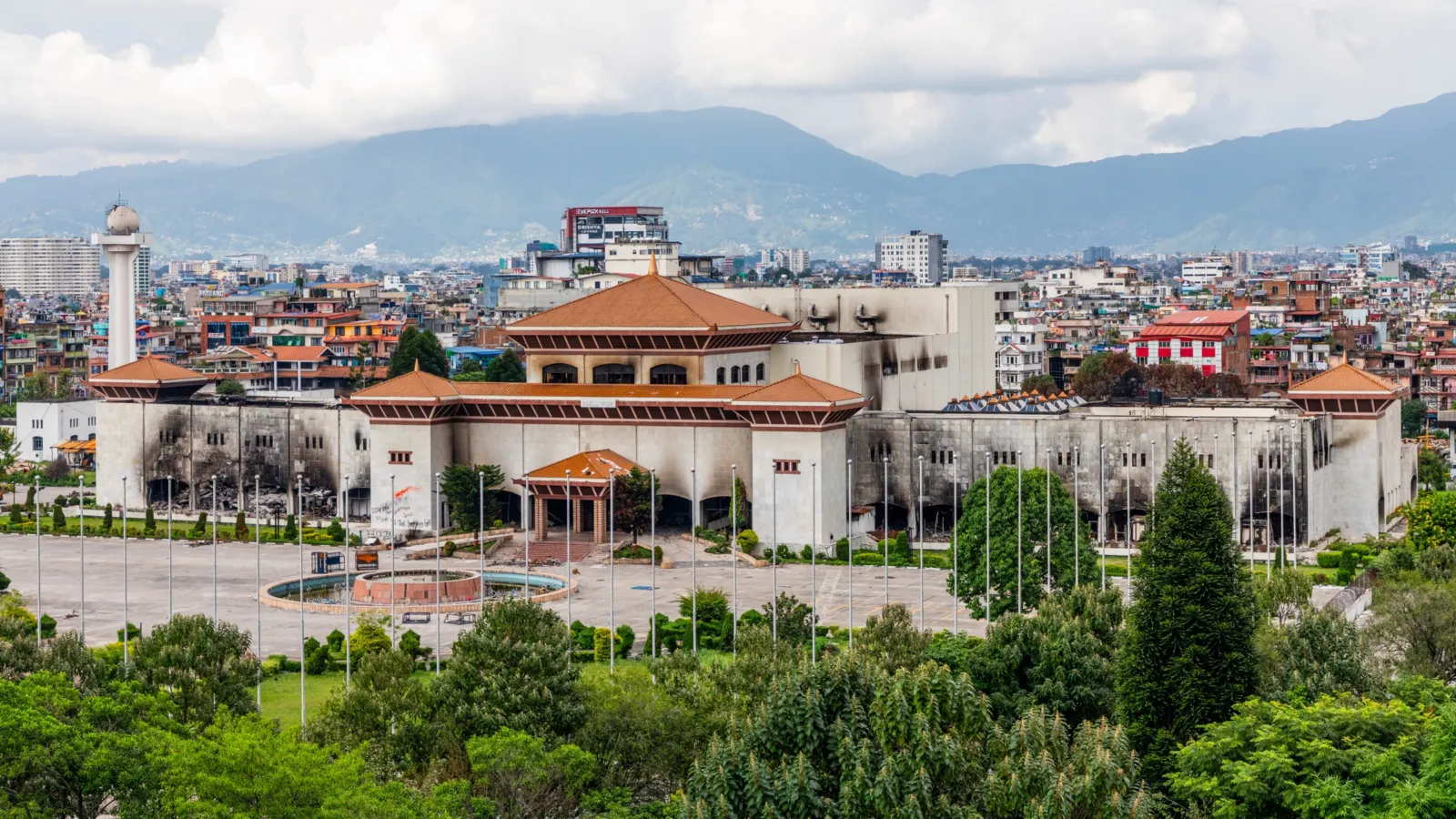
It was too late. On 9 September protesters defied a curfew and set fire to parliament, the headquarters of the Nepali Congress and the homes of senior politicians, including Prime Minister K.P. Sharma Oli and President Ram Chandra Paudel 56. About 900 inmates escaped from two prisons 6. Oli resigned that day, writing to the president: “In view of the adverse situation in the country, I have resigned effective today” 6. The army took control of the capital overnight and imposed a curfew 62.
On 12 September Sushila Karki, a 73-year-old former chief justice, was sworn in as interim prime minister, the first woman to lead a Nepali government. On her recommendation the president dissolved parliament and set elections for 5 March 2026 27. The dead included protesters shot by police, prison inmates trying to escape and three police officers 2. Official tolls kept changing: police said at least 51 had died by 12 September 2; the inquiry later put the toll at 76 dead and 2,522 wounded 8.
Oli denied responsibility. “The government did not issue orders to target the protesters and fire shots,” he said on 19 September, blaming “infiltrators” and calling for an investigation into the use of automatic weapons he said the police did not have 9.
How it unfolded
-
Government blocks 26 social-media platforms.
-
Key moment. Police fire on protesters; 19 killed. The ban is lifted.
-
Key moment. Parliament set on fire; Oli resigns.
-
Sushila Karki sworn in as interim prime minister; parliament dissolved.
-
Key moment. Election: the RSP wins 182 of 275 seats.
-
Inquiry recommends prosecuting Oli, Lekhak and the former police chief.
-
Balendra Shah becomes prime minister; Oli and Lekhak arrested.
-
Supreme Court orders their release; investigation continues.
-
Investigation described as ‘virtually stalled’.
The inquiry
The interim government appointed a three-member judicial commission led by a former judge, Gauri Bahadur Karki, to investigate the events of 8 and 9 September 10. Its report, submitted on 8 March 2026, said the events “occurred due to misgovernance” 10. It recommended that Oli, his home minister Ramesh Lekhak and the former police chief Chandra Kuber Khapung be prosecuted for criminal negligence, finding that no attempt had been made to stop more than four hours of gunfire on 8 September 1112. A commission member said investigators found no evidence of the organised infiltration Oli had alleged 13. The commission largely did not examine the arson of 9 September, citing its mandate and time 13.
Oli called the report “extremely negligent, character assassination and hate politics” 8. A former deputy police chief, Hemanta Malla, called it “completely biased”, and the report was criticised for gaps and contradictions 13.
A new government
The election went ahead on 5 March 2026. The Rastriya Swatantra Party (RSP) won 182 of 275 seats; the Nepali Congress won 38 and Oli’s CPN-UML 25 14153. Balendra Shah, a rapper and former mayor of Kathmandu, beat Oli in his own constituency 14 and was sworn in as prime minister on 27 March 3.
The next day police arrested Oli and Lekhak at their homes in an investigation into deaths by negligence, saying they were acting on the commission’s recommendations 1617. No charges were filed in court. Oli’s lawyer called the arrest illegal 17. On 9 April, after a habeas corpus petition, the Supreme Court ordered their release while the investigation continued. “The government detained me unlawfully for 13 days on criminal charges out of prejudice and revenge,” Oli wrote 18.
A year after the protests, the investigation was described as “virtually stalled” and the commission’s recommendations had largely not been implemented 19. “Governments do not study the commission’s suggestions, nor do they implement them,” said Gauri Bahadur Karki 20.
Why it matters
Nepal’s uprising showed how quickly a young, online generation could bring down a government once the state shut off its platforms and then fired on it. The election that followed swept aside the parties that had dominated Nepali politics for two decades. Whether the new government holds anyone to account for the 76 deaths is the test of whether the change goes beyond the people in power.
Sources and references
- ArticleThe Star (Malaysia) / Asia News Network, “Only Hamro Patro, X respond as Nepal bars 26 social sites”, 6 September 2025. Link
- ArticleAssociated Press via KSAT, “Nepal’s president appoints former chief justice as interim premier and first woman leader”, 12 September 2025. Link
- ReportCongressional Research Service (via EveryCRSReport), “Parliamentary Elections in Nepal (CRS Insight IN12677)”, 31 March 2026. Link
- ArticleThe Kathmandu Post, “19 dead in Gen Z protests across Nepal”, 8 September 2025. Link
- ArticleCBS News (with AFP), “Nepal protests over repealed social media ban rage, sparking prime minister’s sudden resignation”, 9 September 2025. Link
- ArticleBBC News via The Star (Kenya), “Nepal parliament set on fire after PM resigns”, 9 September 2025. Link
- ArticleDawn (AFP), “Parliament dissolved in Nepal, polls set for March”, 13 September 2025. Link
- ArticleArab News Pakistan (Reuters), “Panel wants prosecution of ousted Nepal PM over violence in ‘Gen Z’ protests”, 26 March 2026. Link
- ArticleArab News Pakistan (AFP), “Nepal’s ousted PM calls for probe into deadly youth protests”, 19 September 2025. Link
- ArticleThe Kathmandu Post, “Karki-led commission submits report”, 8 March 2026. Link
- ArticleThe Kathmandu Post, “Karki commission’s recommendations on the Gen Z protests explained in 10 points”, 25 March 2026. Link
- ArticleThe Kathmandu Post, “Leaked Gen Z revolt probe report holds Oli, Lekhak liable to prosecution”, 26 March 2026. Link
- ArticleThe Kathmandu Post, “Karki probe report under fire for gaps, contradictions”, 27 March 2026. Link
- ArticleProthom Alo (AFP), “Nepal’s RSP party of Balendra Shah wins majority: election commission”, 12 March 2026. Link
- ArticleHimalpress, “EC finalizes PR seats; RSP gets 57 out of 110 seats”, 12 March 2026. Link
- ArticleOnlinekhabar English, “Former PM Oli, Lekhak arrested”, 28 March 2026. Link
- ArticleThe Spokesman-Review (wire), “Nepal’s ex-PM Oli arrested over deaths during Gen Z protests”, 27 March 2026. Link
- ArticleThe Kathmandu Post, “Oli, Lekhak released following court order”, 9 April 2026. Link
- ArticleOnlinekhabar English, “A year after Gen Z movement, investigation reports remain unimplemented”, 8 September 2026. Link
- ArticleThe Kathmandu Post via Asia News Network, “Nepal’s Shah government forms commissions, but cares little for the outcome”, 12 August 2026. Link
Sources and references are provided for transparency and further reading. Allegations and claims are attributed to their respective sources. Triple Frontiers distinguishes reported allegations from independently established facts.
The Frontier Brief
The week’s essential international reporting and new investigations, every Friday.