Bangladesh after Hasina: an uprising, a death sentence and a new government
Sheikh Hasina fled to India in August 2024 after a student uprising the UN says left as many as 1,400 dead. A tribunal has since sentenced her to death in absentia, her party is banned, and an elected government has taken office. She says she will come home.
DHAKA On 5 August 2024 Bangladesh’s army chief, General Waker-uz-Zaman, went on television. “The prime minister has resigned. An interim government will be formed to run the country,” he said 12. Sheikh Hasina, who had governed for 15 years 3, had already left her official residence with her sister and flown to India, where she landed at an airport outside New Delhi and was met by India’s national security adviser, Ajit Doval 413. She has lived in New Delhi ever since 3.
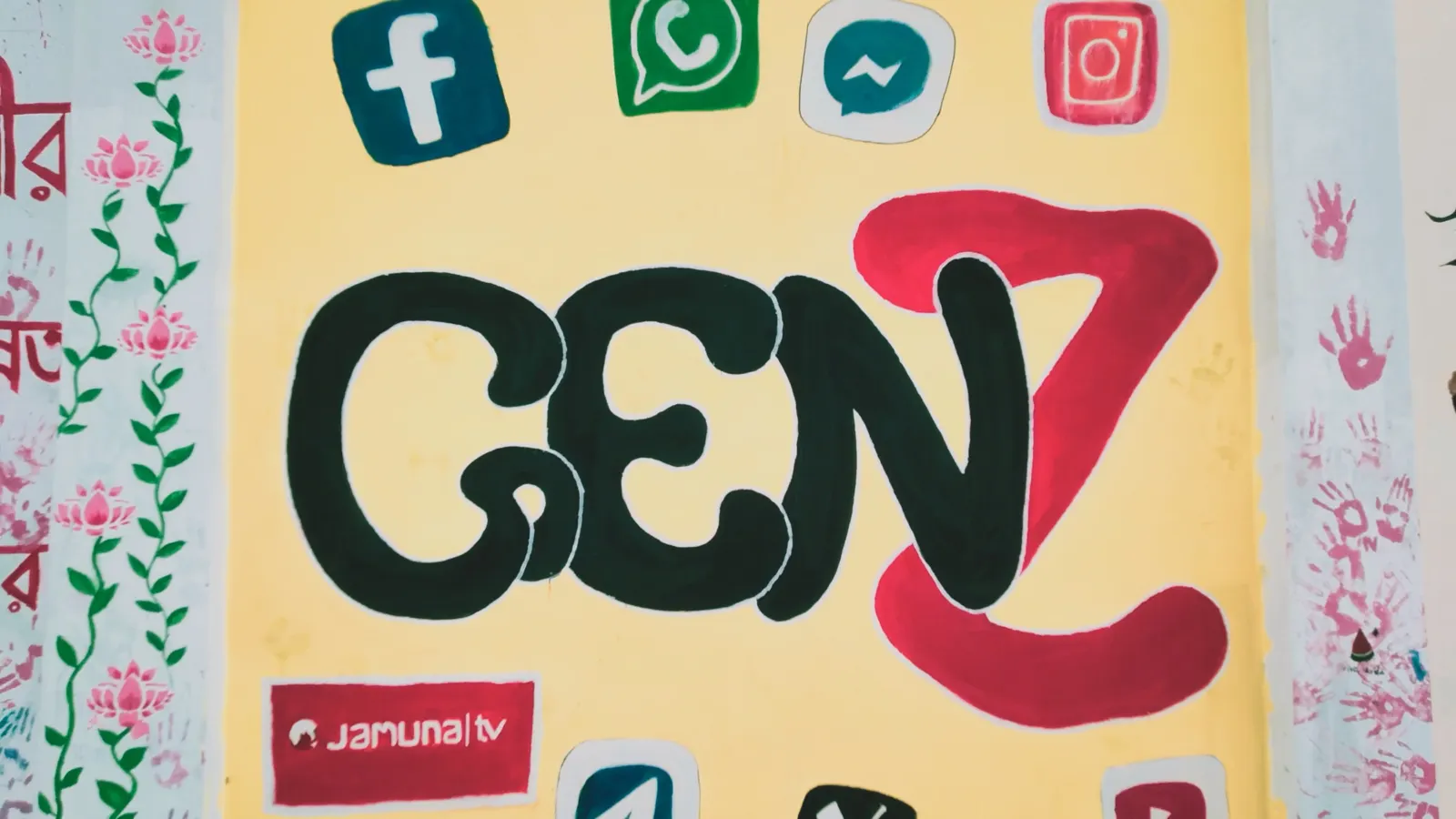
The protests that brought her down began in July as a student campaign against quotas in civil-service jobs. On 21 July the Supreme Court cut the quotas from 56% to 7%, but by then the demonstrations had turned into a demand for justice for those killed by security forces 1.
The UN’s findings
At the request of the interim government, the UN human rights office sent investigators, a forensic physician and a weapons expert to Bangladesh. Its report, published in February 2025, estimated that as many as 1,400 people may have been killed between 1 July and 15 August 2024, the vast majority shot by security forces, and that 12 to 13% of those killed were children; police reported that 44 officers were also killed 5. The interim government’s own count at the time was 834 deaths 6.
“The brutal response was a calculated and well-coordinated strategy by the former Government to hold onto power in the face of mass opposition,” said Volker Türk, the UN High Commissioner for Human Rights. “Accountability and justice are essential for national healing and for the future of Bangladesh” 5.
The interim government
On 8 August 2024 Muhammad Yunus, winner of the 2006 Nobel Peace Prize, was sworn in as chief adviser of an interim government 7. A committee it appointed reported in December that, on average, US$16 billion a year had been laundered abroad under Hasina’s government, according to Yunus’s press secretary 8.
On 10 May 2025 the interim government banned all activities of Hasina’s Awami League, including online, until the International Crimes Tribunal finishes trying the party and its leaders. It also amended the tribunal’s founding law so that it can try political parties 910.
The verdict
Hasina’s trial before the International Crimes Tribunal opened on 1 June 2025. She and her former home minister, Asaduzzaman Khan Kamal, were tried in absentia; the former police chief, Chowdhury Abdullah Al-Mamun, the only defendant in custody, pleaded guilty and became a state witness 1112. The Awami League called the court a “kangaroo” tribunal 12.
On 17 November 2025 the tribunal convicted Hasina of crimes against humanity and sentenced her to death. The presiding judge, Golam Mortuza Mozumder, said she had committed crimes against humanity “by her order to use drones, helicopters and lethal weapons” against civilians 1314. Kamal was also sentenced to death in absentia; Al-Mamun received five years in prison 14. The tribunal ordered their assets seized 15.
Hasina rejected the verdict as the work of “a rigged tribunal established and presided over by an unelected government with no democratic mandate” 13. “But neither I nor other political leaders ordered the killing of protestors,” she said, adding that she was “not afraid to face my accusers in a proper tribunal where the evidence can be weighed and tested fairly” 16. The UN human rights office called the verdict an important moment for victims but said: “We … regret the imposition of the death penalty, which we oppose in all circumstances” 13. Human Rights Watch said the tribunal still fell short of fair-trial standards 13.
Bangladesh asked India “to immediately extradite the two convicts”; India said it had noted the verdict 17. Hasina’s son said the family would not appeal unless an elected government that included the Awami League took office 17.
How it unfolded
-
Student protests against job quotas grow into a nationwide uprising.
-
Key moment. Hasina resigns and flees to India.
-
Muhammad Yunus sworn in as head of an interim government.
-
UN report estimates up to 1,400 killed.
-
Awami League activities banned.
-
Key moment. Hasina sentenced to death in absentia for crimes against humanity.
-
BNP wins the general election; July Charter approved.
-
Key moment. Tarique Rahman sworn in as prime minister.
-
Hasina applies for a passport and says she plans to return.
An elected government
Bangladesh voted on 12 February 2026, with the Awami League barred from taking part 183. The Bangladesh Nationalist Party (BNP) won 212 of 300 seats; an alliance including Jamaat-e-Islami won 77, and the National Citizen Party, formed by activists from the uprising, won six 19. The Election Commission put turnout at 59.44% 18. A referendum held alongside the election approved the July Charter, a package of reforms including a two-term limit for prime ministers and stronger judicial independence, by 68.1% to 31.9% 2019. The BNP leader, Tarique Rahman, was sworn in as prime minister on 17 February 2026, ending some 18 months of interim rule 19.
A planned return
In November 2026 Hasina applied for a new passport, and exiled members of her party said she was confident of returning to Bangladesh in December 3. “If death is my destiny, I would rather die on the soil of my own country, among my own people,” she told the Associated Press by email, according to the Guardian 3. The tribunal’s chief prosecutor, Aminul Islam, said the deadline for her appeal had passed: “Sheikh Hasina has no option but to face the execution of the verdict” 3. The government said she could return only through an “acceptable prisoner exchange” under the extradition treaty with India 3. The Awami League remains banned 3.
Why it matters
Bangladesh has gone in two years from one-party dominance to an uprising, an interim government, a war-crimes-style trial of its former leader and a new elected government. How it handles Hasina, whether she returns, is extradited or stays in India, will test the new government’s commitment to due process, and its relationship with India, which has sheltered her since 2024.
Sources and references
- ArticleBenarNews, “Bangladesh’s Sheikh Hasina resigns as PM, flees; army says interim govt to be formed”, 5 August 2024. Link
- Articlebdnews24.com, “An interim govt will run Bangladesh, says army chief Waker-Uz-Zaman”, 5 August 2024. Link
- ArticleThe Guardian, “Disgraced former leader Sheikh Hasina plans return to Bangladesh from exile”, 10 November 2026. Link
- ArticleThe Daily Star, “Sheikh Hasina has left Gono Bhaban for ‘safer place’”, 5 August 2024. Link
- ReportUnited Nations in Bangladesh / OHCHR, “Bangladesh: UN report finds brutal, systematic repression of protests, calls for justice for serious rights violations”, 12 February 2025. Link
- ArticleDawn, “Hasina govt behind ‘crimes against humanity’, says UN (AFP)”, 13 February 2025. Link
- ArticleThe Daily Star, “Yunus-led interim govt takes charge”, 8 August 2024. Link
- ArticleProthom Alo (BSS), “Committee submits White Paper on economy to Chief Adviser”, 1 December 2024. Link
- ArticleThe Daily Star, “Govt decides to ban AL activities”, 10 May 2025. Link
- Articlebdnews24.com, “Awami League faces ban, war crimes-style trial”, 11 May 2025. Link
- ArticleFrance 24, “Bangladesh to open trial of fugitive ex-PM”, 1 June 2025. Link
- ArticleABC News (Australia), “Bangladesh’s ousted PM Sheikh Hasina indicted on charges of crimes against humanity”, 11 July 2025. Link
- ArticleThe Guardian, “Ousted Bangladesh PM Sheikh Hasina found guilty of crimes against humanity”, 17 November 2025. Link
- ArticleProthom Alo, “Sheikh Hasina sentenced to death”, 17 November 2025. Link
- ArticleThe Business Standard, “ICT’s asset seizure order: What Sheikh Hasina and Asaduzzaman Khan own”, 18 November 2025. Link
- ArticleBusiness Today, “Didn’t order killing: Hasina issues detailed rebuttal after conviction, challenges Yunus”, 17 November 2025. Link
- ArticleFrance 24, “Bangladesh’s ousted leader Sheikh Hasina sentenced to death for crimes against humanity”, 17 November 2025. Link
- ArticleThe Business Standard, “BNP clocks landslide victory as Jamaat’s religion card fails”, 12 February 2026. Link
- ArticleThe Guardian, “Tarique Rahman sworn in as Bangladesh prime minister”, 17 February 2026. Link
- ArticleThe Daily Star, “National Election 2026 results”. Link
Sources and references are provided for transparency and further reading. Allegations and claims are attributed to their respective sources. Triple Frontiers distinguishes reported allegations from independently established facts.
The Frontier Brief
The week’s essential international reporting and new investigations, every Friday.