Hurricane Melissa a year on: Jamaica’s record storm, the payouts and a slow rebuild
Melissa struck Jamaica on 28 October 2025 as a Category 5 hurricane, the strongest on record to hit the island, according to the US National Hurricane Center. Officials counted 45 dead in Jamaica and 43 in Haiti. A catastrophe bond paid out in full, but a year later the prime minister and the opposition both say reconstruction is too slow.
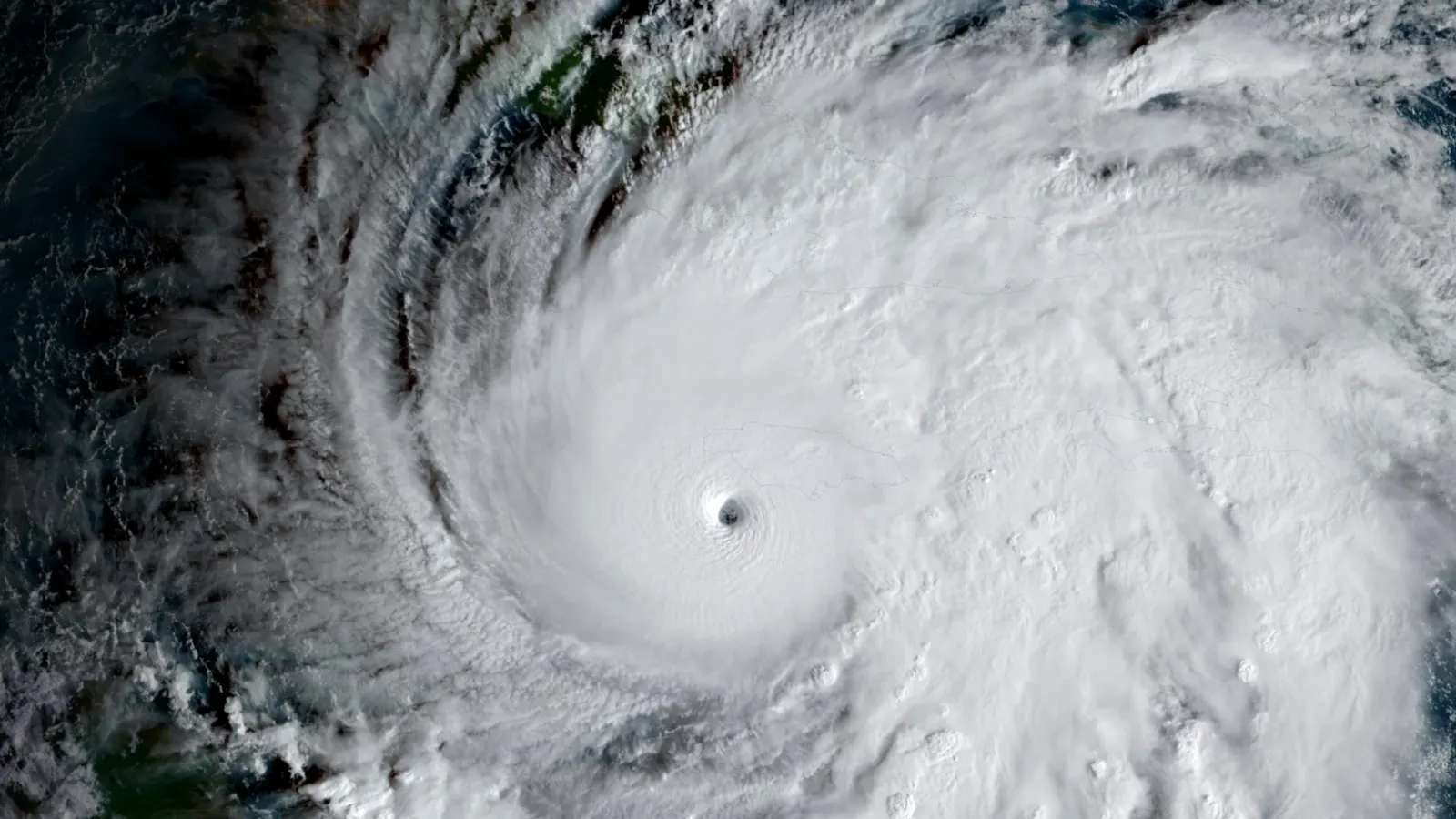
KINGSTON Hurricane Melissa made landfall near New Hope in south-western Jamaica at about 17:25 UTC on 28 October 2025 as a Category 5 hurricane, with estimated maximum sustained winds of 160 knots, the US National Hurricane Center (NHC) said in its post-storm report 1. AP put the storm’s top winds at 185 mph (295 km/h) 2. The NHC says Melissa is the strongest hurricane on record to make landfall in Jamaica 1.
Jamaican officials recorded 45 deaths, and Haiti’s civil protection directorate reported 43 34. Cuba’s government reported no deaths 12. A year on, Jamaica’s own estimate of damage and losses stands at US$12.2 billion, equivalent to 56.7 per cent of its 2024 GDP 5.
A record-breaking storm
Melissa became a hurricane on 25 October, about 150 nautical miles south of Jamaica, and reached Category 5 on 27 October 1. The NHC estimates that it peaked at 165 knots, with a minimum central pressure of 892 millibars, at 12:00 UTC on 28 October, about 40 nautical miles south-south-west of New Hope 1. The centre notes that its intensity estimates typically carry an uncertainty of about 10 per cent 1.
According to the NHC, Melissa’s 160-knot landfall ties the Atlantic record for sustained wind at landfall, shared with Dorian in 2019 and the 1935 Labor Day hurricane 1. Its landfall pressure of 897 millibars is the second lowest on record for an Atlantic landfall 1.
The NHC estimates that the storm surge reached 7 to 11 feet above normally dry ground around Crawford and Black River 1. Melissa left Jamaica’s north coast as a Category 3 hurricane and, at 07:20 UTC on 29 October, made landfall near Chivirico in Santiago de Cuba province, with estimated winds of 100 knots 1.
Deaths in Jamaica, Haiti and Cuba
On 10 December 2025, Commander Alvin Gayle, director general of Jamaica’s Office of Disaster Preparedness and Emergency Management (ODPEM), said the confirmed death toll stood at 45, with 13 people still unaccounted for 3. “Our thoughts remain with the families of those we’ve lost,” he said 3. According to the NHC, St Elizabeth recorded 18 of the deaths and Westmoreland 15 1. Gayle also reported 12 deaths related to leptospirosis after the storm, seven of them officially confirmed 3.
In Haiti, the Directorate of Civil Protection reported 43 dead, 21 injured and 13 missing, with 25 of the deaths in Petit-Goâve 4. In Cuba, the Civil Defense evacuated more than 735,000 people in the east, and no deaths were reported, according to AP 2. The NHC says some media reported deaths in Cuba, but the government’s assessment attributed none to the storm 1.
The NHC’s revised report, dated 19 May 2026, attributes at least 93 deaths to Melissa, including three in Panama and two in the crash of a relief flight in Florida 1. It says a breakdown of direct and indirect deaths is not known 1.
How it unfolded
-
Melissa becomes a hurricane about 150 nautical miles south of Jamaica.
-
Melissa reaches Category 5 south-west of Kingston.
-
Key moment. Peak of 165 knots and 892 mb; landfall near New Hope, Jamaica, as a 160-knot Category 5.
-
Landfall near Chivirico, Cuba, as a Category 3 after more than 735,000 people are evacuated.
-
CCRIF payouts to Jamaica reach US$91.9 million; World Weather Attribution publishes its study.
-
Key moment. World Bank confirms full US$150 million catastrophe bond payout.
-
World Bank and IDB estimate physical damage at US$8.8 billion.
-
Jamaica secures up to US$6.7 billion in international support.
-
ODPEM confirms 45 deaths; 13 people unaccounted for.
-
IMF approves about US$415 million in emergency financing.
-
Key moment. PIOJ puts damage and losses at US$12.2 billion, 56.7% of GDP.
-
World Bank prices a new US$200 million catastrophe bond for Jamaica.
-
First anniversary; opposition leader calls recovery too slow.
-
IMF mission reports a 1.2% contraction in 2025/26 and a return to pre-storm output by mid-2027.
Counting the cost
Estimates of the damage rose over the following months 675. On 4 November 2025, Prime Minister Andrew Holness told parliament that preliminary figures put damage at US$6 billion to US$7 billion, about 28 to 32 per cent of the previous fiscal year’s GDP 6. “I want the country to appreciate that we have never had a disaster of this magnitude with this economic footprint in terms of the impact, not Gilbert, not Ivan,” he said 6.
On 19 November, the World Bank and the Inter-American Development Bank (IDB) estimated physical damage at US$8.8 billion, or 41 per cent of 2024 GDP, the costliest hurricane in Jamaica’s recorded history 7. That estimate excluded wider economic losses 7. On 3 March 2026, the Planning Institute of Jamaica (PIOJ) put total damage and losses at J$1.952 trillion (US$12.2 billion), based on an assessment with the UN Economic Commission for Latin America and the Caribbean 5.
Growth estimates were later revised 589. In January 2026, the IMF projected that the economy would shrink by 4.3 per cent in the 2025/26 fiscal year 8. In March, the PIOJ revised its estimate to a 1.4 per cent contraction 5. In November 2026, an IMF mission said the economy had contracted by 1.2 per cent, according to the Jamaica Observer 9.
Insurance pays out
On 7 November 2025, the World Bank confirmed that its US$150 million catastrophe bond for Jamaica, issued in 2024, would pay out in full 10. The calculation agent, AIR Worldwide, found that Melissa’s central pressure and track met the bond’s pre-agreed triggers 10. The regional insurer CCRIF SPC paid a further US$91.9 million under Jamaica’s tropical cyclone and excess rainfall policies 11. The World Bank called it the largest combined payout in CCRIF’s history 12.
On 1 December 2025, Jamaica secured a package of up to US$6.7 billion over three years from international partners, including up to US$1 billion each from the World Bank Group, the IDB Group and CAF 13. On 16 January 2026, the IMF approved about US$415 million in emergency financing 8. On 18 May 2026, the World Bank priced a new US$200 million catastrophe bond for Jamaica, running to 2030, to replace the cover used up by Melissa 14.
What scientists found
Three research groups published analyses of how climate change affected the storm 151617. World Weather Attribution found that heavy five-day rainfall like Melissa’s in Jamaica is about 30 per cent more intense and about twice as likely in today’s climate, which is about 1.3C warmer than before industrialisation 15.
Imperial College London’s Grantham Institute estimated that climate change increased Melissa’s maximum wind speed by 7 per cent and its economic damage by 34 per cent 16. Climate Central said Melissa passed over waters about 1.4C warmer than average, conditions it said climate change had made 500 to 700 times more likely 17.
Recovery a year on
In September 2026, Education Minister Dana Morris Dixon said 688 schools had been damaged, 313 of them severely 18. Holness said: “I am not satisfied with the pace at which we have been able to deliver” 18.
On 1 October 2026, AP reported that about 20 hotels were still closed and that visitor arrivals had fallen by 17 per cent 19. The Jamaica Hotel and Tourist Association said more than 61 per cent of claimants were still waiting for full insurance settlements 19. “Claims are being paid slowly and settled short, and that leaves a working-capital hole across the sector,” said its president, O’Brian Heron 19.
On the first anniversary, the opposition leader, Mark Golding, said more than 156,000 homes had been damaged and about 24,000 destroyed 20. He said the government’s ROOFS housing programme had not delivered the promised relief 20.
In November 2026, the IMF mission projected growth of 1.3 per cent in 2026/27, with output returning to its pre-hurricane level by mid-2027, the Observer reported 9.
Why it matters
By the NHC’s account, Melissa was the strongest hurricane on record to hit Jamaica 1. The country’s own estimate of the damage and losses equals more than half its 2024 economic output 5. Insurance arranged before the storm paid out in full, and a World Bank economist said Jamaica’s preparedness “offers a good example for other countries” 1012. But a year later, the prime minister and the opposition both say the rebuilding is too slow, and hoteliers say insurance claims are being paid slowly 191820. Attribution studies by three research groups link the storm’s strength to human-caused warming 151617.
Sources and references
- Official documentNOAA National Hurricane Center, “Tropical Cyclone Report: Hurricane Melissa (AL132025), 21-31 October 2025”, 19 May 2026. Link
- ArticleThe Gleaner / Associated Press, “Haiti and Cuba pick up the pieces after Melissa’s destruction (AP)”, 30 October 2025. Link
- ArticleThe Gleaner (JIS News), “32 cases of fatalities still under investigation following Hurricane Melissa”, 10 December 2025. Link
- ArticleLe Nouvelliste, “Death Toll from Hurricane Melissa Rises to 43 in Haiti”, 5 November 2025. Link
- ArticleOur Today, “Total loss and damage from Melissa estimated at US$12.2 billion”, 6 March 2026. Link
- Official documentJamaica Information Service, “Damage from Hurricane Melissa Estimated at Up to US$7 Billion”, 5 November 2025. Link
- ReportWorld Bank, “World Bank, IDB estimate Hurricane Melissa damage to Jamaica totals all-time high of US$8.8 billion”, 19 November 2025. Link
- ReportInternational Monetary Fund, “IMF Executive Board Approves a US$415 Million Disbursement to Jamaica to Address the Impact of Hurricane Melissa”, 16 January 2026. Link
- ArticleJamaica Observer, “Keep spending tight…”, 12 November 2026. Link
- ReportWorld Bank, “Hurricane Melissa triggers 100% payout of $150 million World Bank catastrophe bond for Jamaica”, 7 November 2025. Link
- ReportCCRIF SPC, “CCRIF provides US$91.9 million in payouts to Jamaica following Hurricane Melissa”. Link
- ReportWorld Bank, “When the Storm Hits, Cash is not a Constraint: Jamaica’s Approach to Disaster Financing”, 9 March 2026. Link
- ReportInternational Monetary Fund, “Jamaica Secures a Package of US$6.7 Billion Over Three Years in International Support for Recovery and Reconstruction After Hurricane Melissa”, 1 December 2025. Link
- ReportWorld Bank, “World Bank Prices Catastrophe Bond Providing Protection for Jamaica Replacing Coverage Triggered by Hurricane Melissa”, 18 May 2026. Link
- ReportWorld Weather Attribution, “Climate change enhanced intensity of Hurricane Melissa, testing limits of adaptation in Jamaica and eastern Cuba”, 6 November 2025. Link
- ReportImperial College London Grantham Institute, “Hurricane Melissa (IRIS attribution analysis)”. Link
- ReportClimate Central, “Hurricane Melissa (2025)”. Link
- ArticleCaribbean National Weekly, “Nearly a year after Hurricane Melissa, Holness says recovery is moving too slowly”, 9 September 2026. Link
- ArticleLa Nación / Associated Press, “Jamaica struggles to recover a year after Hurricane Melissa hit as peak tourism season looms (AP)”, 1 October 2026. Link
- ArticleJamaica Observer, “Golding slams slow Hurricane Melissa recovery, calls for greater accountability one year later”, 28 October 2026. Link
Sources and references are provided for transparency and further reading. Allegations and claims are attributed to their respective sources. Triple Frontiers distinguishes reported allegations from independently established facts.
The Frontier Brief
The week’s essential international reporting and new investigations, every Friday.