World court rules Myanmar committed genocide against the Rohingya
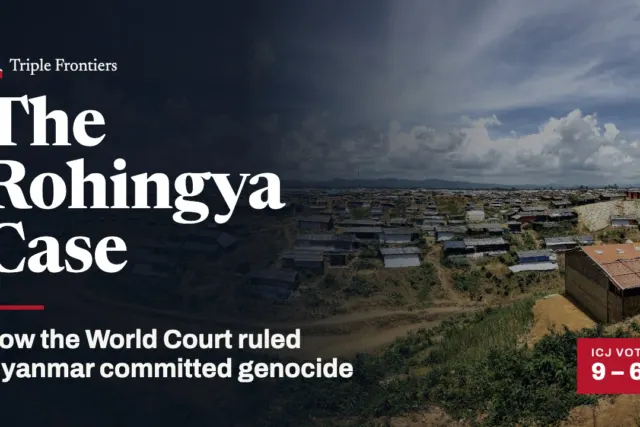
The International Court of Justice ruled by nine votes to six on 19 November that Myanmar committed genocide against the Rohingya in 2017, the first time it has found a state responsible for genocide. Myanmar must compensate the Rohingya and allow their safe return; its government called the ruling unfair.
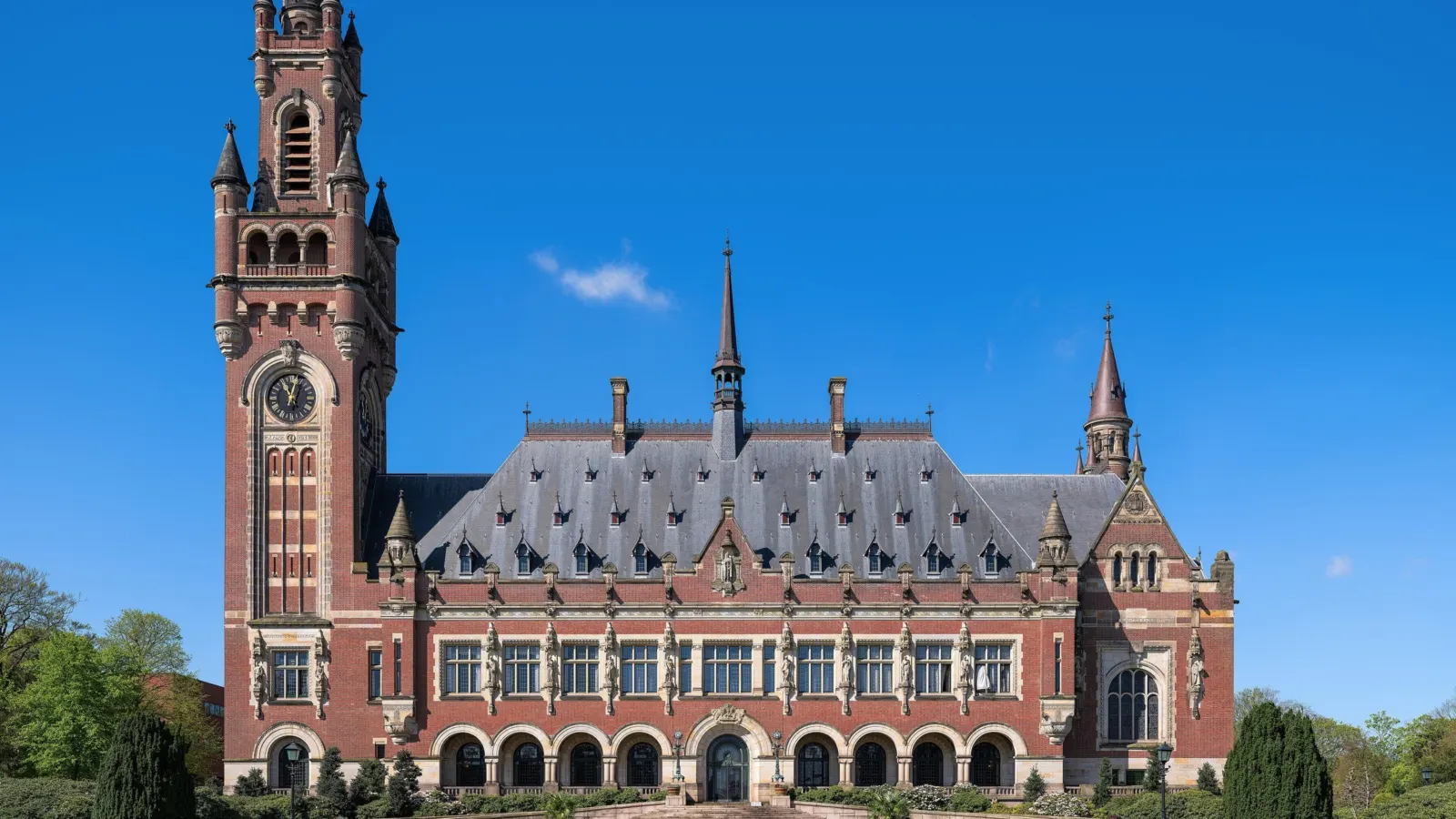
THE HAGUE Updated 25 November: on 23 November the UK formally recognised the genocide against the Rohingya and sanctioned five senior Myanmar military officers 12. This article first reported the ruling on 20 November.
The International Court of Justice ruled on Thursday 19 November that Myanmar committed genocide against the Rohingya in northern Rakhine State during the military’s 2017 “clearance operations” 34. The 15-judge court reached its finding by nine votes to six 35. It is the first time the court has ruled that a state committed genocide 367.
Reading the judgment in The Hague, the court’s president, Yuji Iwasawa, said the court found that Myanmar “has committed genocide against the Rohingya group in northern Rakhine state” 38. “The court finds that Myanmar’s security forces killed thousands of Rohingya civilians,” he said 38.
Myanmar’s government rejected the ruling as unfair 7. The Gambia, which brought the case in 2019 with the backing of the 57-member Organisation of Islamic Cooperation, welcomed it, as did Bangladesh and Rohingya groups 859.
What the court found
The court said evidence showed that Myanmar’s forces killed about 10,000 Rohingya 3. According to a transcript broadcast by Democracy Now, Iwasawa said “the estimate of 10,000 Rohingya violently killed during those clearance operations is supported by the evidence” 5.
According to an analysis of the judgment by Adil Ahmad Haque in Just Security, the court found at least 1,834 acts of rape, that about 326,000 Rohingya had their homes burned and that about 700,000 fled 4. The court also pointed to restrictions on marriages and births in Maungdaw Township and the denial of birth registration for Rohingya children, he wrote 4.
The court rejected Myanmar’s argument that the 2017 campaign was a legitimate operation against insurgents 3. According to Haque, it found that the evidence excluded counter-insurgency, forcible displacement and collective punishment as explanations, and that intent to destroy the Rohingya group in substantial part was the one reasonable inference 4. It applied its established standard of “fully convincing evidence” 4.
Myanmar was also found responsible for failing to prevent genocide by private individuals, failing to punish genocide, failing to adopt necessary legislation and breaching the court’s earlier orders on preserving evidence, according to Haque 4.
The court’s website lists separate opinions or declarations by its judges, including a joint dissenting opinion signed by Vice-President Sebutinde, Judges Tomka, Abraham, Xue and Nolte, and Judge ad hoc Kress 10. Al Jazeera reported that the Chinese judge voted in Myanmar’s favour on all but one count 7.
Compensation and return
The court ordered Myanmar to compensate the Rohingya for its violations, with the amount to be determined later 78. It must also allow a “safe and dignified return to their place of residence and the reunification of families” for Rohingya displaced by its actions, ABC News reported 87.
The international lawyer Philippe Sands told Democracy Now: “It’s given Myanmar two years to report on the steps it’s going to take” 5. After that, he said, The Gambia will be able to go back to court and ask for reparations 5.
The judgment is final and cannot be appealed 811. The court cannot enforce it beyond reporting non-compliance to the UN Security Council 3. Under Article 94(2) of the UN Charter, the council can “make recommendations or decide upon measures to be taken to give effect to the judgment”, according to Human Rights Watch 11. The case concerns state responsibility, and no individuals will be prosecuted or imprisoned as a result of it, ABC reported 8.
Reactions
Myanmar’s government spokeswoman, Khaing Khaing Soe, called the ruling “unfair” 7. “Our country was unjustly accused,” she said, adding that the decision was not unanimous 7. China’s foreign ministry spokesperson, Guo Jiakun, said such rulings were “not conducive to the settlement of disputes” 7.
The Gambia’s justice minister, Dawda Jallow, said: “What was done to them was genocide, and Myanmar is responsible” 5. “The victory belongs to the Rohingya,” he said 5.
In Dhaka, Bangladesh’s state minister for foreign affairs, Humaiun Kobir, told reporters: “We welcome the verdict and we are satisfied” 9. He called the judgment a landmark that could have positive implications for countries such as Bangladesh affected by the Rohingya’s persecution and displacement 9.
Tun Khin, president of the Burmese Rohingya Organisation UK, called it “a big, important, meaningful time for the Rohingya, genocide survivors” 8. Rohingya activist Yasmin Ullah said: “This is a great day for the Rohingya, and it is a great day for all oppressed people, everywhere” 3.
How it unfolded
-
ICJ finds Srebrenica was genocide and that Serbia failed in its obligation to prevent it.
-
ICJ finds genocidal acts in Croatia v Serbia but no genocidal intent.
-
Key moment. Myanmar’s military launches its ‘clearance campaign’ in Rakhine State.
-
Key moment. The Gambia files the case, backed by the Organisation of Islamic Cooperation.
-
Court unanimously orders provisional measures to protect the Rohingya.
-
Court rejects Myanmar’s preliminary objections.
-
Hearings on the merits.
-
Key moment. Court rules 9-6 that Myanmar committed genocide.
How the case reached judgment
In August 2017 Myanmar’s military launched a “clearance campaign” in Rakhine State after an attack by a Rohingya insurgent group 3. Human Rights Watch says more than 700,000 people fled to Bangladesh; ABC, citing the UN and rights groups, puts the figure at more than 740,000, and dpa at nearly 800,000 1189. About 1.2 million Rohingya refugees now live in Bangladesh, mostly in camps in Cox’s Bazar district, according to AP 3.
The Gambia filed the case in November 2019 under the 1948 Genocide Convention, with the support of the Organisation of Islamic Cooperation 119. In January 2020 the court unanimously ordered Myanmar to prevent genocidal acts, ensure its military did not commit genocide and preserve evidence, and to report on its compliance 1211. In July 2022 it rejected all of Myanmar’s preliminary objections 11. Hearings on the merits ran from 12 to 29 January 2026 1011.
Eleven states, including Canada, the United Kingdom, France, Germany and the Maldives, were authorised to intervene on questions of how the convention should be interpreted 11.
Bosnia, Croatia and the cases still pending
The court’s earlier genocide rulings stopped short of finding a state responsible 6. In 2007 it found that the killing of at least 8,000 Bosniak men and boys at Srebrenica amounted to genocide, but it did not find Serbia responsible for genocide, ruling instead that Serbia violated its obligation to prevent it 63. In the 2015 Croatia case, the court found that genocidal acts occurred but “did not establish genocidal intent”, AP reported 6.
Genocide cases brought by South Africa against Israel over Gaza, and by Ukraine against Russia, are pending, with no ruling on the merits expected for years 63. “Genocides have similarities in how they are committed so this decision will have an impact on other cases,” said Melanie O’Brien of the University of Western Australia 3.
Latest
As of 20 November, according to Al Jazeera, Myanmar’s government had rejected the judgment as unfair 7. The amount of compensation is to be decided in later proceedings, and Sands said Myanmar has two years to report on the steps it will take 75. William Schabas told ABC that “we don’t have much in the way of enforcement of judicial decisions” 8.
After the judgment the British government expelled Myanmar’s defence attaché and summoned its chargé d’affaires 132. On 23 November it formally recognised the genocide and imposed asset freezes, travel bans and director disqualifications on five senior Myanmar military officers 12. The government notice names them as Myo Htut Hlaing, Brigadier General and Deputy Commander of Northwestern Regional Command; Major General Myo Min Tun, Eastern Military Commander (Shan/Kayah) State; Major General Myat Thet Oo, former Commander Northern Command (Kachin); Major General Kyaw Soe, Commander of the Western Command (Rakhine) since June 2026; and Major-General Kyaw Swar Oo, the former Western Command commander he replaced 1. Four were listed under the UK’s Myanmar sanctions rules over repression of civilians, and Myo Htut Hlaing under its global human rights rules over the treatment of prisoners in Chin State 12. The UK also said it intends to legislate against the export and supply of aviation fuel to Myanmar, and pledged an additional £5m for Rohingya and other communities in Rakhine State 12. “The horrific violence and persecution inflicted on the Rohingya cannot go unanswered,” said the Foreign Secretary, Ed Miliband 12.
A first genocide finding against a state
The ruling is the first time the court has held a state responsible for committing genocide, after its Bosnia and Croatia judgments stopped short 36. It answers a case brought on behalf of the Rohingya Muslim minority by The Gambia with the backing of the 57-member Organisation of Islamic Cooperation 7811. But compensation and return depend on Myanmar’s compliance, and enforcement rests with the UN Security Council 311. Yasmin Ullah described the Rohingya’s position until now: “Because so far, we’ve just been pushed around into this limbo state” 3.
Sources and references
- Official documentGOV.UK (Foreign, Commonwealth & Development Office), “UK leads global action with major new measures against Myanmar military following landmark genocide judgment”, 23 November 2026. Link
- ArticleDemocratic Voice of Burma (DVB), “UK formally recognizes Rohingya genocide, sanctions 5 generals and plans jet fuel ban”, 24 November 2026. Link
- ArticleCBS News / Associated Press, “Myanmar committed genocide against the Rohingya, U.N. top court rules in landmark judgment”, 19 November 2026. Link
- ReportJust Security (Adil Ahmad Haque), “The International Court of Justice Finds that Myanmar Committed Genocide Against the Rohingya: A Preliminary Analysis”, 19 November 2026. Link
- ArticleDemocracy Now!, “”Historic Judgment”: World Court Rules Burma Guilty of Genocide Against Rohingya”, 20 November 2026. Link
- ArticleAssociated Press (Mike Corder) via PBS NewsHour, “Myanmar is the first state found responsible for genocide. Here’s how the ICJ ruled in other cases”, 20 November 2026. Link
- ArticleAl Jazeera (with AFP, Reuters) via Yahoo News, “Myanmar, China object to landmark ICJ ruling on Rohingya genocide”, 20 November 2026. Link
- ArticleABC News (Australia), Karishma Vyas with wires, “Myanmar committed genocide in Rohingya massacres, UN court finds in historic verdict”, 19 November 2026. Link
- Articledpa via Yahoo News, “ICJ ruling: Bangladesh sees step to resolve Rohingya crisis”, 19 November 2026. Link
- Court documentInternational Court of Justice, “Application of the Convention on the Prevention and Punishment of the Crime of Genocide (The Gambia v. Myanmar): case page”, 19 November 2026. Link
- ReportHuman Rights Watch, “Questions and Answers: International Court of Justice Judgment in Myanmar Genocide Case”, 3 November 2026. Link
- ArticleThe Independent via Yahoo News, “Myanmar must end ‘genocide’ campaign against Rohingya Muslims, ICJ rules”, 23 January 2020. Link
- Official documentGOV.UK (Foreign, Commonwealth & Development Office), “Foreign Secretary statement on International Court of Justice Myanmar judgement: 19 November”, 19 November 2026. Link
Sources and references are provided for transparency and further reading. Allegations and claims are attributed to their respective sources. Triple Frontiers distinguishes reported allegations from independently established facts.
The Frontier Brief
The week’s essential international reporting and new investigations, every Friday.