Trump threatens a ‘tremendous tax’ on data centres abroad. What can he actually do?
Trump says US companies building AI data centres abroad will pay a "tremendous tax", though he set out no mechanism and taxing power lies with Congress. We explain the legal tools, how the threat clashes with his administration's new chip export rule, and which countries' projects are exposed.
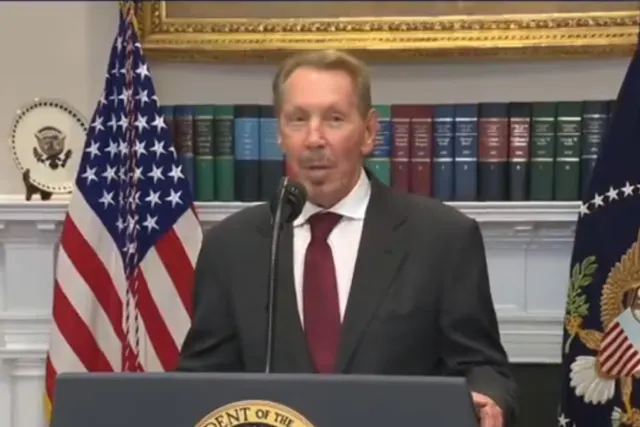
WASHINGTON President Donald Trump said on Friday 20 November that American companies building artificial intelligence (AI) data centres in other countries would face “a tremendous tax” 12. The idea was new even to his own team, he said: “I haven’t even said that to my people. But I’m telling them now they’re here” 2.
Trump did not say how the tax would work, and the Associated Press (AP) said it was not immediately clear how it would be enforced 1. Reports also framed it differently. CNBC said Trump told reporters companies would be banned from building abroad and taxed if they did 2. In the AP’s account he said: “We’re not going to allow companies to build data centers in other countries… If they do that, they can. But we’re going to put a tremendous tax on them” 1.
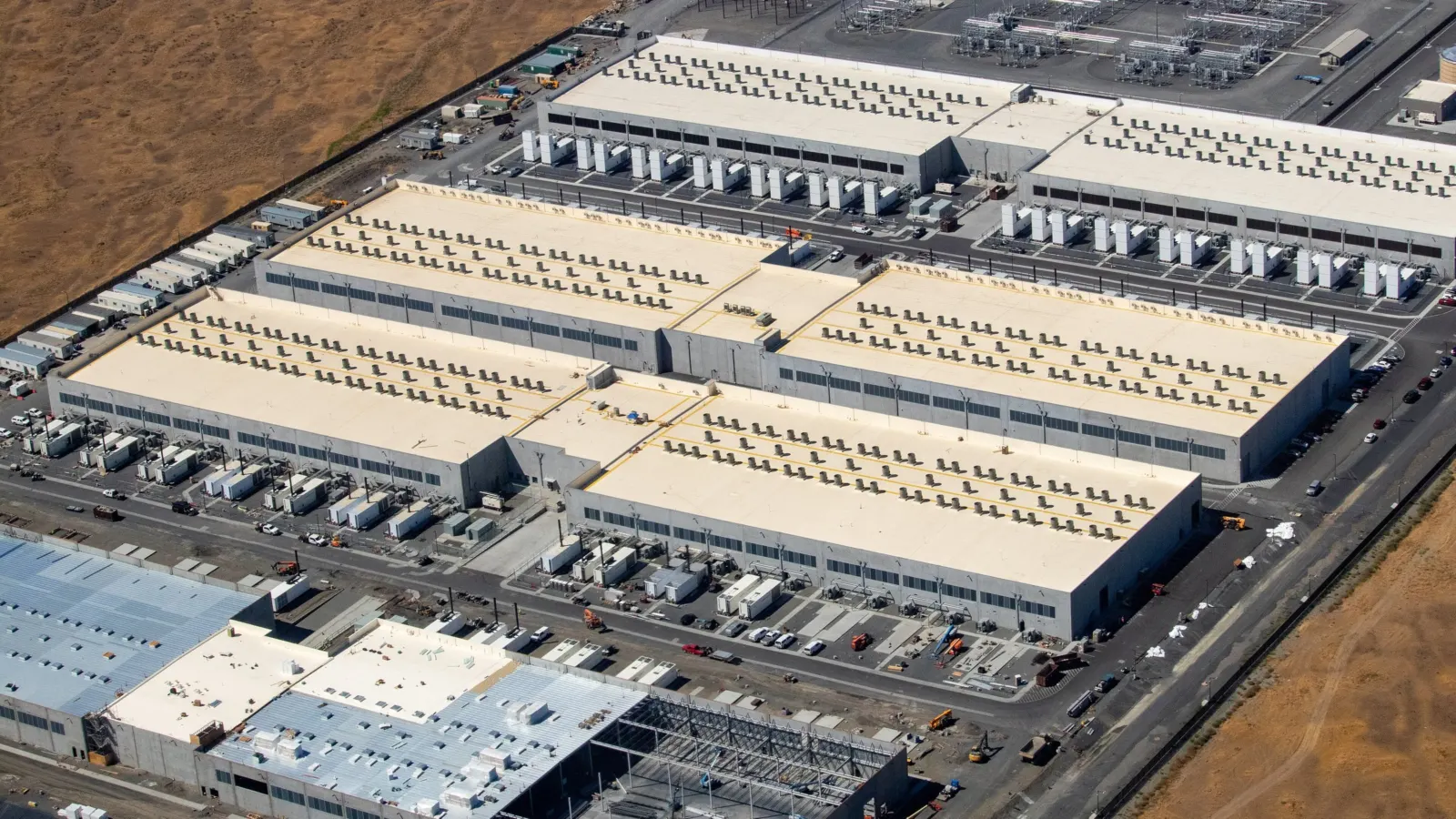
The sums at stake are large. Big technology companies may spend as much as $1.8 trillion on AI next year, mostly on data centres, according to UBS economists cited by the AP 1. Alphabet, Amazon, Microsoft, Meta and Oracle already have data centres abroad, CNBC noted; Amazon, Google, Microsoft and Oracle did not immediately respond to its requests for comment on 20 November 2.
Can a president impose a tax like this?
Not by himself. The Constitution says “The Congress shall have power to lay and collect taxes, duties, imposts and excises”, so a new tax on building abroad would need a law from Congress 3.
The Supreme Court restated that in February. On 20 February, by six votes to three, it ruled that the International Emergency Economic Powers Act (IEEPA), an emergency law Trump had used to impose tariffs, “does not authorize the President to impose tariffs” 453. Chief Justice John Roberts cited an 1824 ruling calling tariffs “a branch of the taxing power”, which the Constitution gives to Congress 53.
That leaves powers Congress has already delegated. Section 232 of the Trade Expansion Act lets the president “adjust the imports” of a product when the Commerce Department finds they threaten national security 4. Trump has used it on AI hardware: a proclamation of 14 January 2026 put a 25% tariff on a narrow group of advanced chips, such as Nvidia’s H200 and AMD’s MI325X, while exempting chips imported for use in US data centres, according to the Congressional Research Service (CRS), Congress’s in-house researchers 4. In effect, that tariff already rewards companies that install those chips at home 4.
But Section 232 is written around imports 4. A data centre built in Malaysia or Abu Dhabi is not an import, and Trump did not explain how a levy on one would work 1. Taxing the American chips shipped to such sites meets another barrier: the Constitution’s Export Clause says “No Tax or Duty shall be laid on Articles exported from any State” 4.
How does it fit with the new chip export rule?
Four days before Trump spoke, the Commerce Department’s Bureau of Industry and Security (BIS), which runs US export controls, released an interim final rule, “Addressing Remote Access to Advanced Semiconductors” 67. It was due to take effect on publication in the Federal Register on 19 November, with comments open until 19 January 2027, according to the law firm K&L Gates 6. It formally scraps the Biden-era AI Diffusion Rule, which the semiconductor industry’s trade body welcomed, praising a “more targeted approach” 87.
The rule requires a licence when advanced chips go to a data centre anywhere in the world that gives companies headquartered in China, Macau or other countries on a US list of concern more than 12 million units of “total processing performance”, a measure of computing power 86. The law firm Morgan Lewis puts that at roughly 760 of Nvidia’s H100 or H200 chips, and says a US company’s ownership “does not exempt its overseas facilities” 8.
It also adds a licence requirement for advanced chips sent to Brazil, Indonesia, Malaysia, Singapore and Thailand, which K&L Gates says the US government sees as presenting “an elevated diversion risk” 6. But no licence is needed where the end user is headquartered in the United States, provided the exporter files monthly reports with BIS 86. So the administration’s own rule gives American companies an easier route into those countries than foreign rivals, the opposite of the penalty Trump described four days later 16.
Which countries stand to lose?
Trump acknowledged the pull of other countries: “We have a lot of places that want them badly, and they’re great places. They have energy, and they have everything” 2.
Malaysia. Google said on 4 November it would invest US$15 billion there in 2027 and 2028, including data centre campuses in Selangor and Negeri Sembilan, and expects construction to support more than 37,000 local jobs a year 9. Malaysia is also on the new BIS licence list 6.
India. In October 2025 Google announced about $15 billion over 2026 to 2030 for an AI hub in Visakhapatnam with a data centre campus “capable of gigawatt-scale compute capacity” 10.
United Arab Emirates. Stargate UAE is being built in Abu Dhabi by Khazna, part of the Emirati AI group G42, with OpenAI, Oracle, Nvidia, Cisco and SoftBank 11. Its first 200-megawatt phase, of a planned one gigawatt, was due in the third quarter of 2026, The National reported in December 2025 11. Our analysis of the Stargate race compares what was promised with what was built 11.
Saudi Arabia. Amazon Web Services and Humain, a Saudi AI company, announced an “AI Zone” in Riyadh in November 2025 with up to 150,000 AI chips, part of a plan to invest more than $5 billion in the kingdom 12.
Why is building at home getting harder?
“We want them to build it here,” Trump said, arguing that the US was ahead of China in AI but could fall behind if political opposition slowed construction 1.
That opposition is wide. About three-quarters of US voters in this year’s election said they opposed a new data centre in their community, according to The AP Voter Poll 1. In CNBC’s All-America Economic Survey, 64% of registered voters opposed an AI data centre within 10 miles of home and 13% supported one 2. A summer AP-NORC survey found about six in ten Americans backed limits on new data centres, with a majority very or extremely worried about electricity prices or water 1. The AP said those concerns contributed to heavy Republican losses in the midterms 1.
Trump told towns negotiating with tech companies to “Make the deal”, adding: “They have plenty of money. Take it” 1. The companies say they will offer communities more financial benefits and fewer taxpayer handouts; Google and Meta told the AP they are working to build trust 1.
He also praised the permitting bill the Senate passed on 19 November, which would speed approvals for power plants and transmission lines and make data centres pay for their energy and grid upgrades: “It’s going to cause tremendous amounts of new building” 1. As we reported on the Senate vote, the bill now goes to the House 1.
What happens next?
As of 20 November, according to the AP and CNBC, the proposal had been set out in remarks at a briefing, without details of how it would work 12. Any new tax would need Congress 3. The fixed dates lie elsewhere: the House must take up the permitting bill 1, and comments on the BIS export rule close on 19 January 2027 6. Meanwhile the existing 25% Section 232 tariff on advanced chips already spares chips bound for American data centres 4.
Sources and references
- ArticleAssociated Press via WRTV, “Trump threatens tax on US companies building AI data centers overseas”, 20 November 2026. Link
- ArticleCNBC, “CNBC report on Trump’s data-centre tax remarks (trump-data-centers-ai-companies-tax)”, 20 November 2026. Link
- Court documentCornell Legal Information Institute, “Learning Resources v. Trump (2026)”. Link
- Official documentCongressional Research Service, “Legal Authority for Export Controls and Tariffs on Semiconductor Chips Sold to China (LSB11409)”, 23 March 2026. Link
- Court documentSCOTUSblog, “A breakdown of the court’s tariff decision”, 20 February 2026. Link
- ReportK&L Gates, “BIS Targets Remote Access to Advanced Computing: New Controls for Semiconductor Companies and Data Centers”, 18 November 2026. Link
- Official documentSemiconductor Industry Association, “SIA Statement on New Export Control Rule to Address Remote Access to Advanced Semiconductors”, 16 November 2026. Link
- ReportMorgan Lewis, “Commerce Targets Remote Access to Advanced Semiconductors in New Interim Final Rule”, 18 November 2026. Link
- ArticleNew Straits Times, “Google to pour US$15bil into Malaysia’s digital future”, 4 November 2026. Link
- Official documentGoogle, “Our First AI Hub in India, Powered by a $15 Billion Investment”, 14 October 2025. Link
- ArticleThe National, “Stargate UAE’s first phase to be completed in third quarter of 2026”, 5 December 2025. Link
- Official documentAmazon, “AWS and HUMAIN Expand Partnership with NVIDIA AI Infrastructure and AWS AI Chip Deal”, 19 November 2025. Link
Sources and references are provided for transparency and further reading. Allegations and claims are attributed to their respective sources. Triple Frontiers distinguishes reported allegations from independently established facts.
The Frontier Brief
The week’s essential international reporting and new investigations, every Friday.