Senate passes permitting overhaul that limits lawsuits and makes data centres pay grid costs
The Bipartisan American Affordability and Jobs Act passed 62-33 with 15 votes from the Democratic caucus. We read the Congressional Research Service summary and the roll call: here is who gains, what changes in court, and what the House must now decide.
WASHINGTON The US Senate on Thursday night passed the Bipartisan American Affordability and Jobs Act (BAAJA), a bill that speeds up federal approval of energy and infrastructure projects and, in the version summarised by Congress’s researchers, gives opponents 150 days to sue over them 12. The vote, at 9:30pm on 19 November, was 62-33 1.
The roll call shows 47 Republicans voting yes, joined by 14 Democrats, among them Senate Democratic leader Chuck Schumer, and Angus King of Maine, an independent who sits with the Democrats 1. Thirty-one members of the Democratic caucus voted no, as did two Republicans, Josh Hawley of Missouri and Mike Rounds of South Dakota; five senators did not vote 1.
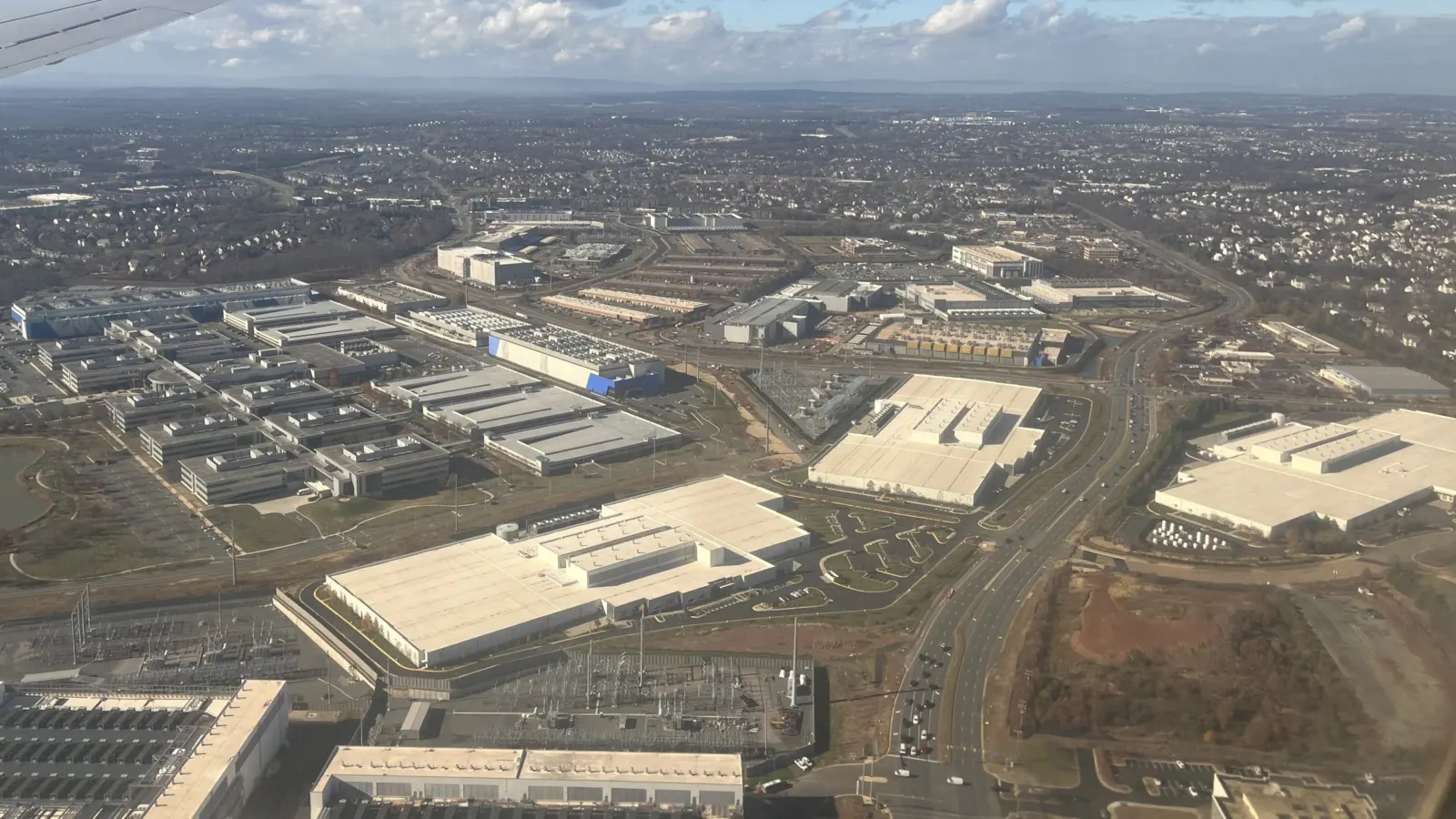
The bill covers a wide range of projects, including gas pipelines, high-voltage power lines, wind and solar farms, and the data centres that run artificial intelligence (AI) systems 23. It also writes into federal law a rule that new data centres must pay for the grid upgrades they cause 24. King says that provision “shifts about $35 billion worth of grid construction costs onto data centers” 5.
That matters because data centres are a rising share of US power demand 67. A Lawrence Berkeley National Laboratory (LBNL) report published by the Department of Energy found that data centres used 176 terawatt-hours (TWh) in 2023, about 4.4% of US electricity, and projected 325 to 580 TWh, or 6.7% to 12%, by 2028 6. The International Energy Agency (IEA) said in April 2025 that data centres were on course to account for almost half of US electricity demand growth to 2030 7.
The bill now goes to the House of Representatives, where Republicans hold a four-seat edge until Democrats take control in January 8910. President Donald Trump supports it 1112.
What changes in court
The National Environmental Policy Act (NEPA) requires federal agencies to study a project’s environmental effects before approving it, and allows public input; supporters of the bill say the process causes delays 13. According to a section-by-section summary by the Congressional Research Service (CRS), Congress’s research arm, section 1110 of the bill as introduced would set a 150-day deadline to sue, counted from publication of an environmental impact statement or from when an approval is made public 2. Cases would go straight to a federal appeals court, the bill limits who can file, and judges would generally be barred from cancelling a permit or halting a project unless further conditions are met 2.
The Institute for Progress (IFP), a Washington think tank that supports the bill, says plaintiffs would have to have commented during the review and show direct harm 4. If the sole flaw a court finds is in the environmental review, it would send the decision back to the agency to fix within 180 days, and work could continue meanwhile, IFP says 4. The House’s own permitting bill, passed in December 2025, cut the deadline to sue under NEPA “from 6 years to 150 days”, according to Republican Representative Harriet Hageman 14.
Agencies would face their own clocks: IFP lists one year for a shorter environmental assessment and two years for a full impact statement 4. Section 1401 would generally stop agencies revoking permits after they are issued, with exceptions such as fraud or court orders, and would let developers claim compensation if they do 2.
CRS describes the bill as introduced on 30 September 2. The four sponsors, Republicans Shelley Moore Capito and Mike Lee and Democrats Sheldon Whitehouse and Martin Heinrich, released a substitute on 7 November that they called “clarifying, conforming, and technical edits” 15.
Who gains
Data centres face new costs but clearer rules. Section 2107 directs the Federal Energy Regulatory Commission (FERC), which oversees interstate power markets, to change how transmission costs are charged to data centres, while confirming that states can set their own rates 2. Under IFP’s reading, utilities could not pass a new data centre’s hook-up and upgrade costs on to other customers, with a federal minimum for sites of 20 megawatts or more 4.
Pipelines gain a fast track for routine work: section 2102 exempts maintenance and upgrades on existing interstate gas pipelines from full environmental review 2. Section 1202 narrows what states can consider when they certify that a pipeline or power line meets water-quality rules under the Clean Water Act 2. IFP says states would get nine months instead of a year to decide 4.
For transmission developers, the bill widens FERC’s power to approve interstate lines and requires utilities to plan lines jointly with neighbouring regions 2. Lines chosen that way could be approved federally if a state refuses, IFP says 4.
What each side says
“Tonight, the passage of permitting reform in the Senate finally became reality and we took a major step towards addressing the affordability concerns of the American people,” Capito, who chairs the Environment and Public Works Committee, said after the vote 16. Majority Leader John Thune said: “This bill is years in the making.” 11 Senator John Barrasso of Wyoming praised its limits on lawsuits, CBS News reported 11. The American Petroleum Institute called the vote “a major breakthrough on historic permitting reforms” 12.
King said: “there is no clear alternative to it, either now or even in the next Congress” 5. Heinrich said in November that it “makes sure data centers pay for the energy they use and the grid upgrades they cause, instead of passing those costs on to New Mexico families” 15.
Senator Jeff Merkley of Oregon, who voted no, said: “First, it makes it a lot easier to build data centers.” 3 He warned it could “open another floodgate for carbon” 11, and called its passage without a committee hearing “pretty damn outrageous and offensive” 12. Erich Pica of Friends of the Earth said: “Senators who voted for this bill should be ashamed.” 12
The CRS summary says section 2301 limits when tribal historic preservation officers must be consulted on projects 2. Tribal groups say the bill threatens their right to be consulted: the National Congress of American Indians and 10 other Indigenous organisations urged Congress to halt the bill 17. Crystal C’Bearing of the Northern Arapaho Tribal Historic Preservation Office said it “is written in a way that will take away our tribal sovereignty and our ability to consult on federal projects” 17. The Crow Tribe and the National Tribal Energy Association backed it 17.
The House arithmetic
As of 20 November the House had 218 Republicans, 214 Democrats, one independent and two vacancies, according to the House Clerk 8. With 433 members seated, the bill needs 217 votes if everyone votes 8. It next sits on 24 November 8.
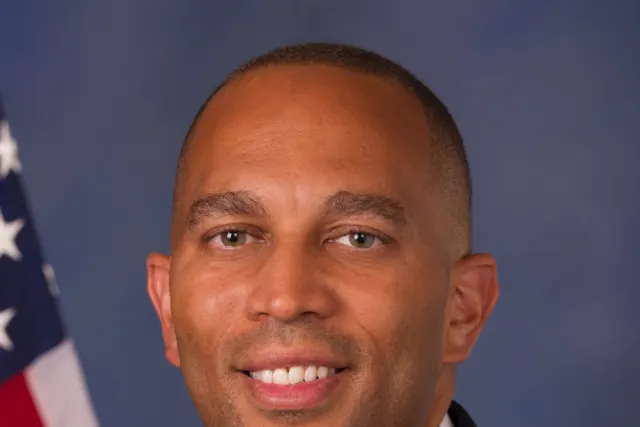
A spokesperson for House Democratic leader Hakeem Jeffries said the bill “falls short in several areas”, CBS News reported, and some House Republicans have raised concerns about its transmission changes 11. Democracy Now reported that a House vote is expected the week after next 3.
Government funding runs out on 11 December, and the new Congress is seated in early January 10. Democrats are on track for more than 250 House seats then, CBS News reported 9. Some opponents argue Democrats will have more leverage next year, and Thune said he did not know whether the House would pass the bill as written or need changes 11.
Sources and references
- Official documentUS Senate, “Roll Call Vote 119th Congress – 2nd Session, Vote Number 270 (On Passage of the Bill H.R. 2347, as Amended)”, 19 November 2026. Link
- Official documentCongressional Research Service (via EveryCRSReport), “Bipartisan American Affordability and Jobs Act (BAAJA) of 2026: Summary of All Sections (R49506)”, 5 November 2026. Link
- ArticleDemocracy Now, “Senate Passes Permitting Reform Bill with Support of 14 Democrats, Including Leader Chuck Schumer”, 20 November 2026. Link
- ReportInstitute for Progress, “How the permitting deal works”, 12 October 2026. Link
- ArticleWABI-TV, “Sen. King reacts after Senate passes Bipartisan American Affordability & Jobs Act”, 20 November 2026. Link
- Official documentUS Department of Energy, “DOE Releases New Report Evaluating Increase in Electricity Demand from Data Centers”, 20 December 2024. Link
- ReportInternational Energy Agency, “AI is set to drive surging electricity demand from data centres”, 10 April 2025. Link
- Official documentClerk of the US House of Representatives, “Office of the Clerk, US House of Representatives: House at a glance”, 20 November 2026. Link
- ArticleCBS News, “House Democrats nominate Hakeem Jeffries for speaker”, 18 November 2026. Link
- ArticleKY3 (Gray DC), “Congress enters lame duck session following midterm elections”, 7 November 2026. Link
- ArticleNews 9 (CBS News / AP), “U.S. Senate passes Bipartisan American Affordability and Jobs Act”, 20 November 2026. Link
- ArticleCommon Dreams, “15 Senate Democrats Help Republicans Pass ‘Giant Giveaway to Big Tech and Polluters’”, 20 November 2026. Link
- ArticleOPB (Associated Press), “Senate advances sweeping energy legislation in first major action since midterm elections”, 10 November 2026. Link
- Official documentOffice of Rep. Harriet Hageman, “House Passes Bipartisan Permitting Reform Bill”, 18 December 2025. Link
- Official documentSenate Environment and Public Works Committee (majority), “Capito, Lee, Whitehouse, and Heinrich Release Substitute Amendment to BAAJA”, 7 November 2026. Link
- Official documentSenate Environment and Public Works Committee (majority), “Senate Passes Capito’s Bipartisan American Affordability and Jobs Act”, 19 November 2026. Link
- ArticleKUNC / Boise State Public Radio, “Indigenous leaders voice concerns about sovereignty amid Senate advancement of BAAJA bill”, 12 November 2026. Link
Sources and references are provided for transparency and further reading. Allegations and claims are attributed to their respective sources. Triple Frontiers distinguishes reported allegations from independently established facts.
The Frontier Brief
The week’s essential international reporting and new investigations, every Friday.