From ban to bargain: how Washington’s AI chip curbs on China were rewritten in 2025–26
The US scrapped a global licensing rule for AI chips, banned Nvidia's China chip and then let sales resume in return for a cut of the revenue. Beijing held back imports, prosecutors charged alleged smugglers, and in November 2026 Commerce turned to chips rented out through overseas data centres.
WASHINGTON On 13 January 2025 the Biden administration issued the “Framework for Artificial Intelligence Diffusion”, a rule that required a licence to export advanced AI chips to any country in the world 1. Eighteen listed destinations and the US, including Japan, the UK, Germany and Taiwan, could obtain the chips under a new licence exception, while other countries faced caps on how much computing power they could import 1. The rule also added a new control on the weights of closed AI models trained with more than 1026 operations 1.
China’s commerce ministry said the restrictions created obstacles for third countries trading normally with China, according to Xinhua 2.
The diffusion rule is dropped
On 13 May 2025, two days before companies would have had to comply, the Trump administration’s Commerce Department announced it would rescind the rule and told enforcement officials not to enforce it 3.
At the same time the Bureau of Industry and Security (BIS), the Commerce agency that runs export controls, warned companies that using Chinese advanced chips, including Huawei’s Ascend processors, risked breaching US export controls 34. China’s commerce ministry spokesperson He Yongqian urged the US to “immediately correct its erroneous practices” 4.
The H20 ban and the revenue share
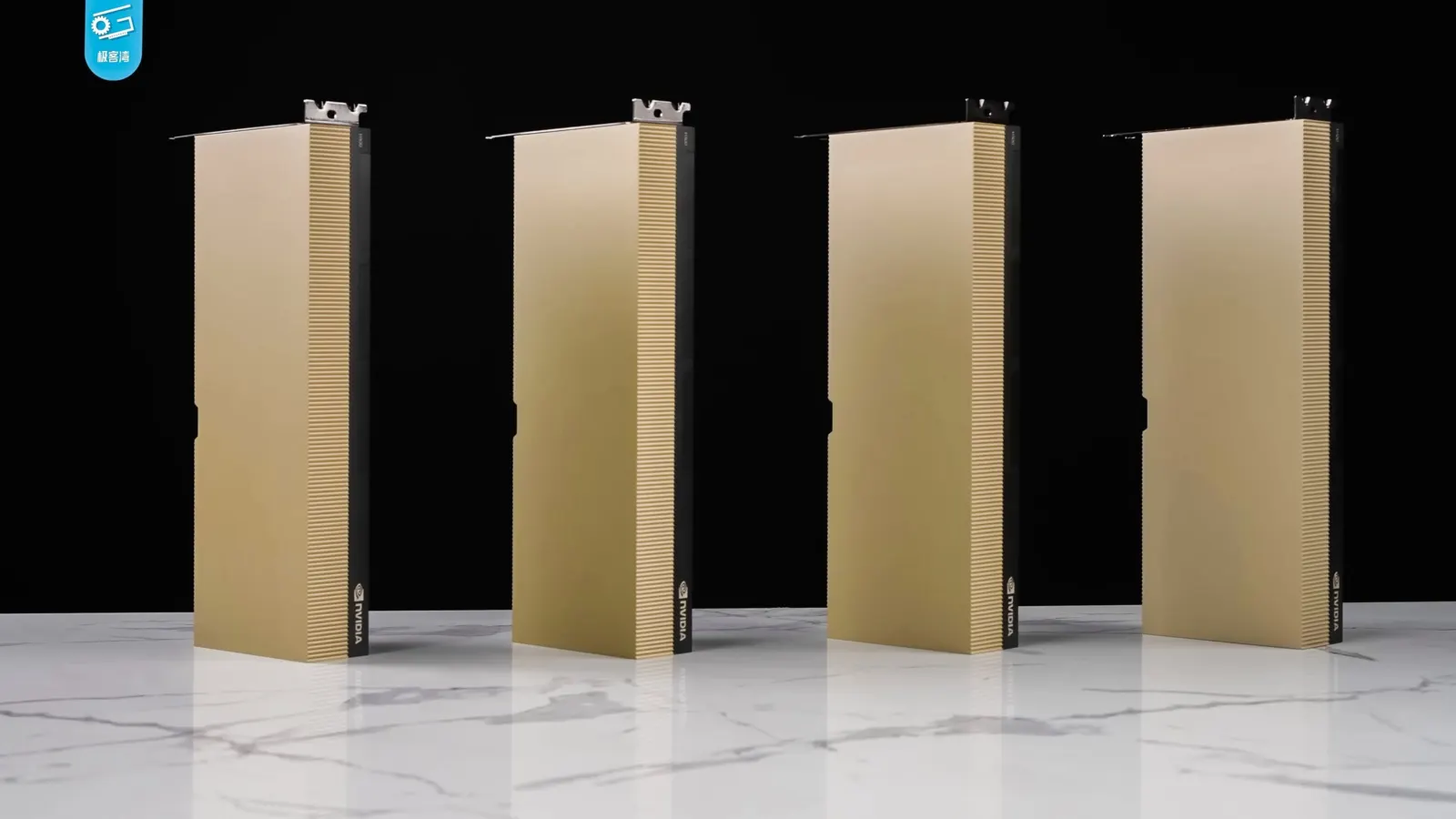
Nvidia had tailored its H20 chip for the Chinese market 5. On 9 April 2025 the US government told the company that exporting the H20 to China would need a licence, and on 14 April said this would apply “for the indefinite future” 6. Nvidia later reported a $4.5 billion charge, said it could not ship a further $2.5 billion of H20 orders and expected to lose about $8 billion of H20 revenue the following quarter 7.
On 14 July Nvidia said it was applying to sell the H20 again and that “the US government has assured Nvidia that licences will be granted” 8. Commerce Secretary Howard Lutnick told Reuters that the decision was part of negotiations with China over rare earths: “We put that in the trade deal with the magnets” 9.
In August Reuters, citing a US official, reported that Nvidia and AMD had agreed to give the US government 15% of revenue from sales to China of chips such as Nvidia’s H20 and AMD’s MI308 10. President Donald Trump said he had first asked for 20%, and called the H20 “obsolete” 11. Nvidia said: “We follow rules the U.S. government sets for our participation in worldwide markets” 10. Alasdair Phillips-Robins, a former Commerce adviser, said that if the reports were accurate, “the administration is trading away national security protections for revenue for the Treasury” 10.
Beijing pushes back
China responded on several fronts. On 31 July 2025 its cyberspace regulator summoned Nvidia to explain alleged “backdoor safety risks” in the H20 12. Nvidia replied that it “does not have ‘backdoors’ in our chips that would give anyone a remote way to access or control them” 12.
In September China’s commerce ministry opened an anti-dumping investigation into some US analogue chips and a separate inquiry into US chip measures, saying US “protectionist practices are suspected of discrimination against China” 13. Two days later China’s market regulator said a preliminary investigation had found that Nvidia broke anti-monopoly law in connection with its purchase of Mellanox 5. According to Nvidia’s filings, the regulator found that its compliance with US export controls, which forced it to sell weaker products in China, discriminated against Chinese customers 14.
Nvidia reported no H20 sales to China-based customers in the quarter to late July 2025 15. It later said H20 licences were granted from August 2025, but Chinese government restrictions left it unable to sell its H20 stock 14.
How it unfolded
-
Key moment. Biden administration issues the AI Diffusion Rule.
-
US tells Nvidia that H20 exports to China need a licence.
-
Key moment. Commerce announces it will rescind the Diffusion Rule.
-
Nvidia says H20 licences will be granted.
-
China’s cyberspace regulator summons Nvidia over the H20.
-
Key moment. Reuters reports Nvidia and AMD will pay 15% of China chip revenue to the US.
-
China’s market regulator says Nvidia broke anti-monopoly law.
-
Trump allows H200 sales to China with 25% for the US.
-
BIS case-by-case H200 policy; 25% chip tariff; China customs reportedly block H200.
-
Super Micro co-founder Wally Liaw charged.
-
Key moment. BIS remote-access rule formally rescinds the Diffusion Rule.
H200 for a 25% cut
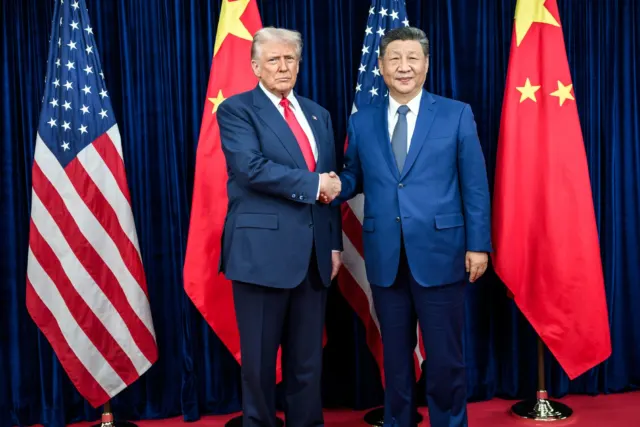
On 8 December 2025 Trump said the US would allow Nvidia to ship its more powerful H200 chip to approved customers in China, with 25% of the proceeds going to the US, and wrote that “President Xi responded positively!” 16.
BIS put this into its rules on 13 January 2026. Exports of the H200, AMD’s MI325X and similar chips to China would be reviewed case by case, subject to conditions including independent testing in the US 17. The next day Trump imposed a 25% tariff on certain advanced chips, naming the H200 and MI325X 18. According to Nvidia’s filings, H200s licensed for China must be inspected in the US first, so they pay the 25% tariff when they are imported, a cost Nvidia says it has not passed on to customers 14.
Beijing was again reluctant. Reuters reported on 14 January 2026, citing three people, that Chinese customs had told agents the H200 was not permitted to enter China 19. Nvidia said licences for small amounts of H200s were granted from February 2026, but sales were restricted by the Chinese government 14. On 5 November 2026 Reuters reported, citing two people, that about 600,000 H200s were being held in Hong Kong awaiting Beijing’s approval 20.
The smuggling cases
In August 2025 two Chinese nationals in California, Chuan Geng and Shiwei Yang, were charged by criminal complaint with exporting GPUs through Singapore and Malaysia 21. In November 2025 four people, two US citizens and two Chinese nationals, were indicted in Florida over 400 Nvidia A100 chips allegedly shipped to China via Malaysia and Thailand 22. These defendants are presumed innocent 2122.
In Texas, Alan Hao Hsu and his company Hao Global pleaded guilty in October 2025 to smuggling and unlawful export offences involving at least $160 million of Nvidia H100 and H200 chips 23.
In March 2026 federal prosecutors in New York charged Yih-Shyan “Wally” Liaw, a co-founder of the server maker Super Micro Computer, with two others over an alleged scheme that diverted at least $510 million of servers to China between late April and mid-May 2025 24. Super Micro was not charged and said the alleged conduct was “a contravention of the company’s policies and compliance controls” 25. Liaw pleaded not guilty and resigned from the board 26. His trial, first set for 2 November 2026, has been moved to March 2027 27. A co-defendant, Ting-Wei “Willy” Sun, pleaded guilty in October 2026, and a third, Ruei-Tsang Chang, remains a fugitive 2824. On 1 October 2026 Greg Lui, the owner of a California computer company, was arrested on charges of routing more than $300 million of servers to China; he is presumed innocent 29.
Where things stand
On 16 November 2026 BIS issued a new rule aimed at chips used remotely 30. Data centres anywhere in the world will need a licence to supply large amounts of computing power, above 12 million units of the agency’s TPP performance measure, to companies headquartered in China, Macau or other countries in the same export-control group; exports of advanced chips to Indonesia, Malaysia, Singapore, Thailand and Brazil will also need a licence 31. The rule also formally rescinds the AI Diffusion Rule, which it says “has never been enforced” 31. China’s foreign ministry said on 13 November that “China opposes abuse of export control measures” 32.
Nvidia said on 17 November 2026 that it shipped $2.4 billion of Hopper data-centre chips to China in the quarter to late October, but that it was not counting on any data-centre computing revenue from China in its forecast 33.
Why it matters
In less than two years the US moved from a global licensing system to selling older chips to China in return for a payment to the Treasury, while Beijing held back much of what Washington allowed 31014. Prosecutors allege that hundreds of millions of dollars’ worth of more capable chips and servers reached China through other routes, and the new remote-access rule shows Washington turning its attention from shipments to computing power hired abroad 232431.
Sources and references
- Official documentFederal Register / govinfo, “Framework for Artificial Intelligence Diffusion (90 FR 4544)”, 15 January 2025. Link
- ArticleChina Daily HK / Xinhua, “China firmly opposes US restrictions on AI exports (Xinhua)”, 14 January 2025. Link
- Official documentBureau of Industry and Security, “Department of Commerce Rescinds Biden-Era Artificial Intelligence Diffusion Rule, Strengthens Chip-Related Export Controls”, 13 May 2025. Link
- ArticleBroadband Breakfast / Associated Press, “China blasts new U.S. rule banning use of Huawei’s Ascend advanced computer chips (AP)”, 15 May 2025. Link
- ArticleBNN Bloomberg / Reuters, “China says preliminary probe shows Nvidia violated anti-monopoly law (Reuters)”, 15 September 2025. Link
- Official documentNVIDIA / SEC, “NVIDIA Form 8-K (H20 licence requirement)”, 15 April 2025. Link
- Official documentNVIDIA, “NVIDIA Announces Financial Results for First Quarter Fiscal 2026”, 28 May 2025. Link
- ArticleARY News / AFP, “Nvidia says it will resume sales of ‘H20’ AI chips to China (AFP)”, 15 July 2025. Link
- ArticleMalay Mail / Reuters, “Nvidia’s resumption of AI chips to China is part of rare earths talks, says US (Reuters)”, 16 July 2025. Link
- ArticleKSL / Reuters, “Nvidia, AMD to pay 15% of China chip sale revenues to US, official says (Reuters)”, 10 August 2025. Link
- ArticleSiliconANGLE, “Nvidia, AMD to pay US government 15% of revenue from AI chip exports to China”, 11 August 2025. Link
- ArticleNews4JAX / Associated Press, “China summons Nvidia over ‘backdoor safety risks’ in H20 chips (AP)”, 31 July 2025. Link
- ArticleThe Star (Reuters/Bloomberg), “China starts probes targeting US semiconductor sector”, 14 September 2025. Link
- Official documentNVIDIA / SEC, “NVIDIA Form 10-Q for the quarter ended 26 July 2026”, 26 August 2026. Link
- Official documentNVIDIA, “NVIDIA Announces Financial Results for Second Quarter Fiscal 2026”, 27 August 2025. Link
- ArticleNBC News, “Trump says he will allow Nvidia to sell some AI chips in China”, 8 December 2025. Link
- Official documentBureau of Industry and Security, “Department of Commerce Revises License Review Policy for Semiconductors Exported to China”, 13 January 2026. Link
- Official documentThe White House, “Fact Sheet: President Donald J. Trump Takes Action on Certain Advanced Computing Chips”, 14 January 2026. Link
- ArticleThe Standard / Reuters, “China’s customs agents told Nvidia’s H200 chips are not permitted, sources say (Reuters)”, 14 January 2026. Link
- ArticleThe Next Web, “Nvidia H200 chips pile up in Hong Kong as Beijing holds back, Reuters says”, 6 November 2026. Link
- Official documentUS Department of Justice, “Two Chinese Nationals Arrested on Complaint Alleging They Illegally Shipped to China Sensitive Microchips”, 5 August 2025. Link
- Official documentUS Department of Justice, “U.S. Citizens and Chinese Nationals Arrested for Exporting Artificial Intelligence Technology to China”, 20 November 2025. Link
- Official documentUS Department of Justice, “U.S. Authorities Shut Down Major China-Linked AI Tech Smuggling Network”, 8 December 2025. Link
- Official documentUS Department of Justice, “Three Charged with Conspiring to Unlawfully Divert Cutting-Edge U.S. Artificial Intelligence Technology to China”, 19 March 2026. Link
- ArticleThe Standard / Reuters, “US charges 3 people tied to Super Micro Computer with conspiring to divert AI tech to China (Reuters)”, 20 March 2026. Link
- ArticleTom’s Hardware, “Super Micro co-founder Wally Liaw pleads not guilty to Nvidia smuggling charges”, 3 April 2026. Link
- ArticleFortune, “Supermicro investigation clears management over Nvidia smuggling case”, 20 August 2026. Link
- ArticleThe Next Web, “Super Micro case ‘fixer’ pleads guilty to sending AI servers to China”, 10 October 2026. Link
- Official documentUS Department of Justice, “California Man Arrested for Smuggling More Than $300 Million in Export-Controlled Computer Servers to China”, 1 October 2026. Link
- Official documentBureau of Industry and Security, “BIS Issues Rule Addressing Remote Access to American Super Intelligence Technology”, 16 November 2026. Link
- Official documentFederal Register, “Addressing Remote Access to Advanced Semiconductors (interim final rule, public inspection)”, 16 November 2026. Link
- ArticleAsia Times, “China hoards Nvidia’s AI chips as US curbs remote access”, 17 November 2026. Link
- Official documentNVIDIA / SEC, “NVIDIA CFO Commentary on Third Quarter Fiscal 2027 Results (8-K exhibit)”, 17 November 2026. Link
Sources and references are provided for transparency and further reading. Allegations and claims are attributed to their respective sources. Triple Frontiers distinguishes reported allegations from independently established facts.
The Frontier Brief
The week’s essential international reporting and new investigations, every Friday.