Australia’s 2025 election: Albanese’s landslide and the Coalition’s turmoil
Anthony Albanese's Labor won 94 of 150 seats in May 2025 and Peter Dutton lost his own seat. Since then the Coalition has split twice, Angus Taylor has replaced Sussan Ley as Liberal leader and One Nation has won its first lower-house seat.
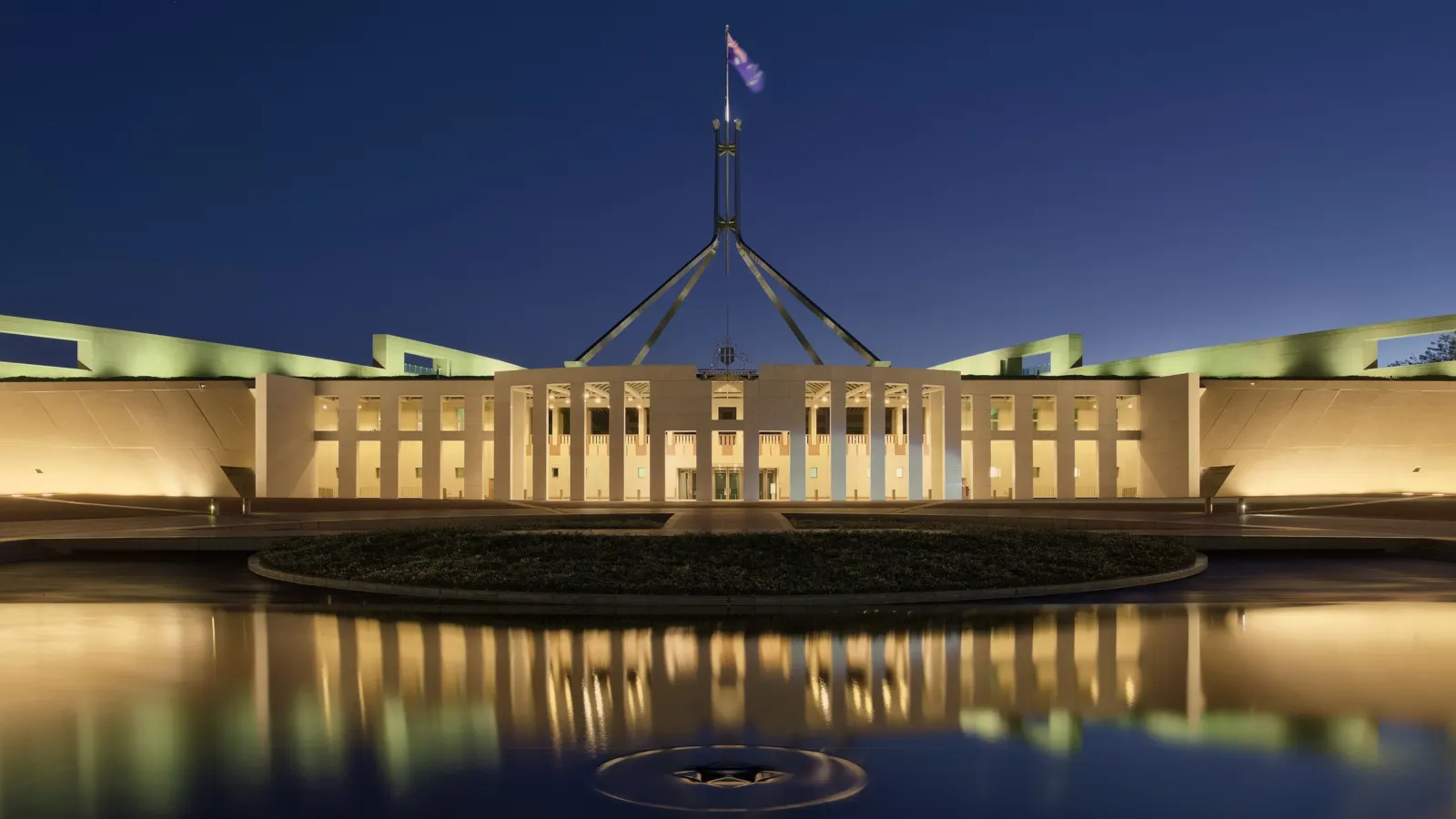
CANBERRA Anthony Albanese’s Labor Party won Australia’s federal election on 3 May 2025, securing a second term 12. In final results from the Australian Electoral Commission (AEC), Labor took 94 of the 150 seats in the House of Representatives and the Liberal-National Coalition 43 3. Independents won 10 seats, and the Greens, Centre Alliance and Katter’s Australian Party one each 3.
Opposition leader Peter Dutton lost his Queensland seat of Dickson to Labor’s Ali France 41. Since then the Coalition has split twice, the Liberals have changed leader and One Nation has won its first lower-house seat 567.
The result
Labor won the national two-party preferred vote by 55.22 per cent to 44.78 per cent, a swing of 3.09 points 8. On first preferences Labor received 34.56 per cent, the Liberals 20.69 per cent, the Liberal National Party of Queensland 7.10 per cent and the Nationals 3.80 per cent 9. The Greens won 12.20 per cent, independents 7.27 per cent and One Nation 6.40 per cent, up 1.44 points 9. Turnout was 90.70 per cent, with 16,409,748 of 18,091,591 enrolled voters casting a ballot 10.
The Coalition’s 43 seats were made up of 18 Liberal, 16 LNP and nine Nationals members 3. The AEC declared the results final, with its page last updated on 10 June 2025 3.
Reuters linked Labor’s win partly to a voter backlash against US President Donald Trump’s policies 2. It also reported that independents campaigning on gender equality and climate action won key Liberal city seats 2. In Tasmania the Liberals lost Bass and Braddon 1. Albanese became the first prime minister since John Howard to win back-to-back elections 1.
“Today, the Australian people have voted for Australian values: for fairness, aspiration and opportunity for all,” Albanese said in his victory speech 1.
Dutton loses Dickson
In Dickson, France won 59,115 votes (55.99 per cent) to Dutton’s 46,464 (44.01 per cent) after preferences, a swing of 7.69 points and a margin of 12,651 votes 4. Dutton became the first opposition leader to lose his own seat at a federal election 1.
“We didn’t do well enough during this campaign, that much is obvious tonight,” Dutton said in his concession speech 1. “We have an amazing party and we’ll rebuild.” 1
A new leader and the first split
On 13 May 2025 the Liberal party room elected Sussan Ley as leader, by 29 votes to 25 over Angus Taylor 11. She was the first woman to lead the federal party 1112. Ted O’Brien won the deputy leadership by 38 votes to 16 over Phil Thompson 11. Senator Jacinta Nampijinpa Price had moved from the Nationals’ party room to the Liberals’ days after the election and joined Taylor’s ticket 11.
A week later, on 20 May, Nationals leader David Littleproud ended the Coalition agreement 2. “We will not be re-entering a coalition agreement with the Liberal Party after this election,” he said 2. The Nationals had sought commitments on four policies: lifting the ban on nuclear power, a $20 billion Regional Australia Future Fund, powers to force the break-up of dominant firms aimed mainly at supermarkets, and guaranteed mobile and internet access in the regions 13. Ley said the Liberals, as the bigger non-government party, would form the official opposition 2.
The split lasted eight days 13. On 28 May the Liberal party room agreed in principle to the four policies, and both parties accepted shadow cabinet solidarity 13. In the new shadow cabinet Taylor moved from treasury to defence, and Kerrynne Liddle replaced Price as Indigenous affairs spokesperson 13.
How it unfolded
-
Key moment. Labor wins a second term; Dutton loses Dickson.
-
Sussan Ley beats Angus Taylor 29-25 for the Liberal leadership.
-
Key moment. Nationals leave the Coalition.
-
Coalition reunites after eight days.
-
AEC final House results: Labor 94, Coalition 43.
-
Nationals frontbench resigns over the hate-speech law vote; Coalition splits again.
-
Coalition reunites under a written agreement.
-
Key moment. Taylor defeats Ley 34-17; Ley says she will leave parliament.
-
Key moment. One Nation’s David Farley wins the Farrer by-election.
-
Roy Morgan poll: Coalition 25.5%, Labor 24.5%, One Nation 23.5%.
Second split and a leadership change
The Coalition broke apart again in January 2026 514. Three Nationals senators, Ross Cadell, Bridget McKenzie and Susan McDonald, voted against Labor’s hate-speech laws, defying an agreed shadow cabinet position 514. Their conduct led to the mass resignation of the Nationals frontbench on 21 January 5.
On 8 February Ley and Littleproud announced a reunion 514. Under the written agreement, frontbenchers who vote against an agreed joint party room position must step down, and the joint party room takes precedence over the separate Liberal and Nationals party rooms 514. “We are back in coalition. We are stronger. Differences have been resolved,” Ley said 14. “This wasn’t about personality, this was about principles,” Littleproud said 5.
Five days later, on 13 February, Taylor defeated Ley by 34 votes to 17 in a party room ballot 156. Jane Hume was elected deputy leader, beating O’Brien by 30 votes to 20 15. Ley’s 276 days as leader were the second-shortest in the party’s history, according to Reuters 6. Reuters also reported that two polls in January had shown One Nation’s primary vote overtaking the Coalition’s 6.
“The choice is simple for the Liberal Party: change or die, and I choose change,” Taylor said 6. He named restoring living standards, tightening immigration and opposing Labor’s tax and spending policies as priorities 6. Ley announced she would leave parliament, triggering a by-election in Farrer, the New South Wales seat she had held since 2001 612. “I leave it for others to judge this period of my leadership, now, and with the passing of time,” she said 12.
The Farrer by-election
One Nation’s David Farley won the Farrer by-election, held on Saturday 9 May 2026, the party’s first win in the House of Representatives 167. According to the AEC’s final count, Farley received 39.53 per cent of first preferences and beat independent Michelle Milthorpe by 57.55 per cent to 42.45 per cent after preferences 17. Liberal candidate Raissa Butkowski won 12.41 per cent of first preferences, a swing against the party of 31 points, and the Nationals’ Brad Robertson 9.78 per cent 17. Labor did not field a candidate 177.
Writing in Inside Story, analyst Peter Brent argued that by-elections are not like general elections and tell little about the electoral future 7.
Where things stand
As of 2 November 2026, Taylor was Opposition Leader 18. A DemosAU poll of 1,500 people taken on 23-26 October projected Labor winning 64 to 77 seats, the Coalition 37 to 52 and One Nation 18 to 32, with a hung parliament the likeliest outcome 18. Albanese led as preferred prime minister on 36 per cent, ahead of One Nation leader Pauline Hanson on 23 per cent and Taylor on 22 per cent 18.
The latest Roy Morgan poll, of 1,595 electors taken on 9-15 November and published on 16 November, put the Coalition on 25.5 per cent of the primary vote, Labor on 24.5 per cent and One Nation on 23.5 per cent 19. It gave the Coalition a 52-48 lead on two-party preferred, or 50-50 using 2025 election preference flows 19.
Why it matters
The 2025 election left Labor with 94 seats and the Coalition with 43, a result that was followed by two Coalition splits and a change of Liberal leader within nine months 3515. One Nation’s win in Farrer, and late-2026 polls placing the Coalition, Labor and One Nation within two points of one another on primary votes, point to a three-way contest at the next election 171819.
Sources and references
- ArticleInDaily Qld (The New Daily/AAP), “’Honour of my life’: Exuberant Anthony Albanese thanks Australia after historic win”, 4 May 2025. Link
- ArticleRNZ (Reuters), “Australia’s opposition coalition splits after election loss”, 20 May 2025. Link
- Official documentAustralian Electoral Commission, “2025 Federal Election: House of Representatives results”, 10 June 2025. Link
- Official documentAustralian Electoral Commission, “Dickson, QLD: 2025 results”, 10 June 2025. Link
- ArticleAustralian Associated Press, “Coalition to reunite as feuding leaders strike deal”, 8 February 2026. Link
- ArticleThe Star (Reuters), “Australia’s conservative opposition picks former energy minister Taylor as new leader”, 13 February 2026. Link
- ArticleInside Story, “Farrer’s national implications: it’s more complicated than you might think”, 11 May 2026. Link
- Official documentAustralian Electoral Commission, “Two party preferred by state”, 10 June 2025. Link
- Official documentAustralian Electoral Commission, “First preferences by party, national”, 10 June 2025. Link
- Official documentAustralian Electoral Commission, “Turnout by state”, 10 June 2025. Link
- ArticleRNZ (ABC), “Sussan Ley becomes first woman to lead Australia’s Liberal Party”, 13 May 2025. Link
- ArticleAustralian Associated Press, “Ley won’t dwell on the disappointment after ousting”, 13 February 2026. Link
- ArticleThe Daily Aus, “The Federal Coalition reunites after eight-day split”, 28 May 2025. Link
- ArticleSBS News, “Off again, on again: Coalition reunites after almost month-long split”, 8 February 2026. Link
- ArticleInDaily SA, “Shock resignation after Liberals pick new leader”, 13 February 2026. Link
- ArticleBloomberg News, “Far-Right Australian Party Wins Seat in First Election Victory”, 10 May 2026. Link
- Official documentAustralian Electoral Commission, “2026 Farrer By-election: results”, 25 May 2026. Link
- ArticleInDaily SA, “Coalition hot on Hanson’s tail in new polling”, 2 November 2026. Link
- ReportRoy Morgan Research, “Federal voting intention, November 16, 2026”, 16 November 2026. Link
Sources and references are provided for transparency and further reading. Allegations and claims are attributed to their respective sources. Triple Frontiers distinguishes reported allegations from independently established facts.
The Frontier Brief
The week’s essential international reporting and new investigations, every Friday.