Raided, sanctioned, rebuilt: inside the crackdown on South-East Asia’s scam compounds
Since early 2025 governments have cut power to scam hubs, executed syndicate bosses, sanctioned armed groups and cut a payments giant off from US banks. A review of UN, US government, Amnesty and satellite evidence shows the industry has been disrupted, but much of it has moved rather than closed.
Key findings
- The UN human rights office cites credible estimates that at least 300,000 people from 66 countries work in scam compounds; all 19 victims it interviewed for its 2026 report described torture or witnessing it. Confirmed
- UNODC estimates that scams cost East and South-East Asia, Australia and New Zealand US$88.3 billion to US$114.1 billion in 2025 alone. Confirmed
- Myanmar’s junta said it had demolished most of KK Park; satellite analysis and AP imagery found most buildings wholly or partly intact in December 2025, and construction under way at 14 of 21 Myawaddy compounds. Disputed
- Cambodia says it has raided 972 scam sites and declared large compounds eradicated; Amnesty links serving soldiers and police to at least 22 of 86 compounds it identified, and Cambodia’s own figures do not reconcile. Disputed
- US authorities allege armed groups and companies on the Thai-Myanmar border built and leased land for compounds including KK Park; those named have been sanctioned, not tried. Alleged
Confirmedbacked by documents or on-record sourcesAllegedclaimed by sources, not provenDisputedcontested by the parties involved
In the space of a year, the industrial-scale fraud compounds of the Mekong region went from an open secret to the target of the most sustained international crackdown they have faced. Thailand cut their electricity. China executed the leaders of a syndicate that ran scam centres across its border. The United States sanctioned the armed groups that protect them and cut off a Cambodian payments conglomerate from its banking system. Myanmar’s military government sent in troops and bulldozers. Cambodia says it has raided nearly a thousand sites.
Triple Frontiers reviewed the public record of that crackdown: two UN human rights reports, two UNODC threat assessments, US Treasury and Justice Department actions, a 162-page Amnesty International investigation, and satellite analysis reported by the Associated Press. The evidence points the same way. The compounds have been disrupted and thousands of people have been freed, but much of the industry has relocated, rebuilt or shrunk into smaller sites, often under the same protection it enjoyed before.
An industry measured in hundreds of thousands
In August 2023 the UN human rights office (OHCHR) said credible sources indicated at least 120,000 people in Myanmar and at least 100,000 in Cambodia might be held in situations where they were forced to carry out online scams 3. By February 2026 its estimate had grown: “recent credible estimates of the scam workforce point to the involvement of at least 300,000 people originating from 66 countries” 1. The UN Office on Drugs and Crime (UNODC) says people from at least 80 countries and territories have now been identified in the region’s compounds 5.
The money is on the same scale. UNODC estimates that scam losses across East Asia, South-East Asia, Australia and New Zealand were between US$88.3 billion and US$114.1 billion in 2025 alone 5. The US government estimates Americans lost at least US$10 billion to South-East Asia-based scam operations in 2024, a 66% increase on the year before 68.
The workers are often victims too. OHCHR’s 2026 report, “A Wicked Problem”, is based on interviews with 19 victims from ten countries who had been trafficked into Cambodia, Laos, Myanmar, the Philippines and the United Arab Emirates. All of them described receiving or witnessing severe mistreatment amounting to torture 12. The report documents debt bondage, wage theft, punishments including so-called water prisons, and ransom demands of up to US$100,000 for release 1. “The litany of abuse is staggering and at the same time heart-breaking,” said Volker Türk, the UN High Commissioner for Human Rights 2.
Survivors are frequently treated as offenders. Citing the US State Department, OHCHR reports that of 6,364 people removed from the Golden Triangle Special Economic Zone in Laos between September 2022 and December 2024, only 25 were formally recognised as trafficking victims 1.
The squeeze
The first decisive move came from Thailand. On 5 February 2025 it cut electricity, fuel and internet supplies to Myanmar border areas including Myawaddy, Payathonzu and Tachileik 15. “Today, the government said we must stop, because you supply our electricity to those who cause damage to our country,” said Anutin Charnvirakul, then interior minister 15. Some 7,000 people were released from scam operations along the border over the following two weeks, and China began flying its nationals home through Mae Sot on 20 February 116. UNODC noted that some operators had already begun moving south, towards areas controlled by the Democratic Karen Benevolent Army (DKBA), before the power was cut 4.
Beijing went further. On 29 January 2026 China executed 11 members of the Ming family, a syndicate that ran scam centres in the Kokang region of Myanmar, after its Supreme People’s Court approved death sentences handed down in September 2025 21.
In October 2025 Myanmar’s military government announced a raid on KK Park, one of the largest compounds near Myawaddy. It said it had seized 30 Starlink receivers; reports said more than 2,000 workers were found and about 1,500 people fled into Thailand 171819. SpaceX later said it had cut off more than 2,500 Starlink terminals in Myanmar 19.
Following the money
Washington’s approach has been financial. Between September 2024 and June 2026 the Treasury imposed successive rounds of sanctions on the scam economy. Those sanctioned include the Cambodian tycoon Ly Yong Phat, the Karen National Army and its leader Saw Chit Thu, the DKBA, the Cambodian senator Kok An, and Prince Group, which it designated a transnational criminal organisation alongside 146 associated targets in coordination with the UK 6891011. Prince Group’s chairman, Chen Zhi, was indicted in New York; Cambodia arrested him and sent him to China in January 2026, where he is wanted on suspicion of fraud and running illegal casinos 620. He has been charged, not convicted, and Prince Group has denied links to scams 26.
On the same day as the Prince Group sanctions, the Treasury’s Financial Crimes Enforcement Network (FinCEN) cut Cambodia-based Huione Group off from the US financial system, barring American banks from holding correspondent accounts for it 725. Treasury says Huione laundered at least US$4 billion in illicit proceeds between August 2021 and January 2025, including funds from North Korean cyber heists 6. UNODC describes Huione Guarantee, the group’s online marketplace, as one of the largest illicit online marketplaces in the world 4. In June 2026 FinCEN proposed extending the rule to a related payments company, H-Pay, and to any successor entity 11.
The Treasury also set out how it believes the compounds were built. It alleges that the Tai Chang compound near Myawaddy was founded by a DKBA brigadier general, Sai Kyaw Hla, together with Trans Asia, a company based in Mae Sot that it describes as a front for China-based criminal organisations, and that Trans Asia leased land to develop the Huanya compound and KK Park 8. These are sanctions findings, not court judgments.
In November 2025 US prosecutors and federal agencies launched a Scam Center Strike Force focused on Myanmar, Cambodia and Laos 8. In April 2026 it charged two Chinese nationals with wire fraud conspiracy over the Shunda compound in Myanmar and restrained about US$702 million in cryptocurrency 12. A “disruption week” with technology companies in May 2026 took down more than 1.4 million accounts 13.
The crackdown
-
OHCHR estimates at least 120,000 people in Myanmar and 100,000 in Cambodia are forced to run scams.
-
Key moment. Thailand cuts power, fuel and internet to Myanmar border scam hubs.
-
China begins airlifting nationals freed from Myawaddy compounds; about 7,000 released in two weeks.
-
Key moment. US and UK sanction Prince Group; FinCEN cuts Huione Group off from the US financial system.
-
Myanmar’s military raids KK Park and later says it is demolishing it.
-
US sanctions the DKBA and launches the Scam Center Strike Force.
-
Key moment. Satellite imagery shows most of KK Park still standing and expansion at 14 of 21 Myawaddy compounds.
-
Cambodia sends Chen Zhi to China; China executes 11 members of the Ming family syndicate.
-
OHCHR puts the scam workforce at 300,000 or more from 66 countries.
-
UNODC estimates 2025 regional scam losses at US$88.3–114.1 billion.
-
Cambodia declares large-scale scam compounds eradicated; experts dispute it.
-
Key moment. Amnesty links soldiers and police to at least 22 Cambodian compounds.
What the satellites show
Myanmar’s junta said it was demolishing the buildings at KK Park, and later claimed hundreds had been brought down 1819. Independent analysis found less. The Centre for Information Resilience counted 31 structures flattened and at least 78 partly damaged in the first wave of demolition, and new satellite imagery reviewed by the Associated Press showed most of KK Park’s buildings wholly or partly intact on 4 December 2025 19.
Elsewhere the compounds were growing. C4ADS, a Washington-based research group, examined satellite imagery of 21 known scam compounds in Myawaddy township and found that 14 of them, including KK Park, had seen construction or expansion during the year 19. “This continued growth of scam compounds is emblematic of the junta’s inability to rein in the industry within Myanmar,” said C4ADS analyst Michael Di Girolamo 19. AP also found at least two compounds still online via Starlink after the cut-off 19. “There’s no real political will to crack down,” said Jason Tower of the Global Initiative Against Transnational Organized Crime 19.
Local sources told the Thai outlets Prachatai and TCIJ that armed groups moved bosses and senior managers out of KK Park before the raid, leaving lower-level workers behind; a rebuilt site nearby has been nicknamed “KK Park 2.0” 24. Those accounts have not been independently confirmed.
Cambodia: eradicated, or relocated?
In August 2026 Cambodia’s Commission for Combating Online Scams declared that large-scale scam compounds in the country had been completely eradicated 22. In November it reported that between July 2025 and October 2026 authorities had cracked down on 972 scam locations, repatriated 23,760 foreigners, revoked 18 casino licences, indicted 5,032 suspects and frozen more than US$300 million in bank accounts 23. These are government figures and have not been independently verified. They also do not reconcile: the August statement counted 58,266 foreigners “rescued and deported” 22, and the Interior Ministry told Amnesty that 832 sites had been raided by the end of August 14.
Experts were sceptical. “There are credible indicators that significant scamming operations continue,” said Mark Taylor, an independent anti-trafficking consultant 22.
Amnesty International’s October 2026 report, “Official Business”, is the most detailed public account of who protects the Cambodian compounds. It identified 86 scam compounds across ten provinces and linked serving members of the Royal Cambodian Armed Forces and the national police to at least 22 of them. It also identified at least five private security companies serving at least 23 compounds 14. Amnesty says its evidence does not establish an institutional policy, and calls for the security companies and state actors to be investigated 14.
Where it went
OHCHR says 74% of scam compounds are still in the Mekong region, but that operations have spread to Pacific Island countries, South Asia, the Gulf, West Africa and the Americas 1. Reported relocation routes run within Myawaddy to Payathonzu and areas further south, into Shan State, into smaller sites inside Cambodia, and to Laos 424. OHCHR describes the law-enforcement response as ad hoc and sometimes “performative”: centres resume or relocate after raids, new recruits replace those released, and, citing UNODC, traffickers are tipped off in advance 1.
The money moves the same way. OHCHR describes a typical laundering chain in which proceeds pass through mule bank accounts, are converted into cryptocurrency, are moved through wallets and over-the-counter brokers, and re-enter formal banking 1. Closing one marketplace or payment provider has not closed the channel: the US is already trying to cover Huione’s successors 11.
“A counter-organized crime strategy focused on disruption alone does not work,” said Delphine Schantz, UNODC’s representative for South-East Asia and the Pacific, at the launch of its July 2026 assessment 5.
Why it matters
The scam compounds sit where trafficking, organised crime and state protection meet. They take money from victims worldwide and hold their workers by force, and they survive because armed groups and officials in host states profit from them. The 2025–26 crackdown is the first sustained attempt by several governments at once to break that model, through power cuts, executions, sanctions and banking bans. The record so far shows that pressure can free people and drain money. It does not yet show that the industry is shrinking rather than moving, because no one has published a new estimate of its workforce to set against the 300,000 figure. Until senior protectors, rather than low-level workers, face prosecution, the compounds’ owners have reason to expect they can rebuild.
The documents
-
OHCHR: "A Wicked Problem" (February 2026)UN human rights office report on trafficking into scam operations. Mirrored copy; the OHCHR page blocks automated access.Read (OHCHR: "A Wicked Problem" (February 2026))
-
UNODC: "Inflection Point" (April 2025)Threat assessment on scam centres, underground banking and illicit online marketplaces, including Huione Guarantee.Read (UNODC: "Inflection Point" (April 2025))
-
Amnesty International: "Official Business" (October 2026)162-page report on security companies and state actors at Cambodian compounds, with the government's response in an annex.Read (Amnesty International: "Official Business" (October 2026))
-
FinCEN: Section 311 final rule on Huione GroupFederal Register, 16 October 2025 (90 FR 48295).Read (FinCEN: Section 311 final rule on Huione Group)
-
US Treasury: sanctions on the DKBA, Trans Asia and Troth Star12 November 2025. Sets out the Treasury's allegations about Tai Chang, Huanya and KK Park.Open (US Treasury: sanctions on the DKBA, Trans Asia and Troth Star)
How we reported this
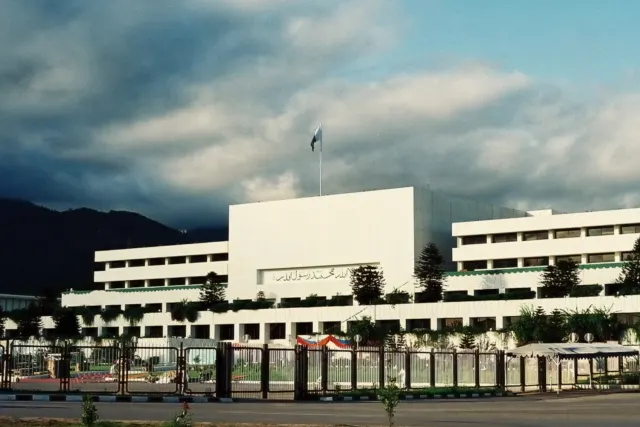
This investigation is a review of public records, not on-the-ground reporting. We read the primary documents listed above and cross-checked each figure against at least one further source where possible. Government figures, including Cambodia’s raid and repatriation counts and the Myanmar junta’s demolition claims, are reported as claims and have not been independently verified. Sanctions designations and US indictments are allegations, not findings of guilt. We excluded figures we could not trace to a primary document, including estimates attributed to the Financial Action Task Force, totals seen only in search results, and a reported raid in Laos supported by a single source. The photograph is a file image from 2022 and does not show conditions after the 2025 raids.
Prince Group has denied any link to scam operations 26. Cambodia’s Interior Ministry, responding to Amnesty International on 16 October 2026, said authorities had cracked down on 832 scam sites and sent 3,477 suspects to court between July 2025 and August 2026, that 77 police officers had received severe disciplinary measures and that the Anti-Corruption Unit had detained 17 police, military and civilian officials 14. Myanmar’s military government says it pursues a zero-tolerance policy towards online scams and has demolished compound buildings 1819. Triple Frontiers did not contact the parties directly for this article; their positions are taken from their published statements and responses.
Sources and references
- ReportOffice of the UN High Commissioner for Human Rights, “A Wicked Problem: Seeking Human Rights-Based Solutions to Trafficking into Cyber Scam Operations in South-East Asia”, February 2026 (mirrored copy). Link
- ArticleUN News, “UN report exposes torture, rape in Southeast Asia’s multi-billion-dollar scam industry”, 20 February 2026. Link
- ReportOHCHR Regional Office for South-East Asia, “Online Scam Operations and Trafficking into Forced Criminality in Southeast Asia”, August 2023. Link
- ReportUNODC, “Inflection Point: Global Implications of Scam Centres, Underground Banking and Illicit Online Marketplaces in Southeast Asia”, April 2025. Link
- Official documentUNODC, “New UNODC report reveals scale of South-East Asia’s ever more interconnected criminal economy”, 21 July 2026. Link
- Official documentUS Department of the Treasury, “U.S. and U.K. Take Largest Action Ever Targeting Cybercriminal Networks in Southeast Asia”, 14 October 2025. Link
- Official documentFinCEN, “FinCEN Issues Final Rule Severing Huione Group from U.S. Financial System”, 14 October 2025. Link
- Official documentUS Department of the Treasury, “Treasury Sanctions Burma Armed Group and Companies Linked to Organized Crime Targeting Americans”, 12 November 2025. Link
- Official documentUS Department of the Treasury, “Treasury Sanctions Southeast Asian Networks Targeting Americans with Cyber Scams”, 8 September 2025. Link
- Official documentUS Department of the Treasury, “Treasury Sanctions Cambodian Senator Kok An and Scam Center Network Defrauding Americans”, 23 April 2026. Link
- Official documentUS Department of the Treasury, “Treasury Further Dismantles Overseas Scam Operations Targeting Americans”, 23 June 2026. Link
- Official documentUS Department of Justice, “Scam Center Strike Force Takes Major Actions Against Southeast Asian Scam Centers”, 23 April 2026. Link
- Official documentIRS Criminal Investigation, “Scam Center Strike Force announces results of U.S. & private industry ‘Disruption Week'”, 3 June 2026. Link
- ReportAmnesty International, “Official Business: Security Companies and Authorities at Scamming Compounds in Cambodia” (ASA 23/1569/2026), October 2026. Link
- ArticleThe Record, “Thailand cuts power supply to Myanmar scam hubs”, 5 February 2025. Link
- ArticleBenarNews, “Chinese workers from Myanmar scam centers begin to fly home from Thailand”, 20 February 2025. Link
- ArticleRadio Free Asia, “Myanmar junta says it seized 30 Starlink receivers in scam center raid”, 20 October 2025. Link
- ArticleAFP (via The Star), “Myanmar junta says demolishing 150 scam hub buildings”, 9 November 2025. Link
- ArticleAssociated Press (via PBS NewsHour), “Myanmar has declared a ‘zero tolerance’ policy for cyberscams. But the fraud goes on”, 17 December 2025. Link
- ArticleReuters (via The Star), “Prince Group founder linked to online scams extradited to China, says CCTV”, 8 January 2026. Link
- ArticleCaixin Global, “China executes 11 in Myanmar border scam syndicate crackdown”, 29 January 2026. Link
- ArticleAssociated Press (via The Star), “Cambodia claims it has wiped out online scam compounds after a sweeping crackdown; experts are skeptical”, 29 August 2026. Link
- ArticleXinhua (via The Star), “Over 23,000 foreigners deported after scam site raids”, 10 November 2026. Link
- ArticlePrachatai English / TCIJ, “The Myawaddy Scammer Crackdown: The Compounds Are Gone, but the Networks Remain”, 28 August 2026. Link
- Official documentFederal Register, “Imposition of Special Measure Regarding Huione Group as a Foreign Financial Institution of Primary Money Laundering Concern”, 90 FR 48295, 16 October 2025. Link
- ArticleThe Star, “Cambodia’s Prince Group denies link to scams after asset seizures”, 12 November 2025. Link
Sources and references are provided for transparency and further reading. Allegations and claims are attributed to their respective sources. Triple Frontiers distinguishes reported allegations from independently established facts.
Corrections and updates
The Frontier Brief
The week’s essential international reporting and new investigations, every Friday.