Bananas, containers and corrupt dockers: how cocaine moves from Ecuador to Europe’s ports
Ecuador's ports have become a main departure point for cocaine bound for Antwerp, Rotterdam, Hamburg and Algeciras. Seizures at the big northern ports have fallen sharply since 2023. Europol and UNODC say that is because the trade has moved, not shrunk.
Key findings
- UNODC estimates global cocaine production reached a record of about 4,100 tons in 2024, more than four times the 2014 low. Confirmed
- EU seizures fell from 419 tonnes in 2023 to 330 tonnes in 2024, and Rotterdam’s port team found less than half as much in 2025 as in 2024; officials say the trade is not shrinking. Confirmed
- Ecuador was the departure country for the largest number of cocaine seizures in Rotterdam in 2025, and the first-listed origin country for seizures at Antwerp. Confirmed
- Europol says moving drugs through ports ‘almost always’ requires several corrupted dock workers, drivers and crane operators. Confirmed
- US Treasury says Ecuadorian gangs moving cocaine through Guayaquil are backed by Mexico’s CJNG and Sinaloa cartels; Europol’s 2026 assessment points to Colombian and Brazilian groups and Albanian brokers. Alleged
Confirmedbacked by documents or on-record sourcesAllegedclaimed by sources, not provenDisputedcontested by the parties involved
On 14 October 2024, Spanish customs officers at the port of Algeciras opened a container that had sailed from Guayaquil, Ecuador, declared as bananas. Behind a front of genuine fruit, the boxes were packed with cocaine: more than 13 tonnes, the largest single seizure in Spain’s history. The Ecuadorian exporter, Spain’s Tax Agency said, was already listed in customs and police databases for illicit trafficking 1.
Triple Frontiers reviewed seizure statistics from Belgian, Dutch, German, Spanish and Ecuadorian authorities, threat assessments from Europol and the UN Office on Drugs and Crime (UNODC), and court records, to trace how the route from Ecuador’s ports to Europe works and how it has changed under pressure.
A record supply
UNODC estimates that potential global production of pure cocaine reached about 4,100 tons in 2024, more than four times its 2014 low 2. Much of it reaches Europe by sea. The EU Drugs Agency reports that EU member states seized 330 tonnes of cocaine in 2024, down from 419 tonnes in 2023, even as availability of the drug continued to increase 3.
Fruit cargoes remain the main cover for cocaine shipped from South America to the Netherlands, Dutch prosecutors say 4. In 2025, Ecuador was the departure country for the largest number of cocaine seizures found by the port team in Rotterdam: 31 4. At Antwerp, it was the first-listed country of origin for seizures that year 5. Inside Ecuador, police seized 222 tonnes of drugs in 2025, after a record 294.6 tonnes in 2024 6.
How it works
The most common method is known as “rip-on/rip-off”. “In maritime container drug trafficking, the rip-on/rip-off method is one of the main MO employed by traffickers,” Europol and the port security committees of Antwerp, Hamburg/Bremerhaven and Rotterdam wrote in a joint report 7. Drugs are placed in an accessible spot in a legitimate container at departure, often without the exporter’s knowledge, and removed at the destination before the container is checked 7. That requires insiders. The report says “collaboration of multiple corrupted dock workers, container drivers and crane operators is almost always necessary”, and that extraction teams are sometimes smuggled into secure port areas inside “Trojan horse” containers 7. UNODC says “the roles of corrupt port workers and of privileged information are often crucial” 2.
Many of those caught are extractors. Dutch prosecutors said 80 “uithalers”, or extractors, were arrested in Rotterdam’s port in 2025, 18 of them minors 4. Antwerp police made a record 207 drug-related arrests in the port in 2025 5.
Key moments
-
Europol and three ports publish their report on criminal networks in EU ports.
-
EU launches the European Ports Alliance with €200m for scanners.
-
US sanctions Ecuador’s Los Lobos gang.
-
Key moment. Algeciras: over 13 tonnes found in a banana container from Guayaquil.
-
36 arrested in Guayaquil in a Europol-backed operation.
-
Key moment. Rotterdam port seizures halve; Antwerp seizes about 55 tonnes.
-
UNODC reports record cocaine production of about 4,100 tons.
-
47 convicted in Belgium’s ‘Costa’ case.
-
Key moment. Operation arising from the Algeciras seizure detains about 20 in Ecuador.
The squeeze, and the shift
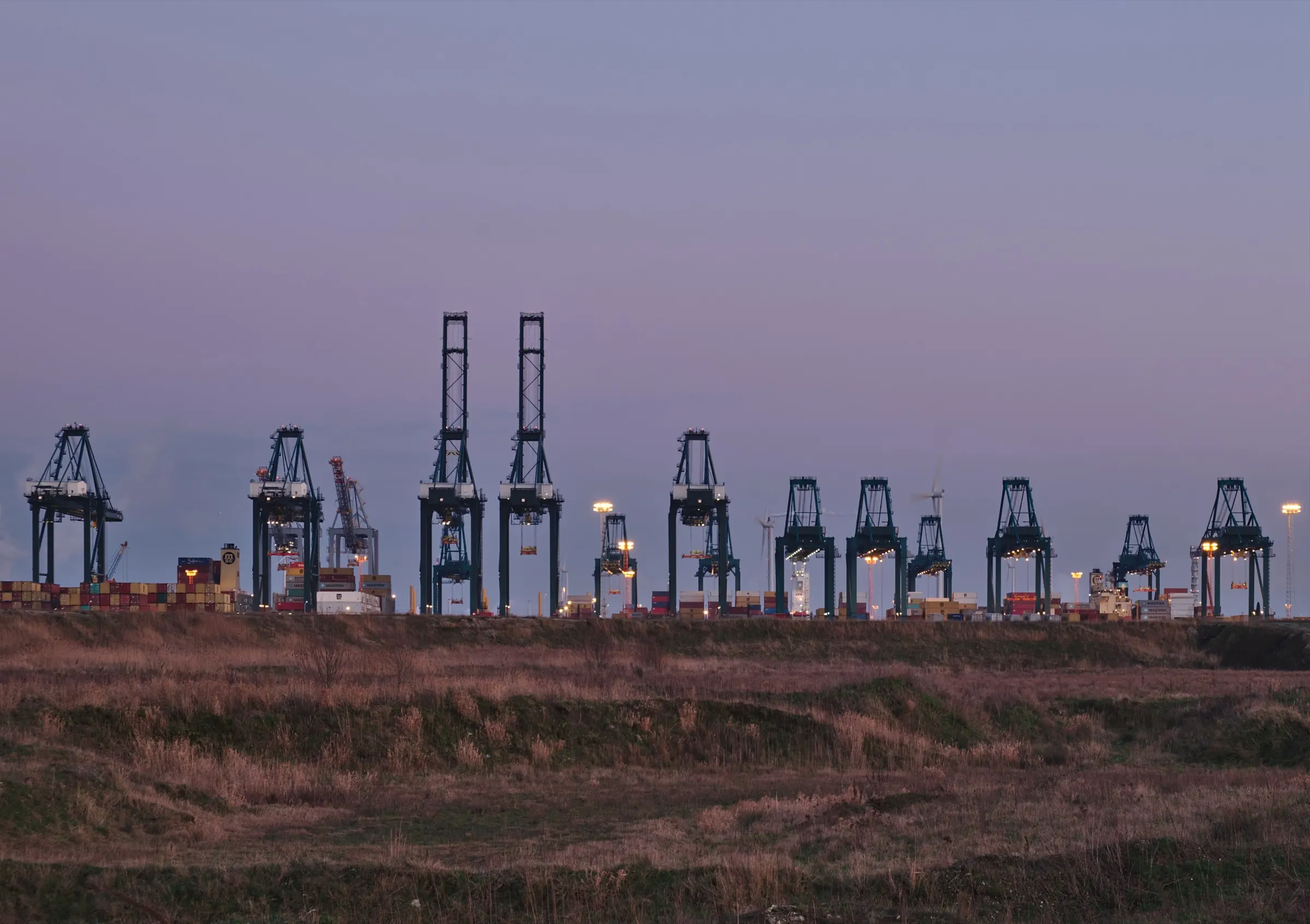
The big northern ports have pushed back. In January 2024 the European Commission launched a European Ports Alliance, with €200 million for customs scanning equipment and a partnership with port authorities and shipping companies 8. Seizures fell. Belgian customs seized about 121 tonnes at Antwerp in 2023, about 44 tonnes in 2024 and about 55 tonnes in 2025 95. Rotterdam’s port team found 11,466 kilograms in 2025, less than half the 25,900 kilograms of 2024 4. In Hamburg, the customs investigation office reported about 5.1 tonnes in its area in 2025, against 9.2 tonnes in 2024 10.
Officials are clear that this is not victory. “We zien lang niet alles”, “we see far from everything”, the Dutch public prosecution service said, warning that smugglers were spreading across more ports and returning to older methods 4. Belgian customs said the fall from 2023 “does not necessarily mean trafficking has diminished” 511. Europol says networks have likely moved to other ports 12, and UNODC reports that seizures in Western and Central Europe shifted in 2024 away from Belgium, Germany and the Netherlands towards France, Portugal and Spain 2. The head of Hamburg’s customs investigation office described a shift towards smaller and medium-sized ports 10.
The networks
The US Treasury, sanctioning the Ecuadorian gang Los Lobos in June 2024, said Ecuadorian groups backed by Mexico’s Jalisco New Generation Cartel (CJNG) and Sinaloa Cartel drive violence in Ecuador 13. Europol’s 2026 assessment describes a different set of partners on the European side: Albanian networks that have settled in Latin America and work with cartels on a transactional basis, and Italian and Western Balkan networks that source cocaine directly 14. It cites a network linked to Los Lobos, based in Guayaquil and Machala, that used fruit-export companies as cover and worked with an Albanian organisation 14.
Enforcement now reaches back to Ecuador. In March 2025 Ecuadorian police, working with Europol and German and Spanish authorities, arrested 36 people in Guayaquil in an operation against a network that Europol said moved multi-tonne container shipments to Belgium, Germany, the Netherlands and Spain 15. In October 2026, an operation that grew out of the Algeciras seizure detained about 20 people in Ecuador 1617. In Belgium, a court in Tongeren convicted 47 people in July 2026 in the “Costa” case, which began with a check at Antwerp in 2019 and involved more than 25 tonnes of cocaine 18.
Why it matters
The fruit trade between Ecuador and Europe is large and legitimate, and that is what makes it useful to traffickers. The fall in seizures at Antwerp and Rotterdam shows that pressure on a port works locally; the record production figures and the shift to Spain, France and smaller ports show that it does not reduce supply. As long as a container of bananas can be opened by someone on the inside at either end, the route will find a way through.
The documents
-
UNODC World Drug Report 2026: HighlightsProduction estimates and a section on the logistics of trafficking, including corrupt port workers.Read (UNODC World Drug Report 2026: Highlights)
-
Europol: Criminal networks in EU ports (2023)Joint report with the port security committees of Antwerp, Hamburg/Bremerhaven and Rotterdam on rip-on/rip-off and insiders.Read (Europol: Criminal networks in EU ports (2023))
-
Europol: Diversification in maritime cocaine trafficking (2026)On the fall in seizures at the big ports and the move to other routes.Read (Europol: Diversification in maritime cocaine trafficking (2026))
-
Europol: The blueprint of criminal opportunism (2026)Latin American and Albanian networks; the Los Lobos case example.Read (Europol: The blueprint of criminal opportunism (2026))
-
Dutch Public Prosecution Service: 2025 port figuresRotterdam and Vlissingen seizures, countries of departure and extractor arrests (in Dutch).Open (Dutch Public Prosecution Service: 2025 port figures)
This investigation names no individual Ecuadorian exporters, officials or politicians. The Spanish Tax Agency did not name the exporter in the Algeciras case 1. Those arrested in Ecuador in 2025 and 2026 have not been convicted; any reference to them describes charges or police allegations. The US Treasury’s description of Mexican cartel backing is the US government’s assessment 13. Triple Frontiers did not contact the parties directly; positions are taken from published statements.
How we reported this
This investigation is based on official seizure statistics, Europol and UNODC assessments, government statements and court reporting. Seizure figures measure enforcement, not trafficking volumes, and different agencies count different areas; we note where figures differ. We excluded allegations about named Ecuadorian politicians and businesses that we could not confirm in two independent, high-quality sources we were able to open. Some EU Drugs Agency pages could not be accessed; its figures are taken from the official press release of its Irish national focal point.
Sources and references
- Official documentAgencia Tributaria (Spain), “Interceptado en Algeciras el mayor alijo de cocaína de la historia de España (13 toneladas)”, 6 November 2024. Link
- ReportUNODC (copy hosted by HRB National Drugs Library), “World Drug Report 2026 – Highlights”, June 2026. Link
- ReportHealth Research Board (Ireland), Irish focal point of the EUDA, “European Drug Report 2026 (press release)”, 9 June 2026. Link
- Official documentOpenbaar Ministerie, “2025: minder kilo’s cocaïne onderschept in Rotterdam en Vlissingen”, 13 February 2026. Link
- ArticleVRT NWS, “55 tonnes of cocaine seized at the port of Antwerp in 2025”, 21 January 2026. Link
- ArticleExpreso (Ecuador), “Policía decomisa 222 toneladas de droga en 2025, por debajo del récord alcanzado”, 29 December 2025. Link
- ReportEuropol, “Criminal networks in EU ports: Risks and challenges for law enforcement”, 30 March 2023. Link
- Official documentEuropean Commission, DG Migration and Home Affairs, “European Ports Alliance to fight drug trafficking and organised crime”, 24 January 2024. Link
- ArticleThe Maritime Executive, “Belgium sees success in fight against Port of Antwerp’s cocaine problem”, 9 January 2025. Link
- Articletransport-online.de (dpa), “Zoll: Drogenschmuggel-Routen verlagern sich”, 20 May 2026. Link
- ArticleThe Brussels Times, “Amount of cocaine seized in Antwerp last year falls below record figures”, 21 January 2026. Link
- ReportEuropol, “Europol Spotlight – Diversification in maritime cocaine trafficking modi operandi”, 27 January 2026. Link
- Official documentUS Department of the Treasury, “Treasury Sanctions Ecuador’s Los Lobos Drug Trafficking Organization and Its Leader”, 6 June 2024. Link
- ReportEuropol, “Decoding the EU’s most threatening criminal networks, Issue 2: The blueprint of criminal opportunism”, 26 June 2026. Link
- ArticleMercoPress, “Europol: Ecuador large cocaine bust 73 tons and coordination with major EU ports”, 18 March 2025. Link
- ArticleThe Brussels Times, “Europol-backed sting exposes drug ring behind billions in tropical fruit trade”, 13 October 2026. Link
- ArticlePrimicias, “Policía de Ecuador y España desmantelan red de narcotráfico”, 8 October 2026. Link
- ArticleThe Brussels Times, “Cocaine, bikes and bananas: large Belgian ‘Costa case’ sees dozens convicted”, 30 July 2026. Link
Sources and references are provided for transparency and further reading. Allegations and claims are attributed to their respective sources. Triple Frontiers distinguishes reported allegations from independently established facts.
Corrections and updates
The Frontier Brief
The week’s essential international reporting and new investigations, every Friday.