Amazon gold: raids, mercury and the trade that keeps illegal mining alive
Brazil says illegal mining in Yanomami land has fallen by about 99% after two years of raids. In Venezuela, armed groups still control much of the gold as Washington licenses state exports, and in Peru economists estimate illegal gold now outsells legal.
Key findings
- Brazil’s government says active illegal mining in Yanomami land fell about 98.9% after two years of operations, though it estimates some 7,000 miners remain. Confirmed
- A Fiocruz study found 84% of hair samples from nine Yanomami villages above 2.0 micrograms per gram of mercury. Confirmed
- InSight Crime says most Venezuelan gold comes from mines controlled by armed groups and that the state works closely with criminal groups to obtain it. Alleged
- After Maduro’s capture, the US licensed exports of gold from Venezuela’s sanctioned state miner Minerven to US refiners. Confirmed
- The IPE estimates Peru’s illegal gold exports were 54% of volume in the first half of 2026; the figures are estimates, not customs data. Alleged
Confirmedbacked by documents or on-record sourcesAllegedclaimed by sources, not provenDisputedcontested by the parties involved
Brazil’s federal government says that after two years of permanent operations, the area of active illegal gold mining in the Yanomami Indigenous Land fell by about 98.9% between 2024 and March 2026 1. Across the border in Venezuela and further south in Peru, the picture reported by researchers is different: armed groups still control much of Venezuela’s informal gold mining, according to InSight Crime, and Peruvian economists estimate that illegal gold exports overtook legal ones in the first half of 2026 23.
Triple Frontiers reviewed government statements and licences, US sanctions records, satellite monitoring, health studies, research and news reports to examine who profits from Amazon gold, the mercury it leaves behind, and what enforcement and trade rules have achieved.
Brazil: the Yanomami operation
In January 2024 Reuters reported that around 80% of roughly 20,000 illegal miners had been removed from Yanomami territory in 2023, but that miners were returning after the military scaled back its support in mid-2023 4. Brazil’s health ministry reported 308 Yanomami deaths from disease, malnutrition and violence in 2023 4. “The state is not effectively present today in Yanomami territory, and we are seeing the return of illegal mining,” Hugo Loss of the environmental agency Ibama told Reuters 4.
A decree of 27 February 2024 formalised a federal Casa de Governo in Roraima, which has coordinated daily operations in the territory since March 2024 15. The government said its agencies carried out 3,547 operations in 2024, destroying 1,095 engines, 421 camps and 22 aircraft 1. By its count, cumulative actions reached 10,554 by May 2026, with 249kg of gold and more than a tonne of mercury seized, 907 camps, 87 airstrips and 55 aircraft destroyed, and 369 arrests or detentions 5. It estimates the losses imposed on illegal mining at R$709 million 5.
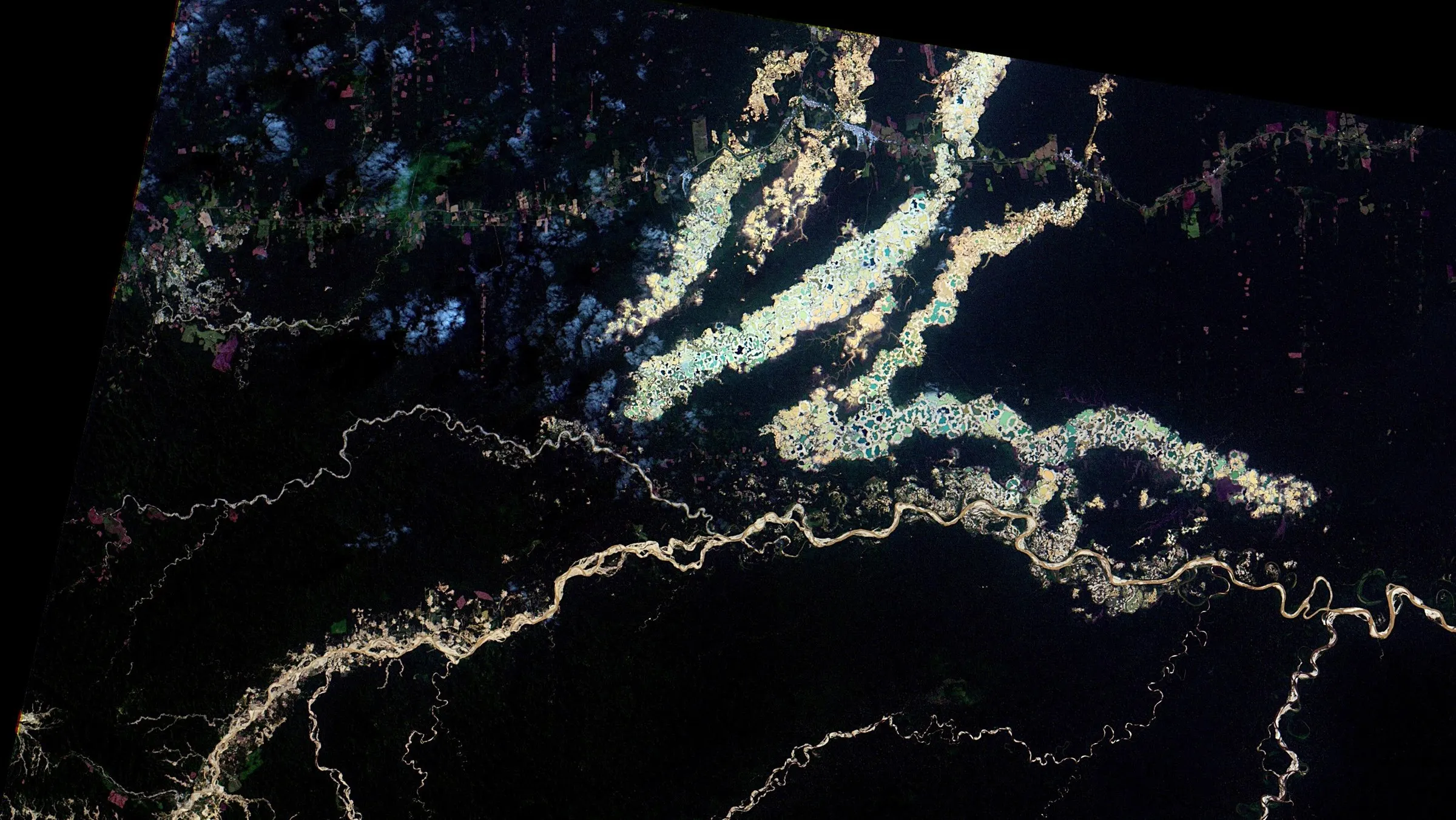
These are government figures 5. Censipam, the federal monitoring centre, reported a 99% reduction in the emergence of new mining sites since March 2024 5. Greenpeace Brasil’s separate satellite analysis found 8.16 hectares of mining-related forest loss in Yanomami land in the first half of 2025, down 95.18% on the same period of 2024 6. It warned that repression alone does not stop miners returning, because their logistics and financial flows remain 6.
The government itself estimates that about 7,000 illegal miners remain, according to Mongabay 7. It reported in June 2026 that miners are splitting into smaller groups, moving deeper into the forest and using border areas with Venezuela and Guyana, including hubs in the southern Venezuelan Amazon 7. “The government has to continue operations until illegal mining activity ends, that’s important,” Dário Kopenawa Yanomami, vice-president of the Hutukara Yanomami Association, told Mongabay 7. Health ministry figures reported by Mongabay show malaria cases falling from 32,265 in 2023 to 27,887 in 2025, and malaria deaths down 80.8% 7.
Mercury in people and fish
The US Treasury has said mercury is used in Venezuela’s gold mining 8. In Brazil, a Fiocruz study with the Instituto Socioambiental tested about 300 people in nine Yanomami villages in the Alto Mucajaí region in October 2022 9. It found 84% of 287 hair samples above 2.0 micrograms per gram, and 10.8% above 6.0, a level the researchers described as high 9. All 47 fish samples showed some contamination 9. “This scenario of vulnerability exponentially increases the risk of illness for the children who live in the region,” said Paulo Basta, the study’s coordinator (translated from Portuguese) 9.
In Peru’s Madre de Dios, Mongabay Latam compiled 39 studies and found that 78.4% of 3,380 human mercury samples from 102 Peruvian communities exceeded the World Health Organization limit 10. A regional health campaign in 2025 found 27% of people sampled around the Amarakaeri reserve above the safe urine mercury level 10. “This is the worst form of environmental injustice,” said William Pan, who led a study of children near Amarakaeri (translated from Spanish) 10.
How it unfolded
-
US sanctions Venezuela’s state gold company Minerven.
-
Reuters reports miners returning to Yanomami land.
-
Key moment. Brazil formalises its Casa de Governo in Roraima.
-
Fiocruz publishes Yanomami mercury study.
-
Federal Police operation over Kayapó gold; R$2.9bn frozen.
-
Key moment. Brazil’s Supreme Court ends good-faith presumption for gold buyers.
-
MAAP: 139,169 hectares cleared by mining in Peru.
-
Peru’s Congress votes to extend REINFO to end-2026.
-
Key moment. US captures Nicolás Maduro.
-
Key moment. OFAC licenses Venezuelan gold exports to the US.
-
Brazil reports 98.9% fall in Yanomami mining area.
-
Venezuela approves new mining law.
-
MAAP: about 500 hectares lost inside Tambopata reserve.
-
21 detained in La Pampa police operation.
-
Key moment. IPE: illegal gold exports outpace legal ones.
-
US sanctions Tren de Aragua gold-mining figure.
-
Bills filed to extend REINFO to 2028 or 2030.
Who profits: the gold trail
In Brazil, police and the courts have also targeted the trade 1112. In September 2024 the Federal Police placed 13 people in pretrial detention and executed 33 search warrants over illegal gold extraction in and around the Kayapó Indigenous Land in Pará; a federal court froze R$2.9 billion in assets 11. Police said at least 3.14 tonnes of illegally extracted gold had been passed off as legal, and that the group had ties to suspects in the Yanomami territory 11. Those detained have not been convicted and are presumed innocent; the source did not name them 11.
On 21 March 2025 Brazil’s Supreme Federal Court unanimously struck down a 2013 provision that presumed gold was legal, and buyers acting in good faith, on the strength of sellers’ declarations 12. The court ordered federal bodies to adopt measures to stop the trade in gold from protected areas and Indigenous lands 12. Instituto Escolhas, using royalty data from the National Mining Agency, said gold officially registered by small-scale garimpos in 2025 was 81% lower than in 2022, before the electronic invoice and the end of the good-faith rule 13. In Pará garimpo output fell by almost 17 tonnes, a drop Escolhas said reinforces indications that illegal gold had been entering the market 13.
In Venezuela, the state has been a buyer 8. When it sanctioned the state gold company Minerven in 2019, the US Treasury said “the mining and subsequent sale of gold has been one of the Maduro regime’s most lucrative financial schemes”, and that the military charged criminal organisations for access to mines 8. InSight Crime said in April 2026 that most Venezuelan gold comes from informal mines controlled by armed groups, including the ELN guerrillas, the FARC dissident Acacio Medina Front and armed gangs known as sindicatos 2. “Today, the state exercises control over the AMO by working closely with criminal groups to obtain gold,” it wrote, referring to the Orinoco Mining Arc (translated from Spanish) 2. These are the research group’s findings, not court rulings 2.
In Peru, the IPE estimated in July 2025 that illegal gold exports could reach up to US$12 billion that year, matching legal exports 14. In September 2026 it put the 2025 figure at about US$11.5 billion and projected at least US$16 billion for 2026, with illegal gold accounting for 54% of export volume in the first half of the year 3. These are estimates, not customs data 3.
Venezuela: from sanctions to licences
The United States captured Nicolás Maduro on 3 January 2026, and Delcy Rodríguez became acting president 215. She said Venezuela extracted 9.5 tonnes of gold in 2025 and forecast a 30% increase in 2026 15. On 5 March a White House official confirmed to E&E News a deal under which Minerven would sell gold to the commodities trader Trafigura 16. “We are helping Venezuela restore their mining sector, which will help American industry get the minerals we need,” the official said 16.
The next day the Treasury’s Office of Foreign Assets Control issued General License 51, authorising transactions with the Venezuelan government and Minerven needed to export Venezuelan-origin gold to the United States for refining there by an established US entity 17. Payments to blocked persons must go into Foreign Government Deposit Funds set up under a January 2026 executive order 17. The licence does not authorise mining or refining inside Venezuela, and Minerven remains on the sanctions list 18.
On 9 April Venezuela’s National Assembly unanimously approved a new mining law that repeals 1999 rules barring foreign and private investment in gold 2. InSight Crime said the law overlooks the ties between illegal mining and the government 2. Its July 2025 review of Operation Neblina, a military campaign in Amazonas state that expelled some 13,000 miners from Yapacana National Park, found that mining had shifted to smaller sites and that armed groups reportedly operate with the tacit or explicit approval of security forces 19.
On 30 September 2026 the US Treasury sanctioned Juan Gabriel Rivas Núñez, known as “Juancho”, whom it described as a Tren de Aragua figure who directs operations including gold mining 20. He was indicted in the Southern District of Texas in December 2025 on charges of providing material support to the group; an indictment is an accusation, not a conviction 20.
Peru: Madre de Dios and La Pampa
MAAP, the satellite monitoring programme run by Amazon Conservation and Conservación Amazónica, reported cumulative gold-mining deforestation of 139,169 hectares in the Peruvian Amazon by mid-2025, 97.5% of it in Madre de Dios 21. It said Operation Mercury, the 2019 government intervention in La Pampa, initially succeeded but that mining rebounded during the Covid-19 pandemic as the state withdrew 21. In May 2026 MAAP reported about 500 hectares of forest loss inside the Tambopata National Reserve, mostly from the second half of 2025 into early 2026, with more than 400 hectares in 2025 alone, above the 2016-17 peak 22.
Enforcement continues 2324. On 1 April 2026 environmental prosecutors, police, the armed forces and the parks service destroyed 49 dredges and 32 camps in the reserve’s buffer zone in La Pampa; no one was arrested 24. “What we seek is not only to intervene, but to identify the main people responsible,” said prosecutor Carlos Chirre Ramírez (translated from Spanish) 24. In July police detained 21 presumed members of a group called Los Guardianes de La Pampa, which they link to illegal mining, extortion and contract killings, and seized rifles, pistols and grenades; two people died in a confrontation 23. El Peruano did not report charges 23.
The REINFO registry for informal miners seeking to formalise is at the centre of Peru’s policy dispute 253. In December 2025 Congress extended it to 31 December 2026 by Law 32537, which also requires buyers to verify the origin of minerals 2526. The IPE says that by exempting registrants from criminal liability, REINFO has helped illegal mining advance 3. Isabel Calle of the Peruvian Society for Environmental Law said that with the extension “the country will remain trapped in a system that has not driven formalisation” (translated from Spanish) 25.
Where things stand
Brazil’s government reports continued operations in Yanomami land, with 310 actions in May 2026 alone 5. In Peru, two bills filed in November 2026 would extend REINFO to 2028 or 2030; the registry has more than 31,600 entrants and is due to expire on 31 December 2026 27. In Venezuela, state gold is now licensed for export to the United States while researchers say armed groups still dominate informal production 172.
Why it matters
Officials and researchers in all three countries describe enforcement that displaces miners rather than ending the trade 71921. Brazil’s court ruling targeted the buyers’ paperwork, and registered garimpo output fell sharply after it 1213. Peru’s extensions of REINFO and the US licence for Venezuelan state gold are different bets, and mercury in people and fish is a cost recorded in all three 9810.
The documents
-
OFAC General License 51: Venezuelan-origin gold6 March 2026. Authorises export of gold to US refiners.Read (OFAC General License 51: Venezuelan-origin gold)
-
US Treasury: Minerven designation19 March 2019. Sanctions on Venezuela's state gold company.Open (US Treasury: Minerven designation)
-
US Treasury: Tren de Aragua financial network30 September 2026. Includes gold-mining facilitator.Open (US Treasury: Tren de Aragua financial network)
-
Brazilian government: two years of Yanomami operations10 March 2026. Operation tallies and area reduction.Open (Brazilian government: two years of Yanomami operations)
-
Brazilian government: Yanomami figures to May 20263 June 2026. Cumulative seizures, arrests and losses.Open (Brazilian government: Yanomami figures to May 2026)
-
Fiocruz: mercury in nine Yanomami villages4 April 2024. Hair and fish sample results.Open (Fiocruz: mercury in nine Yanomami villages)
-
Instituto Escolhas: gold production and exports (2025)February 2026. Two-page factsheet from official data.Read (Instituto Escolhas: gold production and exports (2025))
-
MAAP #233: gold mining in the Peruvian Amazon29 September 2025. Deforestation, dredges, rivers.Open (MAAP #233: gold mining in the Peruvian Amazon)
-
MAAP #241: mining in Tambopata National Reserve12 May 2026. Forest loss inside the reserve.Open (MAAP #241: mining in Tambopata National Reserve)
Brazil’s government presents its Yanomami figures as evidence that the strategy of choking mining logistics is working 5. Venezuela’s acting president, Delcy Rodríguez, presented the new mining law as a way to attract investment: “Here it is, I hand over to the Venezuelan people this law that will allow us to attract important investments,” she said, according to Anadolu’s English rendering 28. A White House official described the Minerven-Trafigura deal as helping Venezuela restore its mining sector 16. Peru’s president, José Jerí, said the executive was satisfied with the REINFO extension, while business groups called it a “grave retroceso” (serious setback) in the fight against illegal mining 25. The people detained in Brazil and Peru, the Tren de Aragua figure sanctioned by the US, and the armed groups named by InSight Crime have not been convicted of the conduct described 112023. Triple Frontiers did not contact those named directly; their positions are taken from published statements.
How we reported this
This investigation is a review of public records and published research: Brazilian federal government statements, a US Treasury sanctions release and OFAC General License 51, Peruvian state media reports, satellite analyses by MAAP and Greenpeace Brasil, a Fiocruz health study, Instituto Escolhas trade data, IPE estimates, InSight Crime reporting and news reports. Enforcement figures are the governments’ own and have not been independently audited. Illegal export values are estimates. Sanctions and indictments are allegations, not convictions. We excluded claims we could not trace to a page we opened, including the reported tonnage of the Minerven-Trafigura deal, later amendments to OFAC’s gold licence, and a Transparency International estimate of armed-group control of Venezuelan gold. The Supreme Federal Court’s own release could not be opened by automated means, so the ruling is described from Greenpeace Brasil and Instituto Escolhas. A health ministry percentage for malaria reduction was left out because it did not match the case numbers reported. Reports from The Rio Times, which publishes AI-generated news, were not used.
Sources and references
- Official documentAgência Gov (Brazilian federal government / Casa Civil), “Garimpo perde força na Terra Yanomami após dois anos de operações permanentes do Governo”, 10 March 2026. Link
- ReportInSight Crime, “Nueva ley minera de Venezuela ignora viejos problemas de corrupción”, 20 April 2026. Link
- ArticleGestión, “Perú ya exportaría más oro ilegal que legal por primera vez en su historia, calcula el IPE”, 17 September 2026. Link
- ArticleReuters, via Business Day, “Miners a resurgent threat to indigenous Yanomami in Brazil (Reuters)”, 18 January 2024. Link
- Official documentAgência Gov / Secom (Brazilian federal government), “Governo do Brasil reduz ação do garimpo ilegal em 99% na TI Yanomami”, 3 June 2026. Link
- ReportGreenpeace Brasil, “Ações de desintrusão fazem garimpo recuar nas maiores terras indígenas da Amazônia”. Link
- ArticleMongabay (Rubens Valente), “Illegal miners adapt their strategies in Yanomami Amazon territory”, 17 June 2026. Link
- Official documentUS Department of the Treasury, “Treasury Sanctions Venezuela’s State Gold Mining Company and its President for Propping Up Illegitimate Maduro Regime”, 19 March 2019. Link
- ReportAgência Gov / Fiocruz, “Yanomamis de nove aldeias assediadas pelo garimpo estão contaminados por mercúrio (Fiocruz)”, 4 April 2024. Link
- ArticleMongabay Latam (Elizabeth Salazar Vega), “Mercurio en la sangre: la huella tóxica en niños y gestantes de Madre de Dios en Perú”, 26 August 2026. Link
- ArticleSBT News, “PF prende 13 e bloqueia R$ 2,9 bilhões de suspeitos de extração e comércio ilegal de ouro em terra indígena no Pará”, 10 September 2024. Link
- ReportGreenpeace Brasil, “Fim da ‘boa-fé’: avanço na luta pela proteção do meio ambiente e dos povos indígenas”. Link
- ReportInstituto Escolhas, “Produção e exportação de ouro (2025)”, February 2026. Link
- ArticleAndina (Peruvian state news agency), “IPE: Illegal gold mining exports could surpass legal ones in Peru this year”, 25 July 2025. Link
- ArticleEl Diario (Venezuela), “Delcy Rodríguez reportó un aumento en la extracción de oro en Venezuela y prevé un crecimiento de 30 % para 2026”, 19 January 2026. Link
- ArticleE&E News (Politico), “Trump clinches Venezuela gold export deal”, 5 March 2026. Link
- Official documentUS Treasury, Office of Foreign Assets Control, “Venezuela Sanctions Regulations, General License No. 51: Authorizing Certain Activities Involving Venezuelan-Origin Gold”, 6 March 2026. Link
- ReportCleary Gottlieb, “OFAC Eases Sanctions on Venezuelan-Origin Gold”, 11 March 2026. Link
- ReportInSight Crime, “Anti-Mining ‘Crackdown’ Shifts Ops Elsewhere in Venezuela”, 25 July 2025. Link
- Official documentUS Department of the Treasury, “Treasury Sanctions Financial Network of Foreign Terrorist Organization, Tren de Aragua”, 30 September 2026. Link
- ReportMAAP (Amazon Conservation / Conservación Amazónica), “MAAP #233: Current situation of gold mining in the Peruvian Amazon”, 29 September 2025. Link
- ReportAmazon Conservation, “Illegal Mining Is Once Again Pushing Deeper Into One Of Peru’s Most Iconic Protected Areas (MAAP #241)”, 12 May 2026. Link
- Official documentEl Peruano (Peruvian state gazette), “Madre de Dios: PNP asesta nuevo golpe a la minería ilegal con 21 detenidos y arsenal de guerra incautado”, 7 July 2026. Link
- ArticleLa República, “Golpe a la minería ilegal en Madre de Dios: destruyen 49 dragas en zona cercana a Tambopata”, 1 April 2026. Link
- ArticleActualidad Ambiental (SPDA), “Congreso amplía nuevamente el Reinfo: esta vez hasta el 31 de diciembre del 2026”, 5 December 2025. Link
- ArticleExitosa Noticias, “Oficializan ampliación del Reinfo hasta el 31 de diciembre de 2026”, 26 December 2025. Link
- ArticleEl Búho (Red de Medios Regionales del Perú), “Reinfo hasta el 2030, pese a que ya fracasó cinco veces en Perú”, 6 November 2026. Link
- ArticleAnadolu Agency, “Venezuela’s acting president signs new mining law to attract more investment”, 18 April 2026. Link
Sources and references are provided for transparency and further reading. Allegations and claims are attributed to their respective sources. Triple Frontiers distinguishes reported allegations from independently established facts.
Corrections and updates
The Frontier Brief
The week’s essential international reporting and new investigations, every Friday.