America’s 43-day shutdown: what it cost and how the funding fights went on
The US government shut down on 1 October 2025 over expiring health subsidies and stayed closed for a record 43 days, disrupting food aid, flights and federal pay. The deal that ended it left the subsidies to lapse, and funding fights ran on through 2026.
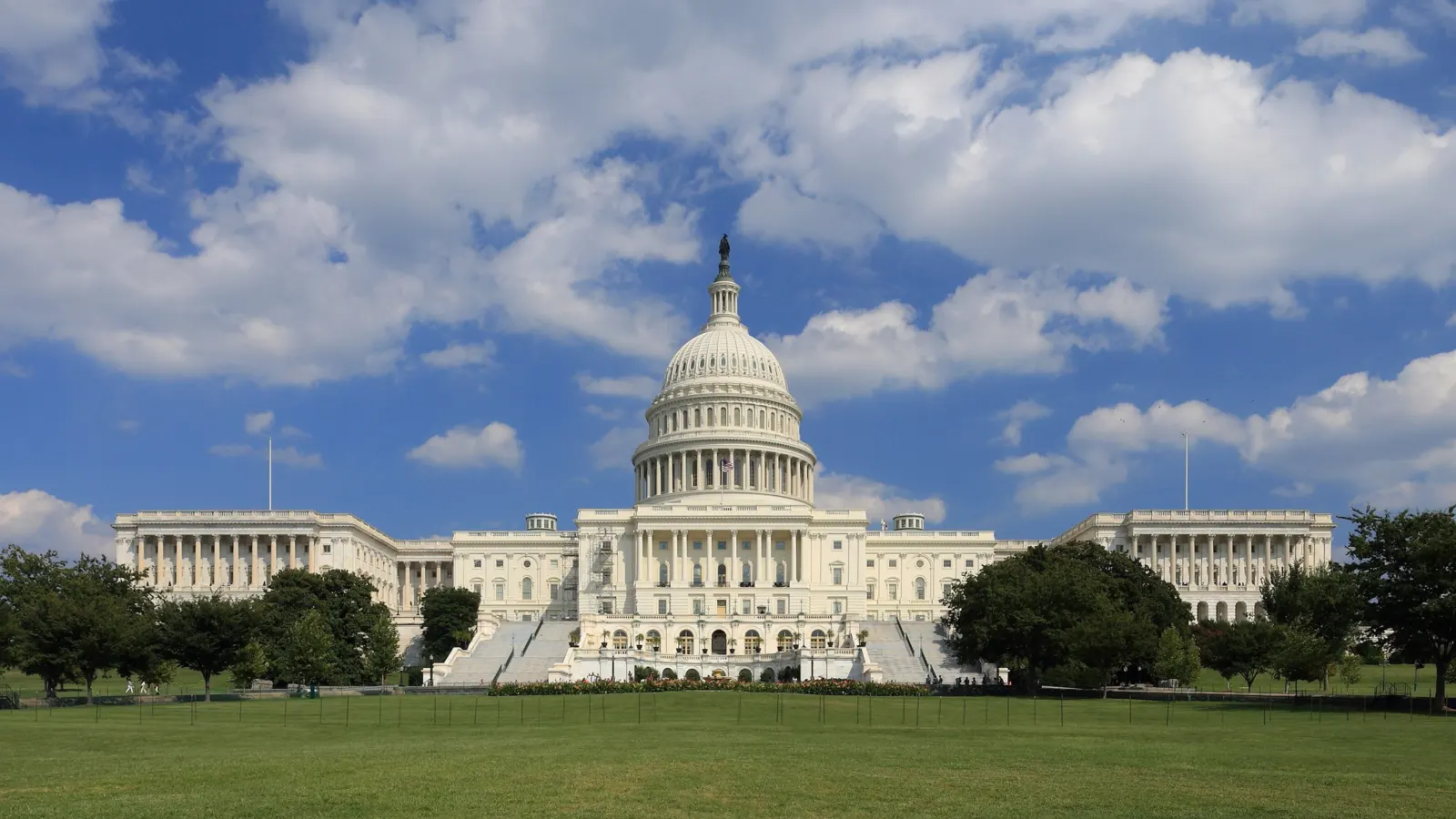
WASHINGTON Just after midnight on 1 October 2025, at the start of the 2026 fiscal year, the US federal government shut down after Congress failed to pass funding 12. It stayed shut for 43 days, the longest shutdown in US history, until President Donald Trump signed a funding bill on the night of 12 November 34.
The central dispute was over health care. Democrats refused to back a short-term funding bill unless it extended enhanced Affordable Care Act (ACA) premium tax credits due to expire at the end of 2025 35. Republicans said that was a separate fight for another time 3.
A standoff over health subsidies
A Republican stopgap passed by the House needed 60 votes in the Senate, where Republicans held 53 seats, and it failed repeatedly 1.
“I certainly pray they will come to their senses,” House Speaker Mike Johnson said on the first day 1. Democratic leaders Chuck Schumer and Hakeem Jeffries said in a joint statement that “President Trump’s behavior has become more erratic and unhinged” 1.
“Never have American families faced a situation where their health care costs are set to double — double in the blink of an eye,” Schumer said 5. Senate Majority Leader John Thune said: “Republicans are ready to sit down with Democrats just as soon as they stop holding the government hostage to their partisan demands” 5.
Furloughs and layoffs
The Congressional Budget Office (CBO) estimated that about 750,000 federal employees could be furloughed each day, with their pay costing about $400 million a day 6. Counts later differed. AP reported that about 1.25 million federal workers went unpaid and about 650,000 did not work 7. The Congressional Research Service (CRS), citing the Bipartisan Policy Center, put the number furloughed at least 670,000, with about 730,000 working without pay, and said there is no official count 2.
The Office of Management and Budget (OMB), led by Russell Vought, told agencies to plan for mass firings as well as furloughs 1. On 10 October at least seven agencies sent layoff notices to more than 4,000 employees, according to an OMB adviser 8. “We’re ending some programs that we don’t want. They happen to be Democrat-sponsored programs,” Trump told reporters 8.
Unions sued. On 15 October US District Judge Susan Illston in San Francisco temporarily halted the layoffs 8. “This hatchet is falling on the heads of employees all across the nation and you’re not even prepared to address whether that’s legal?” she asked the government’s lawyer 8. On 28 October she issued a preliminary injunction barring layoffs noticed since 1 October 9. The government argued that the court had no jurisdiction over personnel decisions 89.
Food aid and flights
The Agriculture Department told states on 24 October that it would not fund November benefits under the Supplemental Nutrition Assistance Program (SNAP) if the shutdown continued 10. The administration said it would not tap about $5 billion in contingency funds 9. SNAP serves about 42 million people, and AP said $8 billion in November aid was delayed 107.
A court ordered full payments on 6 November, but the Supreme Court paused that order the next day 10. Depending on the state, recipients received full benefits, partial benefits or nothing 10.
In the air, the Federal Aviation Administration (FAA) cited absences among air traffic controllers, who had gone more than a month without pay, and ordered airlines to cut 4% of flights at 40 major airports 11. The target rose to 6% on 11 November 11. Airlines cancelled more than 7,900 flights between 7 and 11 November, AP reported 11.
The cost to the economy
The CBO estimated that a six-week shutdown would cut annualised growth in the fourth quarter of 2025 by about 1.5 percentage points 72. It said a rebound would add 2.2 points in the first quarter of 2026, but about $11 billion of output would be lost permanently 72. The CBO also estimated that federal workers would miss about $16 billion in wages by mid-November 7.
Other estimates were higher. EY-Parthenon put lost output at about $55 billion by early November, and Bloomberg Economics at about $100 billion, according to the CRS 2.
The October household survey was not carried out, so no October unemployment rate was produced, the CRS said 2. “Short-lived shutdowns are usually invisible in the data, but this one will leave a lasting mark,” said Gregory Daco, chief economist at EY 7.
How it unfolded
-
Key moment. Funding lapses and the government shuts down.
-
Agencies send more than 4,000 layoff notices.
-
Judge halts shutdown layoffs.
-
USDA tells states November SNAP will not be funded.
-
Supreme Court pauses order for full SNAP payments; flight cuts deepen.
-
Senate passes reopening bill 60-40.
-
Key moment. House passes bill; Trump signs it, ending the 43-day shutdown.
-
Senate blocks ACA subsidy bills.
-
Partial shutdown begins; it ends on 3 February.
-
Key moment. DHS funding lapses.
-
Trump signs DHS bill after 76 days.
-
Stopgap to 11 December 2026 signed.
How it ended
On 10 November the Senate passed a compromise 60-40 12. Seven Democrats and Angus King, an independent, voted yes: Jeanne Shaheen, Maggie Hassan, King, Tim Kaine, Dick Durbin, John Fetterman, Catherine Cortez Masto and Jacky Rosen 1213. Schumer voted no 12.
“There was no guarantee that waiting would get us a better result, but there was a guarantee that waiting would impose suffering on more everyday people,” Kaine told NPR 4. Sen. Tammy Baldwin, who voted against, said a “handshake deal” with “no guarantee to actually lower costs is simply not good enough” 4.
On 12 November the House passed the bill 222-209, with six Democrats voting yes and two Republicans voting no 4. “They knew it would cause pain and they did it anyway,” Johnson said 3. “This fight is not over,” Jeffries said 3. Trump signed it that night and said: “This was an easy extension but they didn’t want to do it the easy way” 4.
The law extends funding to 30 January 2026 14. It gives full-year funding to the Agriculture Department, including SNAP, to Congress itself and to military construction and veterans’ affairs 144. It cancels shutdown layoffs, bars new ones until 30 January and pays employees for the lapse 143. It did not extend the ACA credits; Thune promised a Senate vote by mid-December, while Johnson did not commit to a House vote 43.
The fights that followed
On 11 December 2025 the Senate blocked both a Democratic three-year extension of the credits and a Republican alternative, each by 51-48, short of the 60 votes needed 15. “We failed,” said Republican Sen. Lisa Murkowski 15. The credits expired at the end of 2025 16. On 8 January 2026 the House passed a three-year extension 230-196 after a discharge petition, which the CBO estimated would add about $80.6 billion to deficits over a decade 16.
A partial shutdown began on 31 January 2026 17. It ended on 3 February when Trump signed a roughly $1.2 trillion package, passed by the House 217-214, which completed 11 of the 12 annual spending bills 18. Homeland Security was funded until 13 February, as Democrats sought limits on immigration enforcement after the fatal shootings of Alex Pretti and Renee Good by federal officers in Minneapolis, AP reported 18.
Funding for the Department of Homeland Security (DHS) lapsed on 14 February 19. In March Trump ordered DHS to redirect money to pay its employees 19. On 30 April he signed a bill funding the department except Immigration and Customs Enforcement and Border Patrol, ending a 76-day shutdown 1920. Republicans plan to fund those two agencies through a separate budget reconciliation bill 1921.
Where it stands
On 1 September 2026 the House passed a stopgap by 370-48 after the Senate had approved it, and Trump signed it the next day 2223. It keeps the government funded at largely current levels until 11 December 2026 2223. Lawmakers were due back on 9 November for a post-election session facing that deadline, with the full-year spending bills for fiscal 2027 unfinished 2423.
Why it matters
The 2025 shutdown was the longest in US history and, by the CBO’s estimate, permanently cost about $11 billion in output 32. It interrupted food aid, air travel and federal pay, yet did not win the subsidy extension Democrats sought 515. Funding fights carried on through 2026, and the next deadline is 11 December 1923.
Sources and references
- ArticleAssociated Press (via PBS News), “Senate vote to end shutdown fails as Democrats hold firm on health care demands”, 1 October 2025. Link
- ReportCongressional Research Service (via EveryCRSReport archive), “The 2025 (FY2026) Government Shutdown: Economic Effects (CRS Report R48832)”, 29 January 2026. Link
- ArticleAssociated Press (via PBS News), “Trump signs government funding bill, ending record 43-day shutdown”, 13 November 2025. Link
- ArticleNPR, “House votes to end longest ever shutdown”, 12 November 2025. Link
- ArticleAssociated Press (via PBS News), “The shutdown is over, with no winners and much frustration. How did we get here?”, 13 November 2025. Link
- ArticlePBS News, “750,000 federal employees could be furloughed daily in shutdown, CBO estimates”, 30 September 2025. Link
- ArticleAssociated Press (via PBS News), “The government shutdown will impact an already-struggling economy, from lost paychecks to canceled flights”, 11 November 2025. Link
- ArticleNPR, “Judge pauses shutdown layoffs at more than 30 federal agencies”, 15 October 2025. Link
- ArticleAssociated Press (via PBS News), “Judge extends order barring the Trump administration from firing federal workers during the shutdown”, 28 October 2025. Link
- ArticleAssociated Press (via PBS News), “What to know about the status of SNAP food aid as a vote nears to end the shutdown”, 12 November 2025. Link
- ArticleAssociated Press (via PBS News), “Air travelers face frustration and delays as FAA increases flight cuts during the government shutdown”, 11 November 2025. Link
- ArticleAssociated Press (via PBS News), “Senate passes bill to end shutdown, sending it to the House”, 10 November 2025. Link
- ArticleNPR, “Senate sends shutdown-ending legislation to the House for a vote”, 11 November 2025. Link
- Official documentUS Government Publishing Office, “Public Law 119-37: Continuing Appropriations, Agriculture, Legislative Branch, Military Construction and Veterans Affairs, and Extensions Act, 2026 (H.R. 5371)”, 12 November 2025. Link
- ArticleAssociated Press (via WHYY), “Senate rejects extension of health care subsidies as costs are set to rise for millions of Americans”, 11 December 2025. Link
- ArticleAssociated Press (via WHYY), “U.S. House passes bill to extend health care subsidies in defiance of GOP leaders”, 8 January 2026. Link
- ArticlePBS News, “House passes budget bill to end partial government shutdown”, 3 February 2026. Link
- ArticleAssociated Press (via PBS News), “Trump signs bill to end partial government shutdown”, 4 February 2026. Link
- ArticleCBS News, “Trump signs bill funding DHS, ending record-breaking 76-day shutdown”, 30 April 2026. Link
- ArticleAssociated Press (via PBS News), “House approves bill to fund Homeland Security and end the record shutdown”, 30 April 2026. Link
- ArticleNPR, “Congress ends record shutdown at the Department of Homeland Security”, 1 May 2026. Link
- ReportAssociation of State and Territorial Health Officials, “Summary of FY27 Continuing Resolution”, 1 September 2026. Link
- ArticleReuters (via WHBL), “Trump signs bill to avert government shutdown before midterm elections”, 2 September 2026. Link
- ArticleGray DC (via Fox Carolina), “Congress enters lame duck session following midterm elections”, 7 November 2026. Link
Sources and references are provided for transparency and further reading. Allegations and claims are attributed to their respective sources. Triple Frontiers distinguishes reported allegations from independently established facts.
The Frontier Brief
The week’s essential international reporting and new investigations, every Friday.